.svg&w=384&q=75 "Pitchgist logo")
France vs England: 2026 World Cup 3rd Place Final Preview
The World Cup reaches its bittersweet climax as France and England meet in the 3rd Place Final on 18 July 2026, with the stage still to be confirmed after the organisers left the venue line blank. A month of football has distilled into one last shot at a medal, pride and narrative: for France, a chance to underline a devastating attacking campaign; for England, an opportunity to turn another deep run into something tangible and silence the familiar questions about what might have been.
Season Context
France arrive as group-stage heavyweights. They topped Group I with a perfect 9 points from 3 matches, scoring 10 and conceding just 2. That works out at a formidable 3.3 goals scored per game and only 0.7 conceded, underlining why they were swiftly propelled into the knockout rounds and marked out as one of the tournament’s most complete sides.
England’s route was steadier but still impressive. They finished 1st in Group L with 7 points from 3 games, built on 2 wins and 1 draw. With 6 goals scored and 2 conceded, they averaged 2.0 goals per match while keeping things tight at the back (0.7 conceded per game), enough to secure top spot and a clear path into the Round of 32.
Recent Form
Both sides carry almost identical form lines into this playoff. France’s official run is marked as “LWWWW”, a sequence that speaks of a minor stumble followed by a powerful response: four straight wins, backed by that 10:2 group-stage goal difference (3.3 scored, 0.7 conceded per game). Across a wider sample of 7 World Cup matches they have 16 goals scored and just 4 conceded, reinforcing the picture of a team that usually overwhelms opponents (2.3 scored and 0.6 conceded per match over those 7 games).
England mirror that same form string of “LWWWW”, suggesting a similar arc of recovery and momentum. Their broader tournament body of work shows 14 goals scored and 8 conceded across 7 matches (2.0 for and 1.1 against per game), pointing to a side that leans more on attacking firepower than defensive invulnerability. The last-five trend model rates both at 80 in overall form, with attacking and defensive indices split but broadly comparable, underlining how finely poised this contest appears.
Head-to-Head Patterns
Recent competitive history between these two nations has tilted subtly towards France. The most vivid memory is still fresh: a 2-1 France victory over England in the World Cup quarter-finals, season 2022, at Al Bayt Stadium (World Cup, season 2022, December 2022). That night England were the designated home side but were picked apart in key moments by French efficiency.
Going further back, the picture becomes more nuanced. In a high-tempo Euro Championship group clash at Donbass Arena (Euro Championship, season 2012, June 2012), France and England shared a 1-1 draw, a reminder that when the stakes are high these games often tighten. A 3-2 France win in Paris in a 2017 friendly is part of the broader narrative but, as a non-competitive fixture, it carries less weight for this World Cup showdown. Overall, the verified competitive record in recent years suggests France have had the slight edge when it truly matters.
Tactical Preview
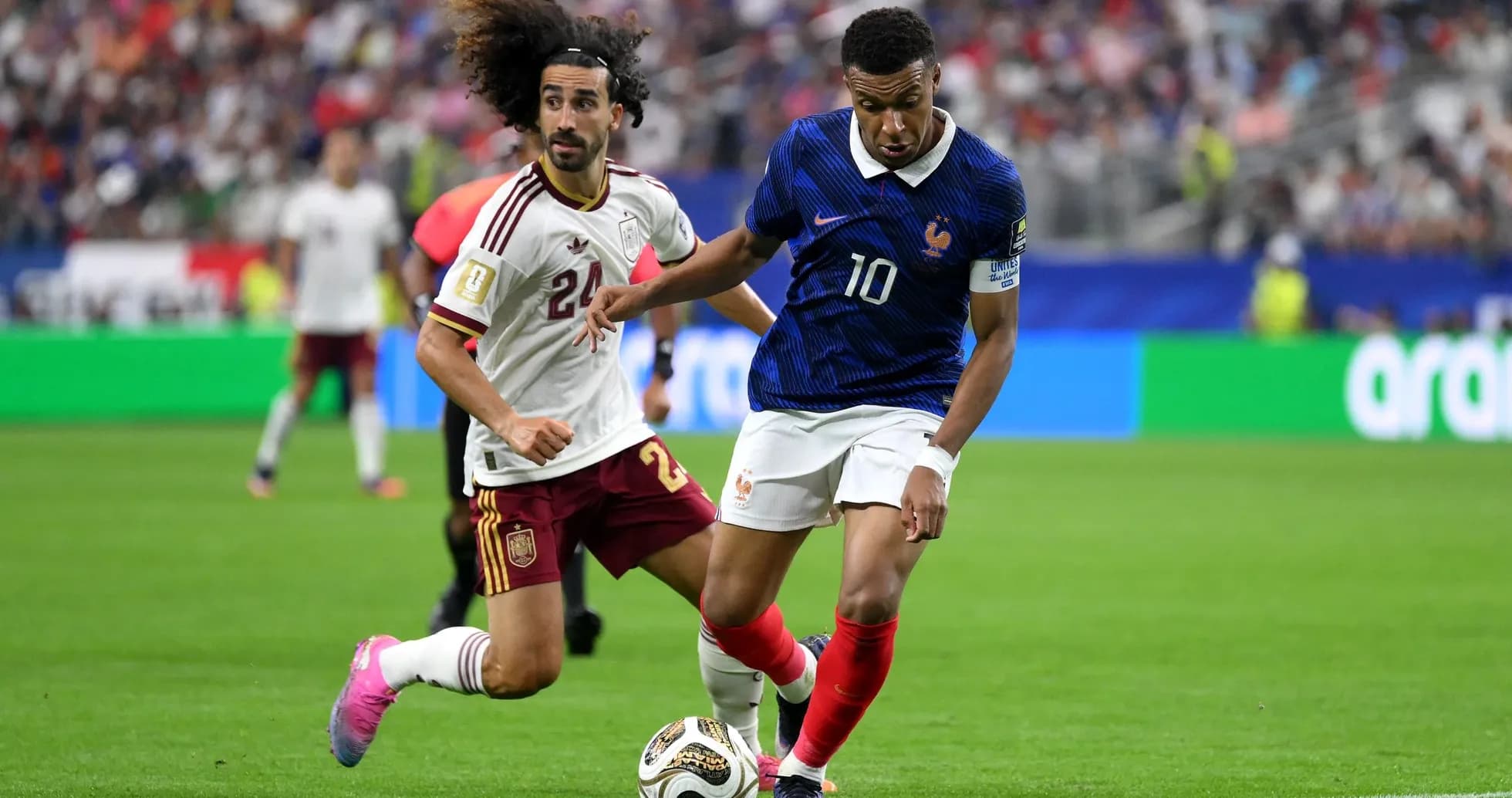
France’s statistical profile and lineup patterns point firmly towards a 4-2-3-1 structure, used in all 7 of their tracked World Cup matches. With 16 goals scored and only 4 conceded in that span, the balance between front-foot aggression and defensive control has been striking (2.3 scored, 0.6 conceded per match). Kylian Mbappé has been the tournament’s most explosive weapon, with 8 goals and 3 assists from 30 shots and 19 efforts on target, while Ousmane Dembélé adds 5 goals and 2 assists, plus 13 key passes. Michael Olise, leading the assist charts with 5, gives France a third creative hub, his 355 completed passes at 86% accuracy underpinning the team’s ability to sustain pressure.
Out of possession, France’s low goals-against tally over 7 games (only 4 conceded) suggests a compact mid-block with strong control in central zones, helped by a deep midfield pool including N’Golo Kanté, Aurélien Tchouaméni and Adrien Rabiot. Clean sheets in 4 of those 7 matches back up the idea that they can shut games down when required, even while committing numbers forward.
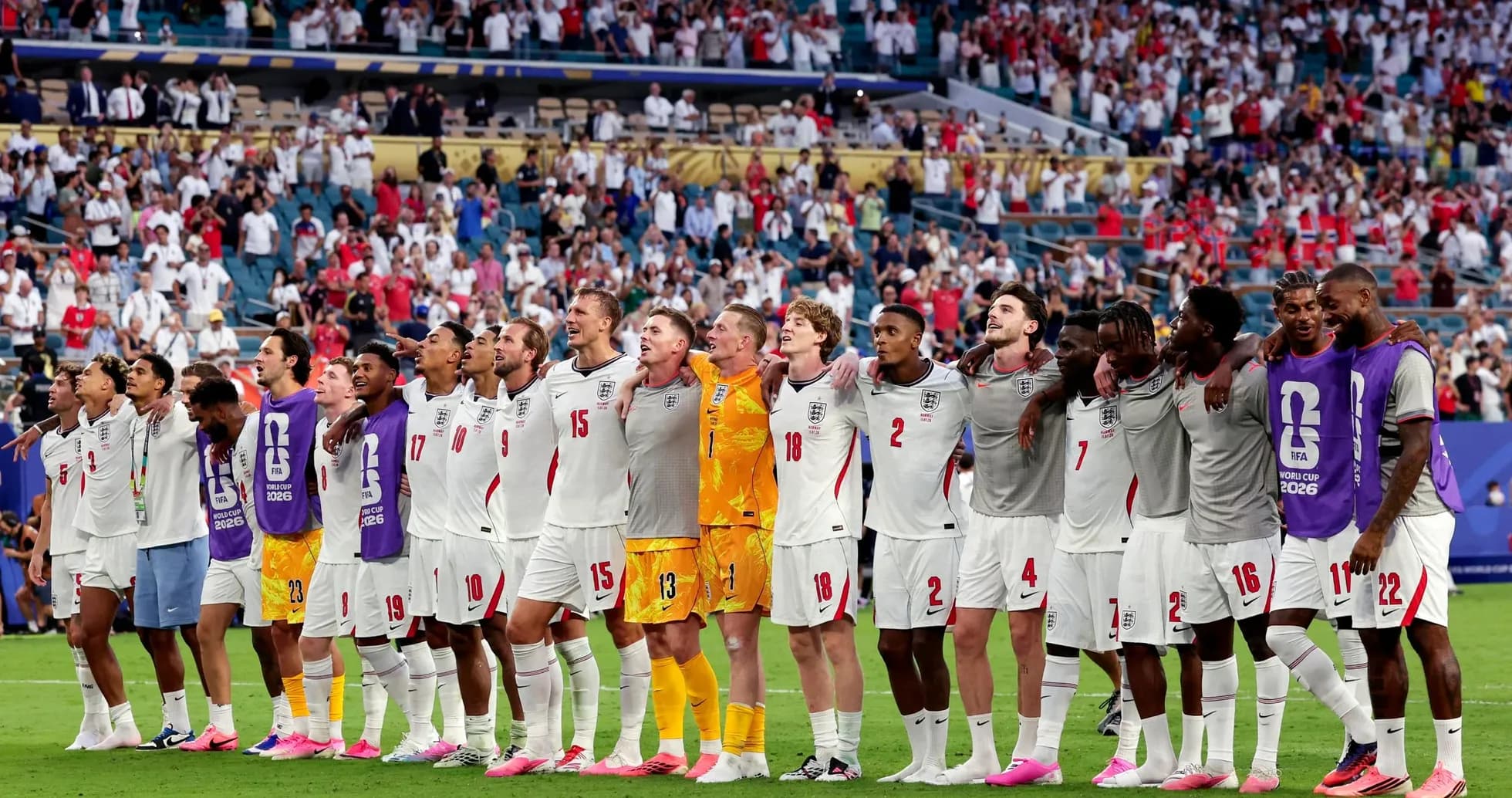
England’s data hints at a more flexible approach, alternating between 4-2-3-1 (6 matches) and 4-1-4-1 (1 match). They have scored 14 and conceded 8 across 7 games, numbers that speak to a side willing to open up in search of goals (2.0 for, 1.1 against per match). Jude Bellingham has been central to this: 6 goals, 1 assist, 15 shots and 223 completed passes show a midfielder who both drives attacks and links phases. Harry Kane matches that 6-goal tally, adding 1 assist and 12 shots on target, while wide threats like Bukayo Saka (3 assists, 5 key passes) and Anthony Gordon (3 assists, 6 key passes) stretch the pitch.
Defensively, England’s 8 goals conceded in 7 games (1.1 per match) and only 2 clean sheets suggest a back line that can be exposed, especially when the full-backs push on. Declan Rice’s presence as a screening midfielder is crucial, with 240 completed passes at 91% accuracy and 4 tackles, but disciplinary flashes such as Jarell Quansah’s red card earlier in the tournament underline that England can be forced into last-ditch defending under sustained pressure. Against France’s pace and movement between the lines, the shape of England’s double pivot and the distances between centre-backs and full-backs will be decisive.
Statistical Snapshot
- Competition: World Cup, season 2026 — 18 July 2026.
- Venue: Unknown, Unknown.
- Prediction: Win or draw — Double chance : France or draw.
- Win Probabilities: Home 45% / Draw 45% / Away 10%.
- Model: France 61.3 — England 38.8.
Betting Verdict
The prediction model leans clearly towards France avoiding defeat, recommending a “Double chance : France or draw” with win probabilities of 45% for France, 45% for the draw and just 10% for England. That stance is backed by France’s superior defensive record (only 2 goals conceded in the group stage and 4 across 7 matches) and their sharper recent edge in competitive head-to-head meetings, notably the 2-1 World Cup quarter-final win in December 2022. England’s attacking talent and 14-goal haul across 7 games mean they are more than capable of landing blows, but their higher concession rate (1.1 per match) and slightly lower overall index in the comparison model tilt the value towards France on the double-chance markets. In a match that could swing on fine margins and individual brilliance, siding with France not to lose looks the most logically grounded position.