.svg&w=384&q=75 "Pitchgist logo")
Juventus vs Fiorentina: Tactical Analysis of a 2-0 Victory
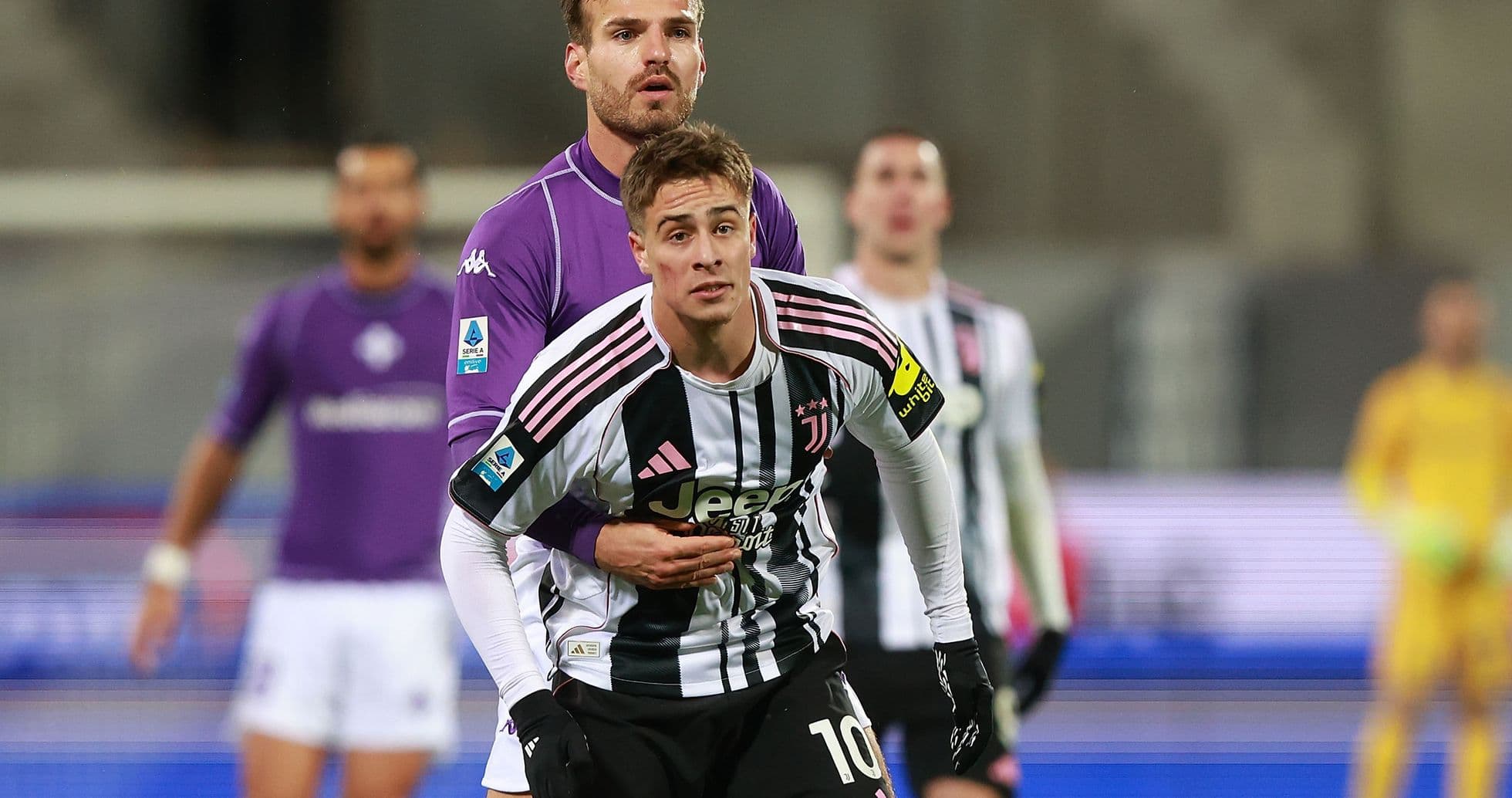
Under the grey Turin sky at Allianz Stadium, a late-season script unfolded that said as much about trajectories as it did about the 2–0 scoreline. Following this result in Serie A’s Regular Season - 37, Juventus remain in 6th on 68 points, still defined by a campaign of control and structure, while Fiorentina, 15th with 41 points, finally found the ruthless edge their numbers have long suggested they lacked.
This was not a dead rubber. Juventus came in with one of the league’s more balanced profiles: overall 59 goals for and 32 against across 37 matches, a robust overall goal difference of +27 built on defensive reliability and a home average of 1.8 goals scored and just 0.8 conceded. Fiorentina arrived as a puzzle: only 40 goals scored overall but 49 conceded, an overall goal difference of -9, their away profile especially fragile with 1.1 goals scored and 1.5 conceded on their travels. Yet in Turin, Paolo Vanoli’s side imposed a 4-3-3 that looked far more assured than a team with 14 overall defeats should.
I. The Big Picture: Structures and Intent
Luciano Spalletti’s Juventus lined up in a 4-2-3-1, a shape they have used 6 times this season, layered on top of a campaign mostly built in a back-three. M. Di Gregorio sat behind a back four of P. Kalulu, Bremer, L. Kelly and A. Cambiaso, with M. Locatelli and T. Koopmeiners as the double pivot. Ahead of them, a fluid trio of F. Conceicao, W. McKennie and K. Yildiz supported D. Vlahovic.
On paper, it was an attacking home posture befitting a side with 10 home wins and only 2 defeats across 19 matches. In practice, it became a story of sterile control, with Juventus’ usual defensive solidity intact but their attacking patterns blunted by Fiorentina’s compactness.
Vanoli’s Fiorentina used their season’s most familiar shape, the 4-3-3 that has started 14 times. D. de Gea anchored a back four of Dodo, M. Pongracic, L. Ranieri and R. Gosens. In midfield, C. Ndour, N. Fagioli and M. Brescianini formed a hard-working, ball-progressing trio, while F. Parisi and M. Solomon flanked R. Piccoli in a front line designed more for vertical running and pressing triggers than for slow construction.
The visitors’ away numbers this season have been contradictory: 5 wins and 6 draws on their travels, but 29 away goals conceded. In Turin, the same back line that has often creaked instead held firm, aided by a compact block and disciplined distances between lines.
II. Tactical Voids and Discipline
The only listed absentee was M. Kean for Fiorentina, missing with a calf injury. On paper he is an attacking option; in reality, his absence simplified Vanoli’s decisions, pushing R. Piccoli into a clear central reference role and keeping A. Gudmundsson as an impact option from the bench rather than a structural piece.
Juventus, by contrast, had a full complement and a deep bench: J. David, A. Milik, L. Openda, J. Boga and E. Zhegrova all waited as potential game-changers, with F. Kostic and K. Thuram as alternative profiles between the lines. The void, then, was not about bodies but about ideas. The 4-2-3-1 often left Locatelli isolated in first build-up and Vlahovic disconnected from the creative trio.
Discipline was a subtle but important undercurrent. Heading into this game, Juventus had shown a tendency to collect yellow cards in the 61–75 minute window (22.00% of their total yellows) and a late spike between 76–90 (20.00%). Fiorentina’s profile was even more volatile: a late-game surge of yellows between 76–90 minutes at 25.30%, and a notable red-card risk in that same window, where 66.67% of their league reds had arrived.
In Turin, though, Fiorentina’s back line – particularly Pongracic and Ranieri, both heavy card collectors this season – walked the line intelligently. Pongracic, who has 12 yellows overall and has committed 69 fouls, managed his aggression in duels with Vlahovic, stepping in front rather than through the man, while Ranieri, with 8 yellows and 1 red in the campaign, balanced front-foot interventions with recovery runs.
III. Key Matchups: Hunter vs Shield, Engine Room vs Enforcer
The marquee duel was always going to be Kenan Yildiz against Fiorentina’s defensive structure. Yildiz has been Juventus’ attacking talisman this season: 10 goals and 6 assists overall, 64 shots with 40 on target, and 76 key passes. He is not just a scorer but a creator, a carrier (149 dribble attempts, 78 successful) and a magnet for pressure.
Against Fiorentina’s 4-3-3, Yildiz often drifted inside from his nominal left-sided role in the three behind Vlahovic, trying to overload Fagioli’s zone. But Vanoli’s plan hinged on Pongracic and Ranieri holding a tight line while Ndour and Brescianini collapsed inward to close his half-spaces. With Dodo and Gosens narrowing aggressively, Yildiz rarely received the ball in his preferred pockets between lines.
The “Shield” in this duel was multi-layered. Pongracic’s season numbers tell the story: 26 blocked shots and 35 interceptions overall, a defender who reads danger early and is willing to throw himself into the line of fire. In Turin, that anticipation broke several of Juventus’ cutbacks and low crosses, forcing Yildiz and Conceicao to recycle rather than penetrate.
Behind Yildiz, the engine of Juventus’ structure is Manuel Locatelli. His season has been immense: 2720 passes overall with 46 key passes, 99 tackles, 23 successful blocks and 38 interceptions. He is both metronome and screen, and his duel with Fiorentina’s midfield three defined the rhythm of the contest.
N. Fagioli and M. Brescianini, supported by Ndour’s legs, set out to disrupt that rhythm. Rather than pressing high in waves, Fiorentina alternated mid-block phases with targeted jumps onto Locatelli’s first touch. When he dropped between Bremer and Kelly to build, Parisi and Solomon narrowed their starting positions to block central lanes, forcing Juventus wide to Cambiaso and Kalulu. That, in turn, reduced McKennie’s ability to arrive late in the box – a significant factor given his 5 goals and 5 assists overall, many of them born from timing rather than pure creativity.
On the other side, Fiorentina’s own “Hunter vs Shield” duel was subtler. R. Piccoli, not a headline scorer in the league’s statistical charts, nonetheless acted as a pivot against a Juventus defence that has conceded only 16 goals at home. Bremer and Kelly, used to defending their box in a compact back three across the season, had to adjust to wider spaces in the 4-2-3-1. Fiorentina’s wide forwards constantly attacked the channels outside them, stretching the line and creating room for late midfield runs.
IV. Statistical Prognosis and What the Scoreline Says
From a season-long lens, Juventus’ defensive solidity is unquestionable: 16 clean sheets overall, with only 32 goals conceded in 37 matches and an overall goals-against average of 0.9. They are a side built to win by margins, not to chase games. Fiorentina, conversely, have struggled to keep things tight, with 49 goals conceded overall and just 10 clean sheets.
Yet this match inverted expectation. Fiorentina’s away fragility – 29 goals conceded on their travels before this fixture – was replaced by a compact, disciplined block. De Gea’s presence added calm, but it was the coherence in front of him that mattered: clear roles, narrow distances, and a willingness from Parisi and Solomon to track deep.
Juventus’ attacking numbers suggest they should generate steady threat at home, with a home goals-for average of 1.8 and only 4 home matches all season where they failed to score. This became one of those rare blanks, a product of Fiorentina’s structure and of Juventus’ own predictability in the final third. Even their set-piece threat, often a fallback in tight games, was muted by Pongracic’s dominance in the air and Ranieri’s aggression on second balls.
In a world of xG and models, the underlying profiles heading into this game would have favoured Juventus: stronger overall goal difference, better home record, more reliable defence. But Fiorentina’s performance hinted at a team finally aligning its tactical plan with its individual pieces. The late-season form line – “WDLDD” – suggested incremental improvement; this win in Turin gave it substance.
For Juventus, the broader prognosis remains stable: their defensive platform and structured build-up are sustainable, but the ceiling of this project will depend on making players like Yildiz and McKennie less dependent on improvisation and more integrated into rehearsed patterns. For Fiorentina, this was a rare afternoon when their numbers bent to their will rather than the other way around – a reminder that even a side with an overall goal difference of -9 can, on the right day, dictate terms in one of Serie A’s hardest stadiums.