.svg&w=384&q=75 "Pitchgist logo")
Iran and New Zealand Draw 2-2 in Group G Clash
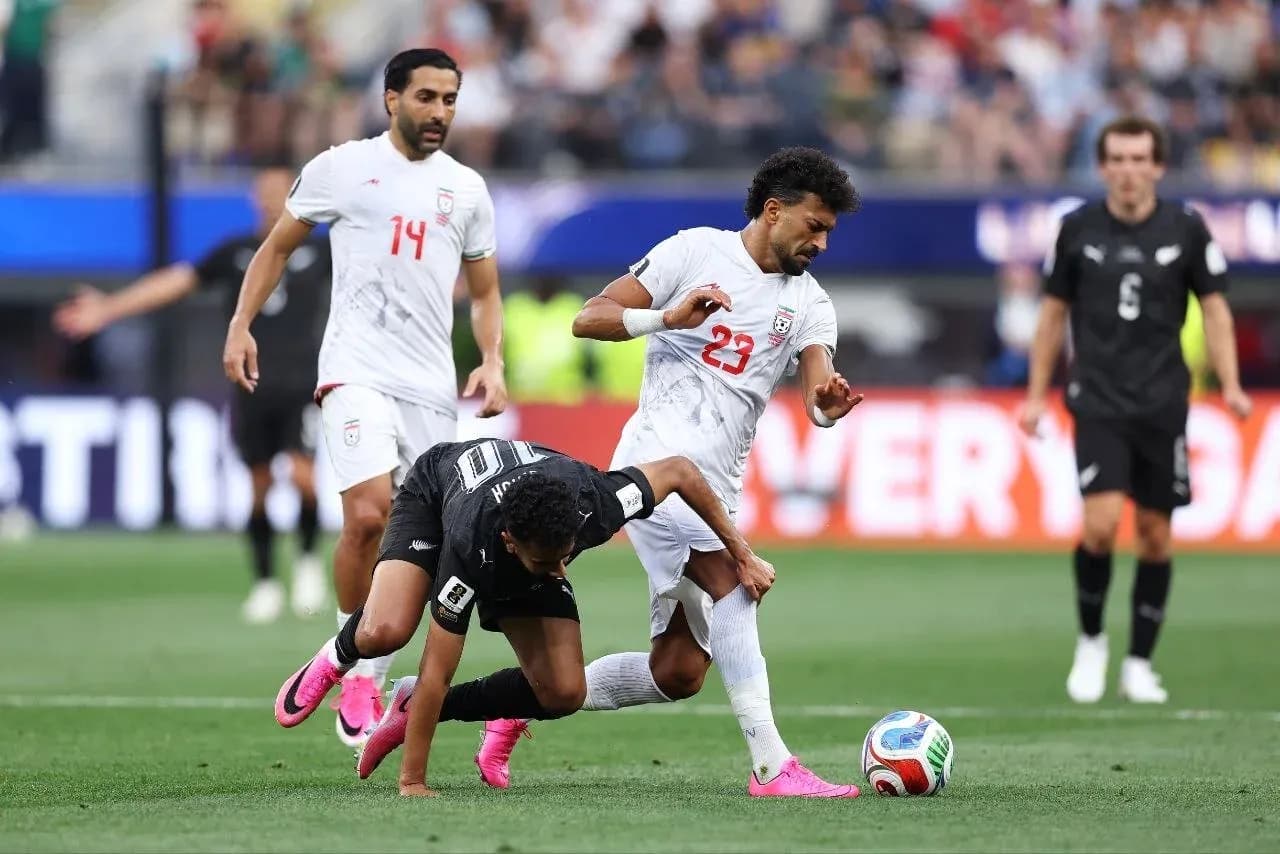
Iran 2-2 New Zealand at SoFi Stadium opened Group G with an even contest that reflected both sides’ strengths and flaws. With both teams already in Round of 32 qualifying positions, the draw moves Iran to 2 points and keeps them second in the group, while New Zealand also rise to 2 points and stay top on goal difference, leaving the section finely poised after two matches each.
Match Report
The game’s pattern was set early. In the 7th minute New Zealand struck first: 7' New Zealand goal — E. Just (assisted by C. Wood). Wood dropped off the front line to link play and slid a pass into Just, who finished clinically to punish Iran’s loose defensive shape.
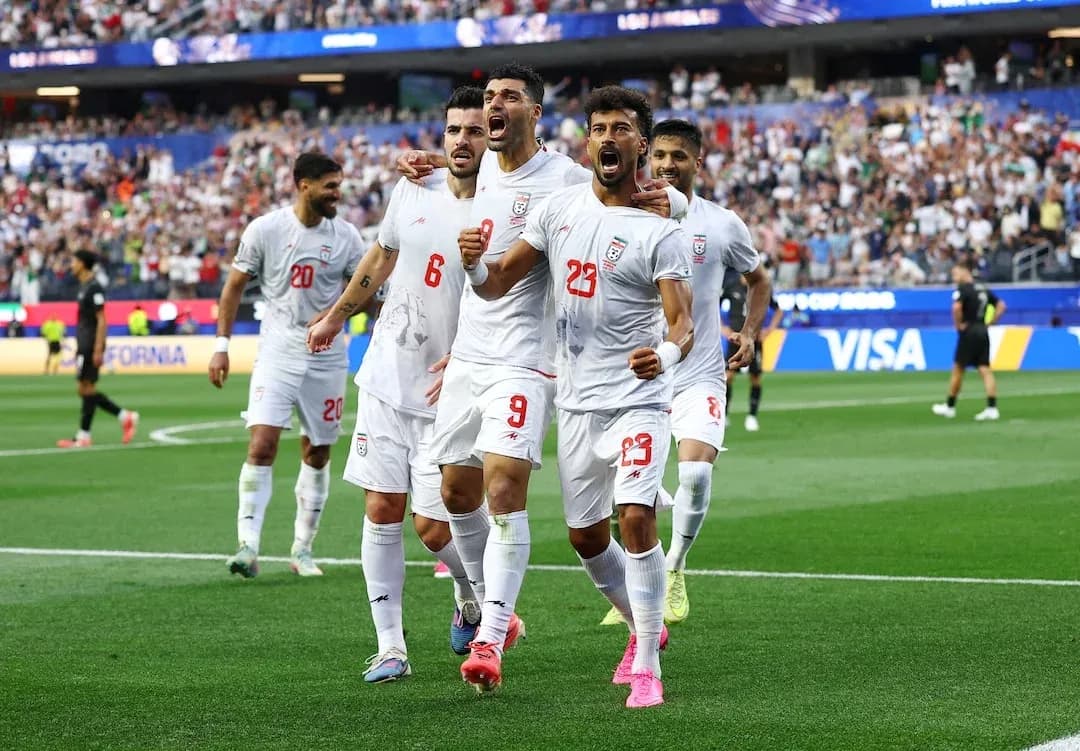
Iran responded with growing territorial pressure and found their equaliser just after the half-hour. 32' Iran goal — R. Rezaeian (unassisted). The right-back advanced high, cut inside and drove a low shot beyond Max Crocombe, a solo effort that rewarded Iran’s sustained spell of attacks down the flanks.
At half-time Amir Ghalenoei looked to inject more direct threat. 46' M. Ghaedi replaced A. Yousefi (Iran), adding a more vertical option from wide areas. Shortly after, he freshened the front line again: 53' A. Alipour replaced S. Moghanlou (Iran), a like-for-like change to increase depth of runs behind New Zealand’s centre-backs.
New Zealand, however, regained the lead almost immediately after that second Iranian change. 54' New Zealand goal — E. Just (assisted by C. Wood). Once more Wood combined smartly with Just, who timed his movement into the box to finish, capitalising on Iran’s slow defensive reset after the substitution.
Iran refused to fold and levelled again just past the hour. 64' Iran goal — M. Mohebi (assisted by R. Rezaeian). Rezaeian overlapped on the right and delivered a measured ball that Mohebi met with a composed finish, underlining Iran’s most reliable route to goal: wide overloads and late runs into the area.
Ghalenoei then adjusted his midfield balance. 65' E. Hajsafi replaced S. Ghoddos (Iran), bringing on the experienced left-sided player to stabilise Iran’s structure and help protect the full-backs against transitions.
New Zealand responded with a triple defensive and midfield refresh on 68 minutes to cope with Iran’s momentum. 68' B. Old replaced L. Cacace (New Zealand), 68' R. Thomas replaced C. McCowatt (New Zealand), adding fresh legs at left-back and in the attacking midfield line to support out-of-possession pressing and ball circulation.
As the game entered its final quarter-hour, New Zealand further rotated their back line. 78' C. Elliot replaced T. Payne (New Zealand), a straight swap at right-back to maintain energy against Iran’s persistent right-sided attacks.
Iran made their final attacking adjustment on 80 minutes. 80' A. Hosseinzadeh replaced M. Taremi (Iran), introducing a more mobile forward profile to press New Zealand’s build-up and attack space between the lines, though without producing a decisive third goal.
The only card of the match arrived late. 89' E. Hajsafi (Iran) — yellow card (Tripping), a tactical foul as New Zealand tried to launch a counter-attack through midfield.
In stoppage time, New Zealand turned to their bench once more to manage the closing moments. 90+2' J. Randall replaced S. Singh (New Zealand) and 90+2' T. Bindon replaced M. Stamenic (New Zealand), with Randall offering fresh running in the attacking band and Bindon adding defensive security as New Zealand protected the draw.
Fixture Statistics & Tactical Audit
- xG: Iran 1.5 vs 1.24 New Zealand
- Possession: Iran 48% vs 52% New Zealand
- Shots on Target: Iran 4 vs 8 New Zealand
- Goalkeeper Saves: Iran 6 vs 2 New Zealand
- Blocked Shots: Iran 5 vs 2 New Zealand
The 2-2 scoreline broadly matched the underlying numbers, with Iran’s slight xG edge (1.5 vs 1.24) reflecting the quality of their central and wide combinations, particularly around Rezaeian’s advanced positioning and Mohebi’s late entries into the box. New Zealand, despite having less xG, generated more shots on target (8 vs 4), indicating a more direct and efficient route to goal through Chris Wood’s hold-up play and Just’s penetrative movement. Iran’s back line often allowed New Zealand to reach finishing zones, forcing Alireza Beiranvand into six saves, but Iran compensated through volume and variety of attempts, including five blocked shots that showed New Zealand’s defensive line was frequently under pressure inside its own area. Overall, neither side did enough to clearly merit three points on chance quality alone, and the draw felt a fair reflection of a game where attacking strengths and defensive vulnerabilities were evenly shared.
Standings Update & Seasonal Impact
For Iran, this second successive 2-2 draw moves them to 2 points, with 4 goals scored and 4 conceded, leaving their goal difference at 0. They remain 2nd in Group G’s Round of 32 qualifying positions, but with defensive issues still evident, the margin for error in their final group match is slim if they are to consolidate progression and potentially challenge New Zealand for top spot.
New Zealand also advance to 2 points, with 4 goals for and 4 against, likewise maintaining a goal difference of 0. They stay 1st in Group G on tie-breakers, underlining that their attacking structure around Wood and Just is effective at this level, but their inability to close out leads in consecutive 2-2 draws keeps the group open and invites pressure from the teams below in the final round of fixtures.
Lineups & Personnel
Iran Starting XI
- GK: Alireza Beiranvand
- DF: Ramin Rezaeian, Shoja Khalilzadeh, Ali Nemati, Milad Mohammadi
- MF: Mohammad Mohebi, Saman Ghoddos, Saeid Ezatolahi, Aria Yousefi
- FW: Shahriar Moghanlou, Mehdi Taremi
New Zealand Starting XI
- GK: Max Crocombe
- DF: Tim Payne, Finn Surman, Michael Boxall, Liberato Cacace
- MF: Joe Bell, Marko Stamenic, Callum McCowatt, Sarpreet Singh, Elijah Just
- FW: Chris Wood
Post-Match Verdict
This was an attacking showcase from both sides but also a demonstration of defensive fragility. Iran were expansive and often incisive in wide areas, a justifiable approach given their slight xG superiority (1.5 vs 1.24) and volume of total shots (17 vs 14), yet they allowed New Zealand too many clean looks at goal, as evidenced by the disparity in shots on target (4 vs 8). New Zealand were clinical in exploiting those openings, repeatedly using Wood as a focal point to feed Just, but their defensive unit conceded 17 shots and five blocks, indicating a vulnerable structure under sustained pressure. In tactical terms, Iran’s substitutions improved their control and attacking fluency but did not fully resolve transition issues, while New Zealand’s rotations preserved energy without significantly altering the game’s balance. A draw was the logical outcome: Iran’s proactive, chance-creating approach offset by lapses at the back, and New Zealand’s efficient finishing undermined by their inability to protect two separate leads.