.svg&w=384&q=75 "Pitchgist logo")
Fernando Muslera's World Cup Nightmare: A Reluctant Exit
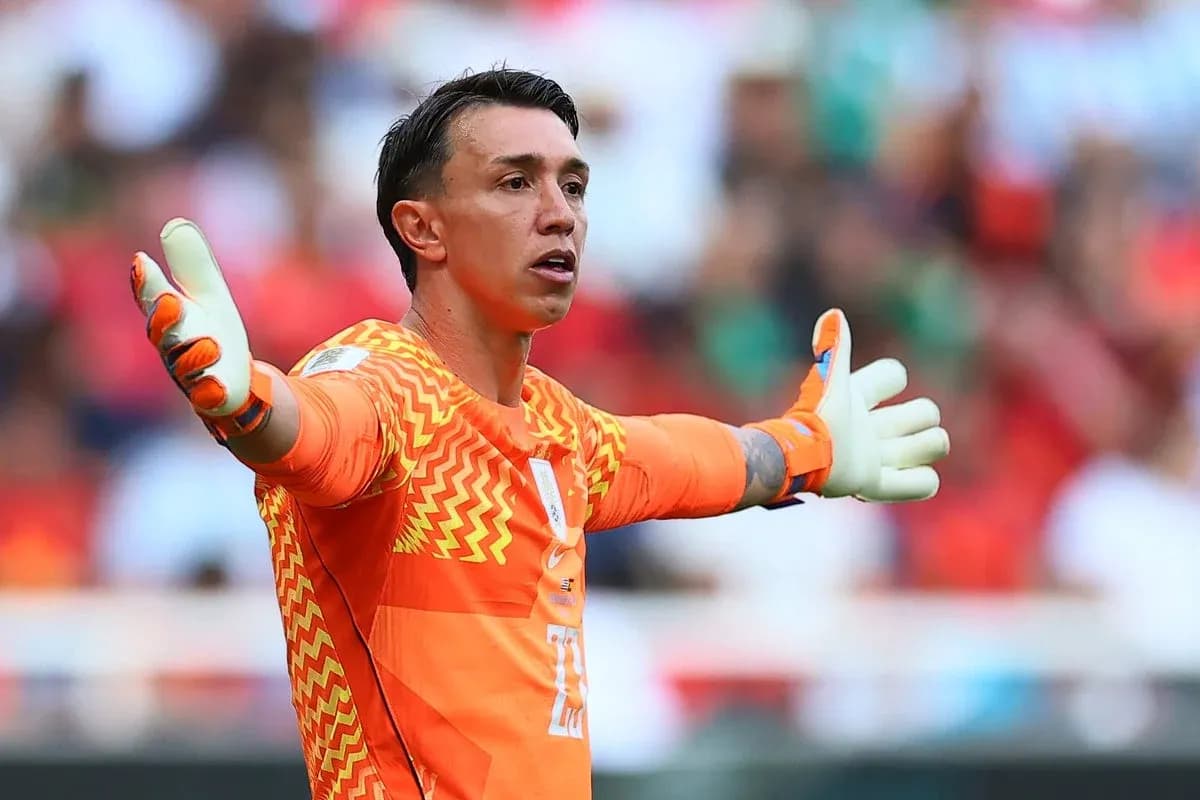
Fernando Muslera’s World Cup ended not with a save, but with a walk.
Hauled off at half-time in Uruguay’s 1-0 defeat to Spain, the veteran goalkeeper became the reluctant symbol of a campaign that unravelled in slow motion and then collapsed altogether.
A nightmare sealed with a spill
Uruguay came into the final Group J game needing only a draw after stalemates with Cabo Verde and Saudi Arabia. Survival, not spectacle. Keep Spain at arm’s length, manage the moments, get over the line.
Instead, their most experienced player handed the initiative away.
Alex Baena’s effort should never have troubled a goalkeeper of Muslera’s pedigree. It dribbled towards the corner, hardly struck with venom. Yet it slipped through, squirming past him and into the net, a soft goal that cut Uruguay open far deeper than the scoreboard suggested.
Muslera erupted, roaring in anger, gesturing in fury – at himself, at the moment, at a World Cup that had turned into a personal ordeal. The Estudiantes keeper has endured a torrid tournament, and this mistake carried an unwanted piece of history with it.
It marked the first time since detailed records began in 1966 that a goalkeeper has been directly responsible for three errors leading to goals in a single World Cup campaign. A brutal statistic, and one that will now follow him whenever this tournament is remembered.
A change that came from the player
When Muslera did not emerge for the second half and Sergio Rochet jogged on in his place, the assumption was obvious: Marcelo Bielsa had made a ruthless call.
The head coach quickly corrected that narrative.
“The Muslera change was not my decision, it was Fernando,” Bielsa told Uruguayan television after the defeat. The goalkeeper, Bielsa made clear, had effectively taken himself out of the firing line.
It was a remarkable moment in Uruguay’s World Cup history. Not since substitutions were first permitted at Mexico 1970 had La Celeste changed their goalkeeper during a World Cup match. On this night, that rarity underlined the scale of the crisis.
Bielsa added that he “couldn't boost the Uruguay players” and admitted he felt he left “nothing to the country,” a stark self-assessment from a coach who arrived with such conviction and such a defined identity.
Valverde withdrawn, questions multiply
If Muslera’s exit drew gasps, another change only deepened the sense of turmoil.
With Uruguay chasing the result that would keep them alive, Bielsa removed Federico Valverde after 56 minutes. The Real Madrid star, subdued and unable to impose himself, trudged off as another symbol of a campaign that never truly caught fire.
Bielsa later said that with Valverde’s departure he wanted “more presence in the attack,” a tactical justification that will do little to quiet the noise around him. Speculation over disagreements within the camp had already started to swirl before this match. Now, with elimination confirmed and two points from three games on the board, his future looks more fragile than ever.
Spain saw the job out, Uruguay could not find a response, and a group that should have been manageable instead became a trap.
La Celeste leave the World Cup with their goalkeeper broken by errors, their star midfielder substituted in a decisive moment, and their coach under intense scrutiny.
The question now is not how this campaign went wrong. That played out in real time. The question is whether Uruguay will trust Bielsa to rebuild after a World Cup that ended with their most seasoned player asking to step away when they needed him most.