.svg&w=384&q=75 "Pitchgist logo")
France's Tactical Mastery Over Senegal in World Cup Opener
Under the New Jersey lights at MetLife Stadium, France’s 3–1 win over Senegal felt less like an opening skirmish and more like a statement of intent. In a World Cup Group Stage opener that finished in regular time, Didier Deschamps’ side blended structure and star power, while Bouna Thiaw Pape’s Senegal showed flashes of threat but ultimately bowed to superior depth and detail.
I. The Big Picture – Group I takes shape
Following this result, the standings in Group I are already sharply defined. France sit 2nd with 3 points from 1 match, a goal difference of +2 built on 3 goals for and 1 against overall. Their entire campaign so far has been “at home” on paper: 1 home fixture played, 1 home win, with 3.0 home goals scored on average and 1.0 home goal conceded on average. It is a clean, clinical opening: no clean sheets yet, but no stumble either.
Senegal, by contrast, are 3rd with 0 points from 1 match, their overall goal difference of -2 a mirror image of France’s, with 1 overall goal for and 3 against. On their travels they have played 1 away game, losing it 3–1, averaging 1.0 away goal scored and 3.0 away goals conceded. The group table already tells a story of one heavyweight on schedule and one dangerous outsider playing catch-up.
Both managers trusted the same structural lens on the game: a 4-2-3-1 for France, a 4-2-3-1 for Senegal. But how they inhabited those shapes made all the difference.
II. Tactical Voids – Control vs exposure
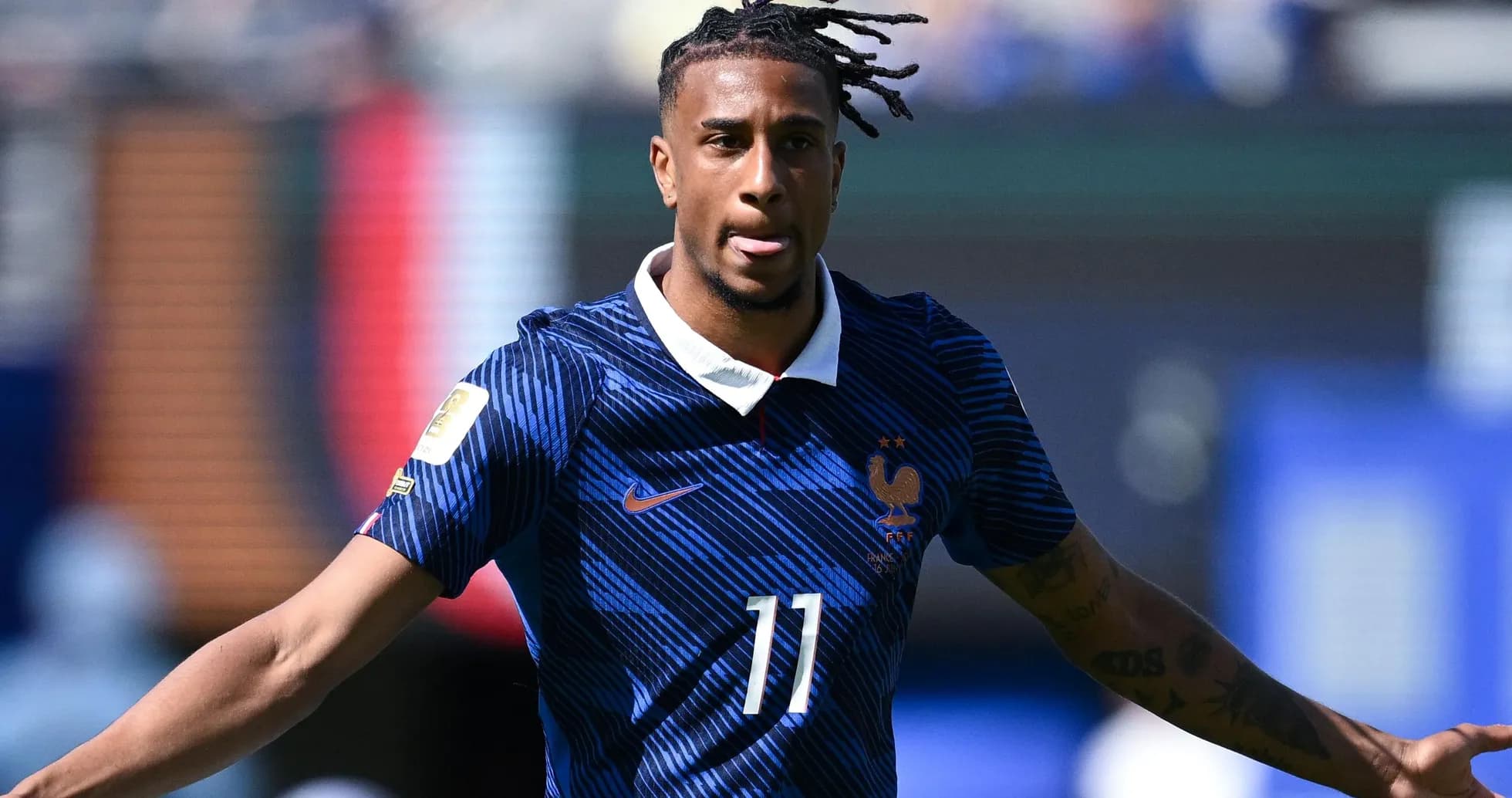
France’s XI was a familiar Deschamps blueprint. Mike Maignan anchored a back four of Jules Kounde, Dayot Upamecano, William Saliba and Theo Hernandez. Ahead of them, Aurelien Tchouameni and Adrien Rabiot formed a double pivot, with a fluid band of three – Michael Olise, Ousmane Dembele and Desire Doue – operating behind Kylian Mbappe.
The structure gave France two stabilising anchors. Tchouameni sat as the metronome and screen, while Rabiot shifted laterally to plug half-spaces and support build-up. With Olise and Dembele starting in the nominal “wide” roles of the 4-2-3-1 but often drifting inside, the system regularly morphed into a 2-3-5 in possession: Kounde staying conservative on the right, Hernandez surging on the left, and Mbappe pinning the back line.
Senegal mirrored the shape but not the control. Edouard Mendy stood behind a back four of Krepin Diatta, Kalidou Koulibaly, Moussa Niakhate and Moussa Diouf. Idrissa Gueye and Pape Gueye formed the double pivot, with Ismaila Sarr, Lamine Camara and Sadio Mane supporting Nicolas Jackson up front.
On paper, that double pivot should have matched France’s. In practice, it was stretched. With Mane and Sarr eager to spring transitions and Jackson constantly threatening depth, Idrissa Gueye and Pape Gueye were often left to patrol a vast midfield corridor against France’s rotating trio of Olise, Dembele and Doue plus the late surges of Rabiot. The absence of any listed suspensions or injuries in the data suggests this was a deliberate tactical gamble rather than enforced compromise – and it left Senegal vulnerable between the lines.
Disciplinary data for both sides is blank across all time ranges, indicating no notable card trends so far in the tournament and no suspensions shaping selection. This was strength vs strength, not a patched-up opener.
III. Key Matchups – Hunter vs Shield, Engine Room vs Engine Room
Hunter vs Shield
Kylian Mbappe arrived at this World Cup already in full predator mode. In total this campaign, he has 2 goals from 1 appearance, with 4 shots and all 4 on target, plus an 8.2 rating. His efficiency is ruthless: 16 total passes at 93% accuracy, 6 dribbles attempted and a willingness to duel (9 total duels, 2 won). He did not need volume; he needed moments.
That posed the central question for Senegal’s shield: Koulibaly and Niakhate. The raw team numbers underline the scale of their task. On their travels, Senegal have conceded 3.0 away goals on average, all 3 shipped in this single match. Overall, they have conceded 3 goals from 1 fixture, with no clean sheets. The back line was therefore asked to defy both Mbappe’s form and their own early statistical profile.
They could not. Mbappe’s movement off the left shoulder of Koulibaly, combined with France’s ability to find him early through Tchouameni and Rabiot, bent Senegal’s defensive line backwards. Once stretched, the spaces for Olise and Dembele to attack the channels multiplied. Even when Mbappe did not score directly, his presence distorted the geometry of Senegal’s block.
On the other side, Senegal’s own bright attacking note came from the bench. Ibrahim Mbaye, listed as a 17-year-old attacker for Senegal, already has 1 goal from 1 appearance, needing just 1 shot on target and 8 passes at 87% accuracy to make his mark. He is the reminder that Senegal have weapons beyond the established names, and that France’s defence – which overall has conceded 1 goal from 1 home game – is not yet impenetrable.
Engine Room – Playmaker vs Enforcer
France’s creative axis is more distributed than the numbers might suggest. Bradley Barcola, with 1 goal from 1 appearance and a 7.9 rating in just 10 minutes, underscores the depth of attacking options Deschamps can unleash from the bench. But the true engine lies deeper, in Tchouameni and Rabiot’s ability to both shield and serve.
For Senegal, the clearest creative spark so far in this World Cup is Iliman Ndiaye. In total this campaign he has 1 assist from 1 appearance, created with 10 passes at 90% accuracy and 1 key pass, plus an interception that hints at his work rate. He is not in the starting XI here, but his profile screams “game-changer” – the sort of player who can tilt a tight contest when introduced between the lines.
The tactical tension is obvious: Ndiaye’s ability to receive on the half-turn between France’s midfield and defence against the reading and anticipation of Tchouameni. If Senegal chase games later in the group, that duel will become central.
IV. Statistical Prognosis – France in control, Senegal searching for balance
France’s early statistical fingerprint is that of a contender: in total this campaign they have scored 3 goals and conceded 1, averaging 3.0 goals for and 1.0 against overall. There are no penalties taken, no penalties missed, and no clean sheets yet – a hint that while their attack is humming, there is still defensive refinement to come.
Senegal’s numbers point to a side caught between ambition and stability. Overall they have 1 goal for and 3 against, with 1.0 goals scored and 3.0 conceded on average on their travels. They have also yet to keep a clean sheet or fail to score, which suggests open, high-variance football rather than tight control.
Overlay an Expected Goals lens, and the pattern is likely clear even if the raw xG values are not provided: France, with their volume of high-quality final-third talent and structured 4-2-3-1, will consistently generate better chances than they concede against most opponents. Senegal, relying on transition and individual brilliance from Mane, Sarr, Jackson and Ndiaye, will create dangerous moments but risk conceding too many.
Following this result, the tactical verdict is straightforward. France look like a side whose squad architecture and early numbers align: a powerful attack, a functional if not flawless defence, and depth pieces like Barcola ready to swing games late. Senegal, meanwhile, must tighten the spaces around Idrissa Gueye and Pape Gueye without blunting their forward thrust. If they can rebalance that midfield, the goals of Ibrahim Mbaye and the creativity of Iliman Ndiaye suggest they still have the tools to turn Group I on its head.