.svg&w=384&q=75 "Pitchgist logo")
Crystal Palace vs Arsenal: Premier League Season Finale Insights
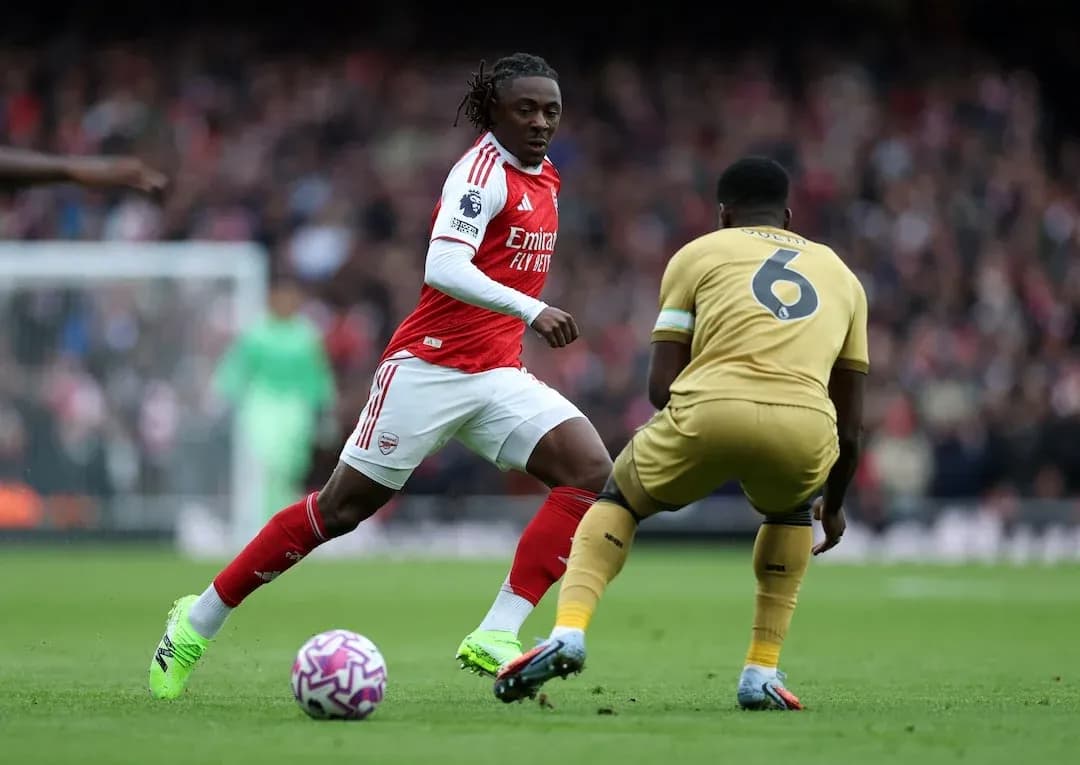
Selhurst Park’s final act of the 2025–26 Premier League season closed on a knife-edge: Crystal Palace, 15th and frayed after a long campaign, pushed league leaders Arsenal all the way before falling 2–1 in a match that distilled both clubs’ seasonal identities into ninety tense minutes.
I. The Big Picture – contrasting seasons, familiar patterns
Following this result, the table underlines the gulf between them. Palace finish 15th on 45 points with a goal difference of -10, their overall 41 goals for and 51 against matching the numbers on the standings board. Arsenal, by contrast, complete the campaign as champions-in-all-but-name: 1st, 85 points, and a goal difference of 44 built on 71 goals scored and just 27 conceded overall.
The scoreline at Selhurst – 1–2 – felt like a microcosm. Palace’s season-long averages tell the story of a side living on fine margins: at home they average 1.0 goals for and 1.2 against, away 1.2 for and 1.5 against, overall 1.1 scored and 1.3 conceded per game. Arsenal arrive as the division’s most balanced machine: at home they average 2.2 goals for and 0.6 against, on their travels 1.6 for and 0.8 against, overall 1.9 scored and 0.7 conceded. The champions are used to controlling games; Palace are used to surviving them.
Oliver Glasner stayed loyal to the club’s seasonal blueprint, rolling again with the 3-4-2-1 that has started 33 league matches. Dean Henderson sat behind a back three of Nathaniel Clyne, Jefferson Lerma and Chadi Riad, with Daniel Muñoz and Will Hughes flanking Daichi Kamada and the young R. Cardines. Ahead, J. Devenny and I. Sarr worked pockets around lone striker J. S. Larsen.
Mikel Arteta, meanwhile, chose his more recently favoured 4-2-3-1 – the secondary shape this season behind his 4-3-3 – but one that offered control and verticality. Kepa Arrizabalaga started in goal, shielded by a back four of Martin Zubimendi, C. Mosquera, Piero Hincapié and Riccardo Calafiori. Christian Nørgaard and M. Lewis-Skelly formed the double pivot, with Noni Madueke, M. Dowman and Gabriel Martinelli supporting Gabriel Jesus.
II. Tactical Voids – absences and disciplinary shadows
Both squads were subtly reshaped by who was missing. Palace’s midfield anchor C. Doucouré was out with a knee injury, depriving Glasner of his most natural ball-winner and screen. C. Richards (ankle injury) and B. Sosa (injury) further thinned defensive depth, while the oddity of E. Nketiah being listed under Palace but ruled out with a thigh injury simply meant one less forward option on paper.
For Arsenal, the absences were more structural than numerical. J. Timber’s ankle injury and B. White’s knee problem removed two of Arteta’s most versatile defenders, forcing a back four built on Hincapié’s aggression and Calafiori’s ball progression rather than the usual blend of physicality and comfort stepping into midfield.
Over the season, Palace have flirted with disciplinary trouble without completely losing control. Their yellow-card timings are scattered, but spikes at 31–45', 46–60' and 76–90' (each 18.42%) show a side that tends to get dragged into tactical fouls at turning points – just before half-time, just after, and in the closing stretch. Their red-card profile is especially telling: one red between 46–60' and another between 61–75', each representing 50.00% of their dismissals, underlining how their aggression can boil over as the game opens up.
Arsenal’s yellow distribution peaks late: 25.49% of their bookings come between 76–90', with another 21.57% between 61–75'. This is a team that presses and protects leads deep into matches, willing to take cards to break rhythm. Crucially, they have no reds in any time range, a mark of control even when they operate on the edge.
III. Key Matchups – Hunter vs Shield, Engine Room vs Enforcer
The “Hunter vs Shield” narrative started before a ball was kicked. Palace’s most ruthless finisher this season, J. Mateta, began on the bench, but his profile hung over the contest. With 12 league goals from 32 appearances, he has been Palace’s sharpest weapon, his 56 shots and 32 on target speaking to a volume striker who keeps asking questions. His duels total (292, with 110 won) and 10 tackles, plus 6 successful blocks, underline why Glasner trusts him as a first line of defence as much as a penalty-box predator.
Arsenal’s own hunter, Viktor Gyökeres, waited among the substitutes. His 14 goals overall, from 41 shots and 22 on target, have added a direct, penalty-box presence to Arsenal’s attack. He is not merely a finisher: 320 passes and 20 key passes, plus 37 dribble attempts, show a forward comfortable linking play and attacking space. With 3 penalties scored and none missed, he also embodies Arsenal’s season-long ruthlessness from the spot: 4 penalties taken, 4 scored, 100.00% converted.
Against them, the shield is collective. Arsenal’s defensive record – just 27 goals conceded overall, 11 at home and 16 away – has been built on the kind of structure Mosquera and Hincapié represent: front-foot defenders who step out to engage. Palace, by contrast, have relied heavily on individuals like Maxence Lacroix, even though he was on the bench here. Over the campaign he has played 35 times, blocking 18 shots, making 60 tackles and 45 interceptions, and committing 34 fouls while drawing 19. His single red card is the cost of operating on that line, but his presence in the squad gives Glasner a stopper who relishes duels (333 contested, 204 won).
In the “Engine Room” duel, the absence of Doucouré heightened the importance of Hughes and Kamada. Hughes’ task was to disrupt Arsenal’s rhythm, a job made harder against a double pivot of Nørgaard and Lewis-Skelly. Nørgaard’s remit was simple: protect Arsenal’s 0.7 goals-against average overall by screening transitions, while Lewis-Skelly’s energy allowed the visitors to spring quickly into Madueke and Martinelli.
Creative weight for Arsenal still sat on the bench in the form of M. Ødegaard and Leandro Trossard, both among the league’s top assist providers with 6 each overall. Ødegaard’s 828 passes and 40 key passes this season, plus his 84% accuracy, mark him as the conductor Arteta can introduce to tilt any game. Trossard, with 757 passes, 36 key passes and 6 goals, offers a dual threat between the lines. Even when they did not start, their looming presence shaped how Palace had to defend the half-spaces.
IV. Statistical Prognosis – xG, margins, and what this game told us
We do not have explicit xG numbers in this dataset, but the season-long patterns allow a reasoned tactical reading. Arsenal, averaging 1.9 goals per game overall while conceding 0.7, are a side that typically generates significantly more and better chances than they allow. Palace, at 1.1 scored and 1.3 conceded overall, live in games where the xG gap is small and often tilted against them, especially against elite opposition.
A 2–1 away win for Arsenal fits that underlying profile. Their away average of 1.6 goals for and 0.8 against suggests a typical scoreline on their travels hovers around 2–1 or 2–0 in their favour. Palace’s home pattern – 19 scored, 23 conceded – points to tight, low-scoring contests where a single moment in either box decides everything.
Following this result, the narrative is clear. Palace’s 3-4-2-1 once again allowed them to compete structurally, with Henderson protected by three centre-backs and wing-backs who could jump to Arsenal’s wide threats. But without Doucouré’s bite and with Mateta only able to influence the game from the bench, their attacking ceiling remained limited against the league’s most complete defensive unit.
Arsenal, for their part, showed why their season has been defined by control rather than chaos. Even with a rotated back line and key creators starting among the substitutes, the spine of Kepa, Mosquera, Hincapié, Nørgaard and Gabriel Jesus maintained a level of stability that kept Palace’s xG profile modest and their own edge intact.
In the end, Selhurst Park’s final whistle felt less like a twist and more like confirmation. Palace, 15th and still searching for a way to turn structure into sustained threat, bowed out narrowly. Arsenal, 1st and relentless, simply did what their numbers have said all year: they found a way to win.