.svg&w=384&q=75 "Pitchgist logo")
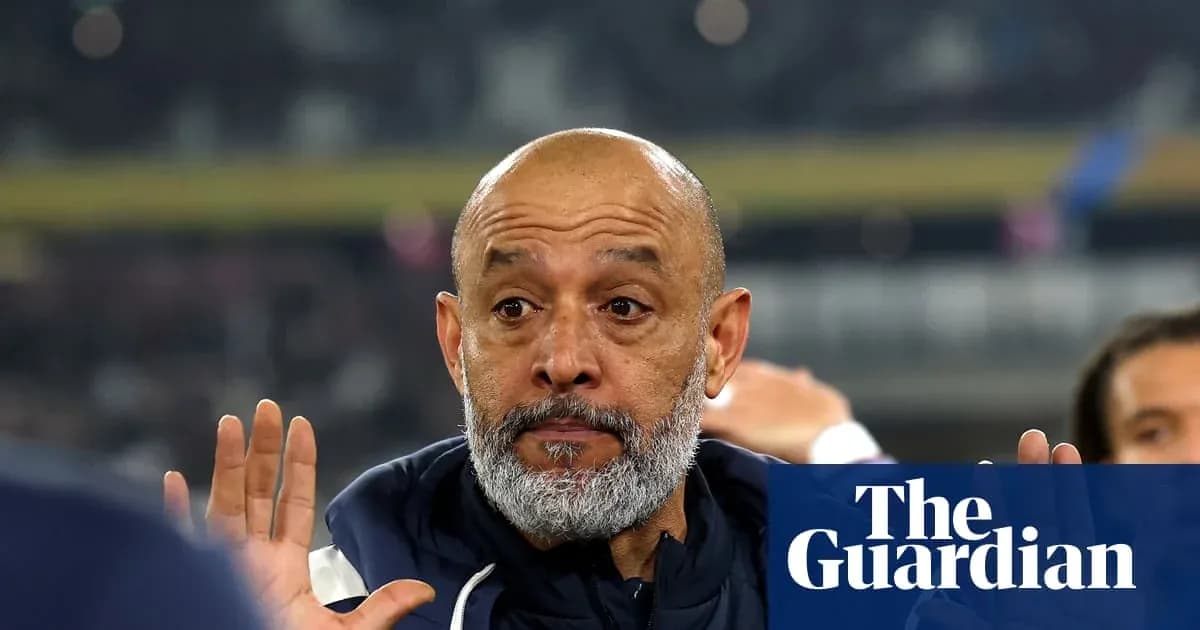
West Ham Power Struggle: Nuno Espírito Santo's Future in Jeopardy
West Ham’s relegation has not just dragged the club into the Championship. It has dragged the boardroom into open disagreement over what happens next with Nuno Espírito Santo.
The Portuguese was summoned for crisis talks on Monday, with a verdict on his future expected before the end of the week. On paper, the outcome looks simple: the club go down, the manager goes too. Inside the corridors of power, it is anything but.
At the heart of the split sit the two dominant figures in the modern West Ham story. On one side, David Sullivan, the largest shareholder and long-time powerbroker. On the other, Daniel Kretinsky, the Czech billionaire whose influence grows with every percentage point of equity he acquires.
Kretinsky, the club’s second-largest shareholder, is understood to want Nuno to stay and lead the rebuild in the Championship. Sullivan is far less convinced.
That tension matters now more than ever. Kretinsky has a deal in place to increase his stake and draw level with Sullivan’s control of the club. Both men are poised to buy into the Gold family’s 25.1% holding, a move that would leave them sharing power in the boardroom and reshaping the internal balance that has defined West Ham for 16 years.
Relegation complicates everything. It is expected to hit the value of that deal and has already sharpened the debate over who should be trusted to pick up the pieces.
Sullivan, 77, has been the dominant voice at West Ham for more than a decade and a half, but the slide into the second tier has turned that status into a lightning rod. He was loudly targeted by sections of the support during last Sunday’s win over Leeds, with fans pinning much of the club’s decline on decisions made above the dugout.
One source has put the chances of Sullivan deciding to sell after relegation at “50-50”. The picture is blurred. His direct involvement in the talks with Nuno suggests a man still intent on shaping what comes next rather than walking away from it. He is also understood to be active in discussions over how to rebuild the squad and construct a side capable of an immediate promotion push.
The manager’s contract gives both sides leverage. Nuno arrived last September on a three-year deal after replacing Graham Potter, but the agreement contains a clause that allows West Ham to dismiss the 52-year-old without paying compensation. The escape hatch works both ways: Nuno is free to walk away as well.
His appetite for the fight in the Championship will weigh heavily in the final call. Does he want to stay and front a gruelling, high-pressure promotion campaign? Or does he cut ties now, before the dust has even settled on relegation?
Names are already circling in the background. Scott Parker, Slaven Bilic and Gary O’Neil are all viewed as potential successors, three very different profiles for three very different possible futures. Parker, with his experience of the Championship grind. Bilic, a familiar face with emotional credit in the bank. O’Neil, the rising operator who has impressed in difficult circumstances elsewhere.
For now, West Ham stand at a crossroads, with ownership power, financial stakes and managerial direction all tangled together. The next decision from that divided boardroom will not just determine Nuno’s fate. It will set the tone for whether this relegation becomes a brief detour or the start of a much longer exile.