.svg&w=384&q=75 "Pitchgist logo")
Tactical Analysis of Mexico vs England Round of 16 Match
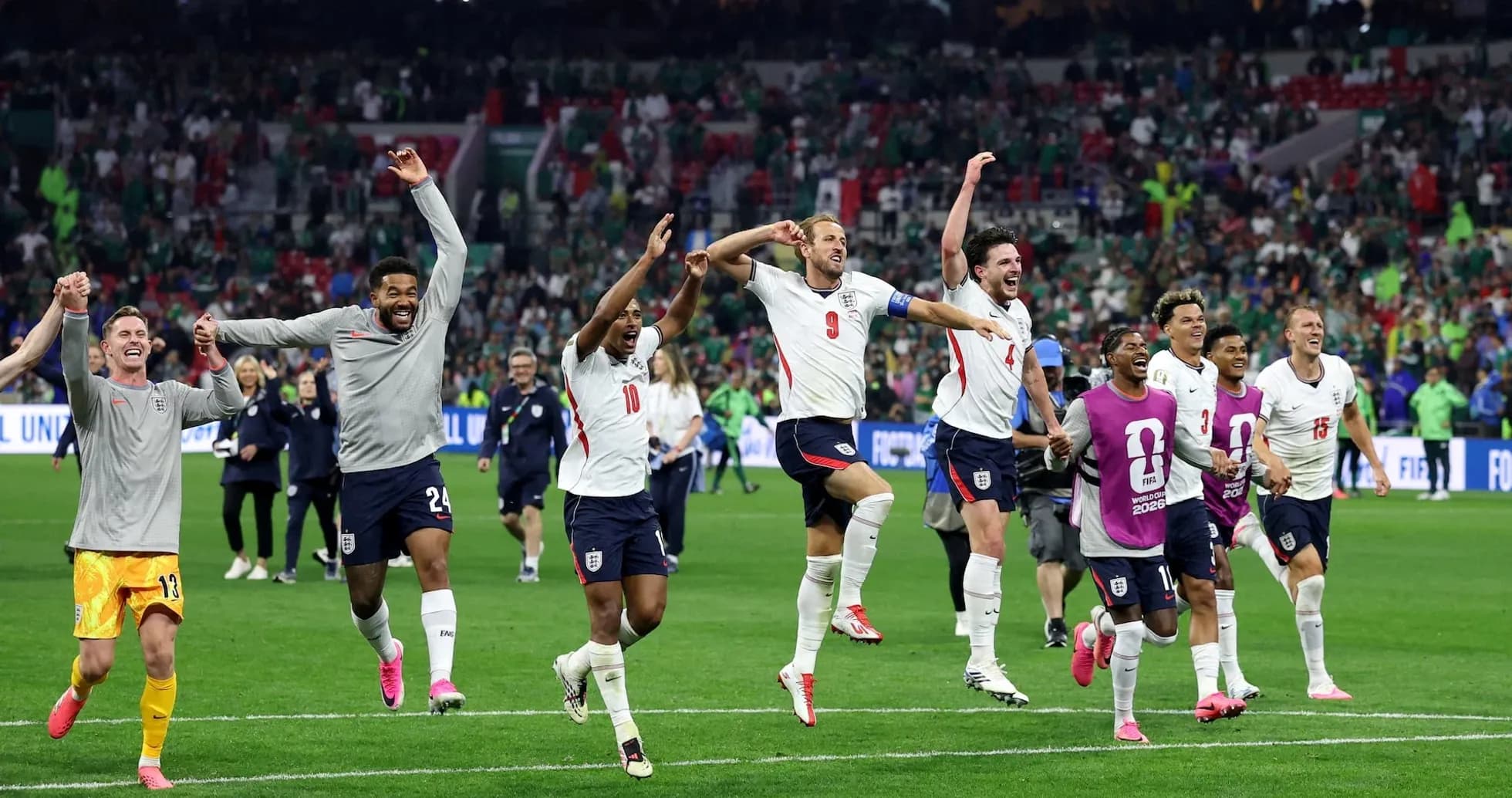
Mexico’s Round of 16 defeat to England at Estadio Azteca was defined less by the scoreline and more by the contrasting tactical identities on show. Mexico, in a 4-3-3 under Javier Aguirre, tried to impose themselves with long spells of structured possession and wide overloads. England, set up in a 4-2-3-1 by Thomas Tuchel, accepted a reactive role, leaning on vertical efficiency, transitional quality and ruthless execution in the final third to win 3-2 despite playing a full half with ten men.
Mexico’s 4-3-3 had a clear ball-dominant brief. With 67% possession, they built systematically from the back through Raúl Rangel, César Montes and Johan Vásquez, using Erik Lira as the single pivot and Luis Romo and Gilberto Mora as advanced No. 8s. The full-backs, Jorge Sánchez and Jesús Gallardo, pushed high and wide, effectively turning the structure into a 2-3-5 in sustained attacks. This produced a heavy shot volume: 20 total shots, 12 from inside the box, and 7 blocked, reflecting how often Mexico managed to pin England deep and force last-ditch interventions.
Yet the shot profile betrayed a recurring problem: turning territory into truly high-quality chances. Mexico’s xG of 1.87 from those 20 attempts shows a lot of volume but relatively modest chance value per shot. Much of their threat came from crosses and second balls rather than clear, through-the-lines penetrations. Julián Quiñones and Roberto Alvarado frequently received wide-to-inside, while Raúl Jiménez acted as a classic target reference, but England’s compact central block under Declan Rice and Ezri Konsa often shepherded Mexico into less dangerous zones.
Set plays became a major lever for Mexico’s territorial dominance. They generated 12 corner kicks to England’s 2, repeatedly loading the six-yard box with Vásquez, Montes and later Edson Álvarez. However, England’s zonal-plus-man hybrid defending in the area, anchored by Jordan Pickford, held firm. The fact that England faced 5 shots on goal but Pickford made 3 saves indicates that while Mexico did find the target, they were often forced into manageable shooting angles rather than clear one-on-ones.
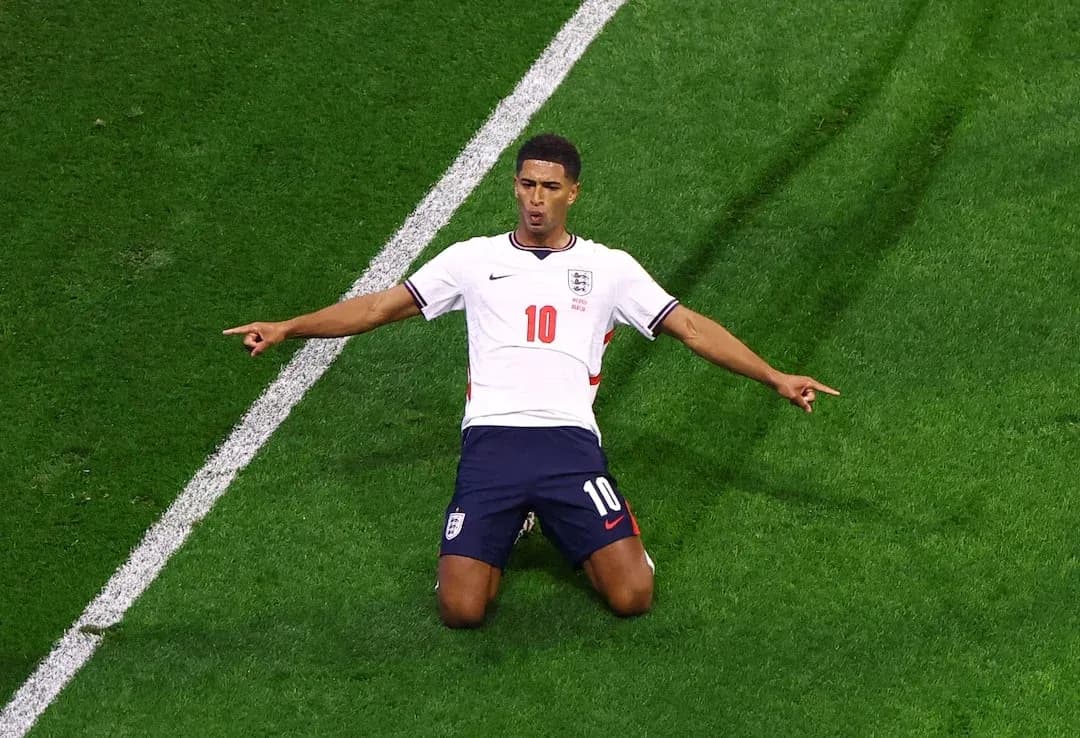
Out of possession, Mexico’s high pressing and counter-press were aggressive but occasionally naïve. The front three stepped early onto England’s first line, with the midfield three jumping in support, which helped lock England into their own half for long stretches. But when England did escape the initial press, Mexico’s two centre-backs were exposed against the pace and timing of Jude Bellingham, Bukayo Saka and Anthony Gordon. England only attempted 6 shots in total, but 4 came from inside the box and they converted three of them, underlining how clean their attacking sequences were once they broke the first line.
England’s 4-2-3-1 without the ball often resembled a 4-4-1-1, with Bellingham sliding alongside Rice and Elliot Anderson to form a compact midfield trio and Harry Kane dropping onto Lira. England were content with just 33% possession and 244 passes (vs Mexico’s 455), focusing on verticality: win the ball, find Bellingham between the lines, and then release the wide runners or Kane early. Their xG of 1.55 from only 6 shots shows an attacking plan based on select, high-value situations rather than accumulation.
Tuchel’s side also had to manage the game-state after Jarell Quansah’s red card for “Serious foul” at 54’. Down to ten, England rebalanced by tightening their block and sacrificing some width. The substitutions of John Stones for Saka and later Djed Spence and Dan Burn were clearly about stabilising the back line and protecting the central lane. England dropped their line a few metres, conceded more territory, and trusted their box defence and Pickford’s command to absorb Mexico’s waves of pressure.
Discipline and game management were another tactical layer. England committed only 7 fouls to Mexico’s 14 but collected 4 yellow cards and 1 red, many tied to “Unsportsmanlike conduct” or early “Roughing”, suggesting a combative, sometimes emotional response to Mexico’s dominance of the ball and the Azteca atmosphere. Mexico’s 2 yellow cards, both for “Unsportsmanlike conduct”, came as they chased the game and pushed numbers forward, occasionally losing composure in transition defence.
In midfield, the Rice–Anderson double pivot was crucial. Rice, booked in the 1st minute, walked a disciplinary tightrope but remained England’s main screening presence, constantly blocking central lanes into Jiménez and stepping out to contest second balls. Anderson’s role was more shuttling: he supported full-backs, tracked Mexican No. 8s and helped launch counters. Even with a man down, England’s central compactness forced Mexico to recycle play wide and rely on crosses rather than incisive through passes.
For Mexico, Aguirre’s substitutions were aimed at increasing attacking punch and half-space creativity. Santiago Giménez for Gilberto Mora and Brian Gutiérrez for Luis Romo at 61’ signalled a shift towards a more aggressive, dual-striker dynamic and extra support between the lines. Later introductions of Álvaro Fidalgo and Guillermo Martínez further tilted the structure towards a 4-2-4 in possession. This helped sustain pressure and contributed to their penalty goal, but also left them vulnerable to counters that England, already ahead, chose not to over-commit to exploiting.
The defensive metrics underline the different risk profiles. Mexico’s 2 goalkeeper saves and negative goals prevented (-0.15) for Raúl Rangel indicate that England’s few chances were slightly better than the goals conceded might suggest, and that Rangel (Mexico) did not significantly outperform expectation. Conversely, Jordan Pickford (England) also posted -0.15 goals prevented with 3 saves, implying that while Mexico’s volume was high, the average shot quality allowed England’s goalkeeper to manage without having to produce extraordinary interventions.
Passing accuracy further frames the tactical story. Mexico completed 420 of 455 passes (92%), reflecting long, controlled phases and a patient, circulation-heavy approach. England, at 195 of 244 (80%), were more direct, accepting a lower completion rate in exchange for progression and speed. Mexico’s structure produced territorial dominance and late pressure; England’s produced scoreboard control and, ultimately, knockout progression.
In summary, this was a classic clash between a possession-heavy 4-3-3 and a compact, transition-focused 4-2-3-1. Mexico controlled the ball, the corners and the shot count; England controlled the spaces that mattered, maximised their limited entries into the box, and, even with ten men, managed the defensive block and game rhythm well enough to protect a 3-2 lead at Estadio Azteca.