.svg&w=384&q=75 "Pitchgist logo")
Morocco Falls to France in World Cup Quarterfinals: A New Era Begins
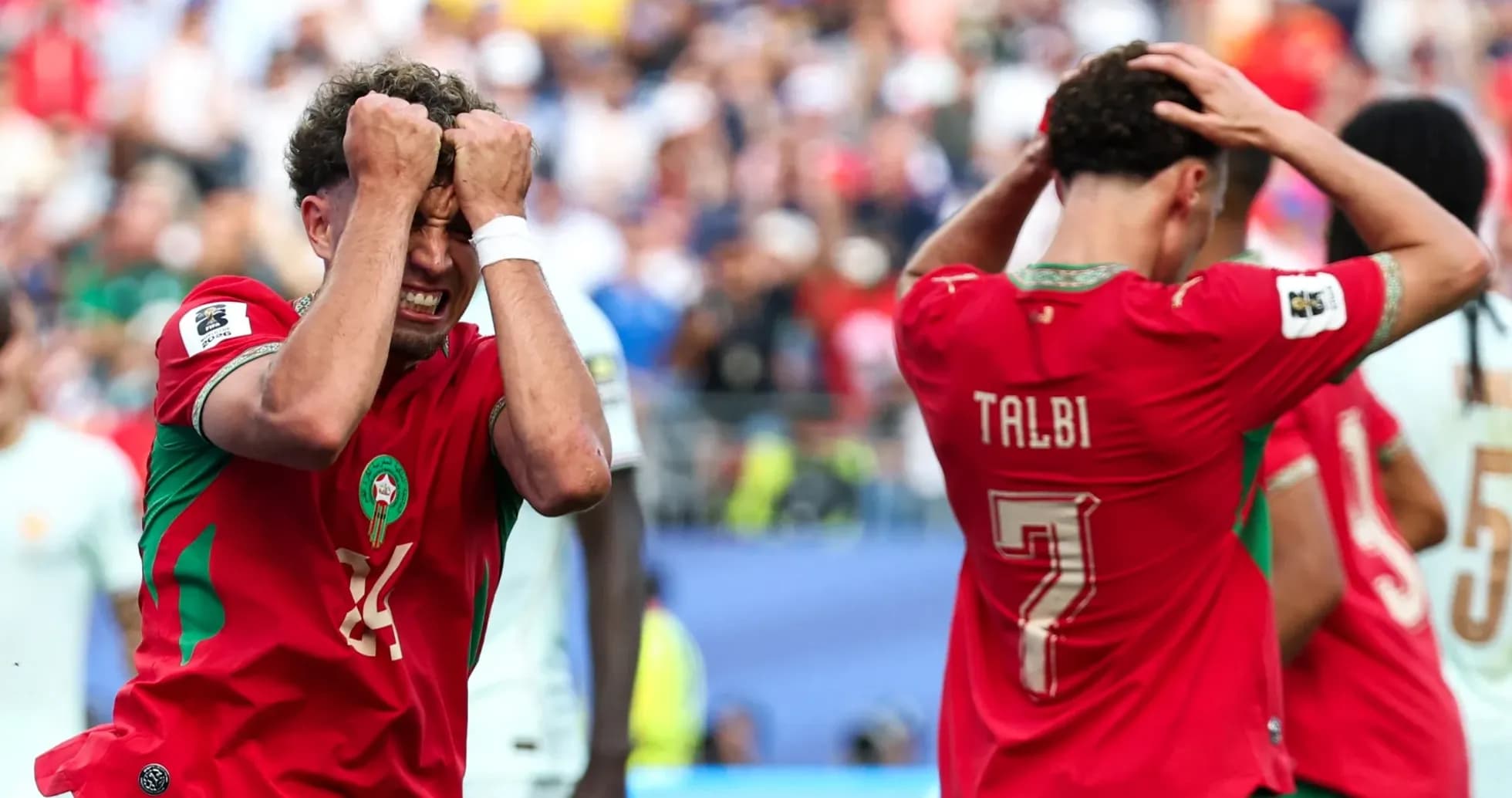
Boston, United States – By the final whistle, the Moroccan flags were still draped over shoulders, but many of their owners had already crossed an invisible line. Their team was out of the World Cup. Their allegiance for the rest of the tournament was clear.
They had just joined the Kylian Mbappe fan club.
On a blistering afternoon on the US East Coast, France’s captain needed barely six second-half minutes to turn a tense quarterfinal into a statement. One ruthless finish. One burst and cut-back that carved open Morocco again. A 2-0 win, a place in the last four, and a growing sense among even the defeated that they had just been run over by something close to unstoppable.
“France are an unstoppable force,” said Morocco fan Yaseen Maroufi, shrugging as he shuffled out of the stadium, the sting of elimination softened by reluctant admiration. “France are the team to beat, and it’s very hard to beat them at the moment.”
He was hardly alone. The word “unstoppable” floated around the concourses like a chant of its own.
Revenge on hold
This was supposed to be the night Morocco settled a score.
The 2022 semifinal defeat to France still sits deep in the national memory, a rare bruise in a storybook run. The first quarterfinal of 2026 came loaded with that history: a younger Moroccan side, a new coach, and the same opponent standing between them and another seismic step.
The mood before kick-off mixed belief with realism. Hopes were pinned on the freshness of this Atlas Lions squad, on tactical discipline, on the idea that lightning might strike twice for African football’s trailblazers. There was also a quieter, shared wish among Moroccan fans: that Mbappe, the man who had tormented them four years earlier, might finally have an off day.
For half an hour, it looked like that prayer might be answered.
When France won a penalty in the 29th minute, the stadium held its breath. Mbappe placed the ball, then waited. And waited. Player jostling, encroachment, the referee’s instructions – the delay dragged on. The French captain hesitated in his run-up and rolled a tame effort to Yassine Bounou’s right. Morocco’s hero of 2022 guessed correctly and gathered it with ease.
The roar from the Moroccan end was visceral. Fists punched the air. “Dima Maghreb” thundered around the stands. For a moment, the script felt like it might be rewritten.
The miss summed up a first half played on a tightrope. Both teams were cautious, wary of committing bodies forward, fearful of the counterpunch. France probed but rarely sliced through. Morocco contained, pressed selectively, and trusted their shape. Chances were rationed, nerves were not.
Space, and punishment
The restart flipped the tone.
Morocco came out bolder, stepping higher into French territory, daring to test the back line that had looked so comfortable before the break. They carved out their only shot on target of the night early in the second half, only for it to be swallowed up by the French defence and goalkeeper.
That attacking intent carried a price. As the Atlas Lions pushed on, gaps began to appear where there had been none. And space, against this France side, is an invitation to disaster.
Mbappe started to find it on the left. A shimmy, a burst, a feint inside. The Moroccan defence, so compact in the first 45, suddenly had to turn and chase. In the 60th minute, the dam finally broke. Mbappe cut through, worked the angle, and buried his finish for his eighth goal of the 2026 World Cup.
The Moroccan section fell silent. The French end exploded.
Six minutes later, the captain turned provider. Again he drifted into that left channel, again he twisted his marker, and this time he slid the ball across for Ousmane Dembele. The winger, already enjoying a prolific tournament, did the rest, sweeping in his fifth goal of the World Cup.
With that, France wrote a small piece of history: the only team ever to have two players score five or more goals in the same World Cup.
Morocco never truly recovered. They chased, they harried, but the earlier balance had vanished. Mbappe kept spinning his dizzying circles around tired legs, stretching the game, drawing fouls, draining belief. The red shirts still ran, but the running now felt desperate, not defiant.
The first half had offered them parity. The second half ripped it away.
Chants fade, belief lingers
As the clock ticked down, the soundtrack of the stadium shifted. “Dima Maghreb” – relentless, proud, deafening for so long – began to fade. In its place, “Allez les Bleus” rose from the French supporters who had spent much of the evening drowned out.
They knew what they were watching. A young French side, already world champions in 2018, now looked ready to chase another trophy and perhaps a dynasty.
“It was wonderful to watch all this French talent,” said French American fan Claude Beyanoun, standing beside his son Zach, both wrapped in tricolores. For them, this was confirmation, not surprise.
For Morocco, it was something more complicated. The scoreline, 2-0, mirrored 2022. The sense of being pushed aside by the same opponent, on another grand stage, cut deep. Hopes of revenge had been real. So was the pain of seeing them brushed away with familiar ruthlessness.
Yet even in defeat, there was a stubborn thread of optimism. This was a younger Morocco, one still growing into itself, one that will walk into 2030 as co-hosts and, in their own minds at least, contenders.
“We didn’t win this one, but we’ll win the next World Cup at home,” said Hamza, a Morocco fan who offered only his first name, already looking four years ahead.
The faces around him were tired, some tear-streaked, many resigned. But they kept their scarves on. They kept their flags up.
“We must carry on after the loss,” Hamza added. “This is football. This is life.”
On a scorching day in Boston, France marched on with a superstar in full flight and history at his feet. Morocco walked away beaten by the same score, by the same giant, but with another chapter added to a story that is clearly not finished yet.