.svg&w=384&q=75 "Pitchgist logo")
Spain vs France: Tactical Clash in World Cup Semi-Finals
Under the roof in Arlington, the World Cup’s Semi-finals brought together two sides whose entire tournament had been building toward this collision: France, devastating in transition and front‑loaded with star power, and Spain, a possession machine with a defensive record bordering on perfection. By the final whistle at Dallas Stadium, Spain’s 2–0 win felt less like an upset and more like the logical conclusion of a clash between structure and chaos.
I. The Big Picture – styles colliding in a cage match
Both teams arrived as group winners and unbeaten in regular time. In total this campaign, France had played 7 matches, winning 6 and losing only 1, with 16 goals scored and 4 conceded. That gives them an attacking output of 2.3 goals per game in total and just 0.6 conceded, a profile of a heavyweight who usually lands the first punch. Spain, over their own 7 matches in total, had been even more watertight: 13 goals scored at 1.9 per game, but only 1 conceded overall – an extraordinary average of 0.1 goals against.
Those numbers framed the night: France as the tournament’s most explosive attack, Spain as its most suffocating defence. The Semi-finals stage, neutral venue and knockout tension stripped away home/away nuances; this was pure identity versus identity.
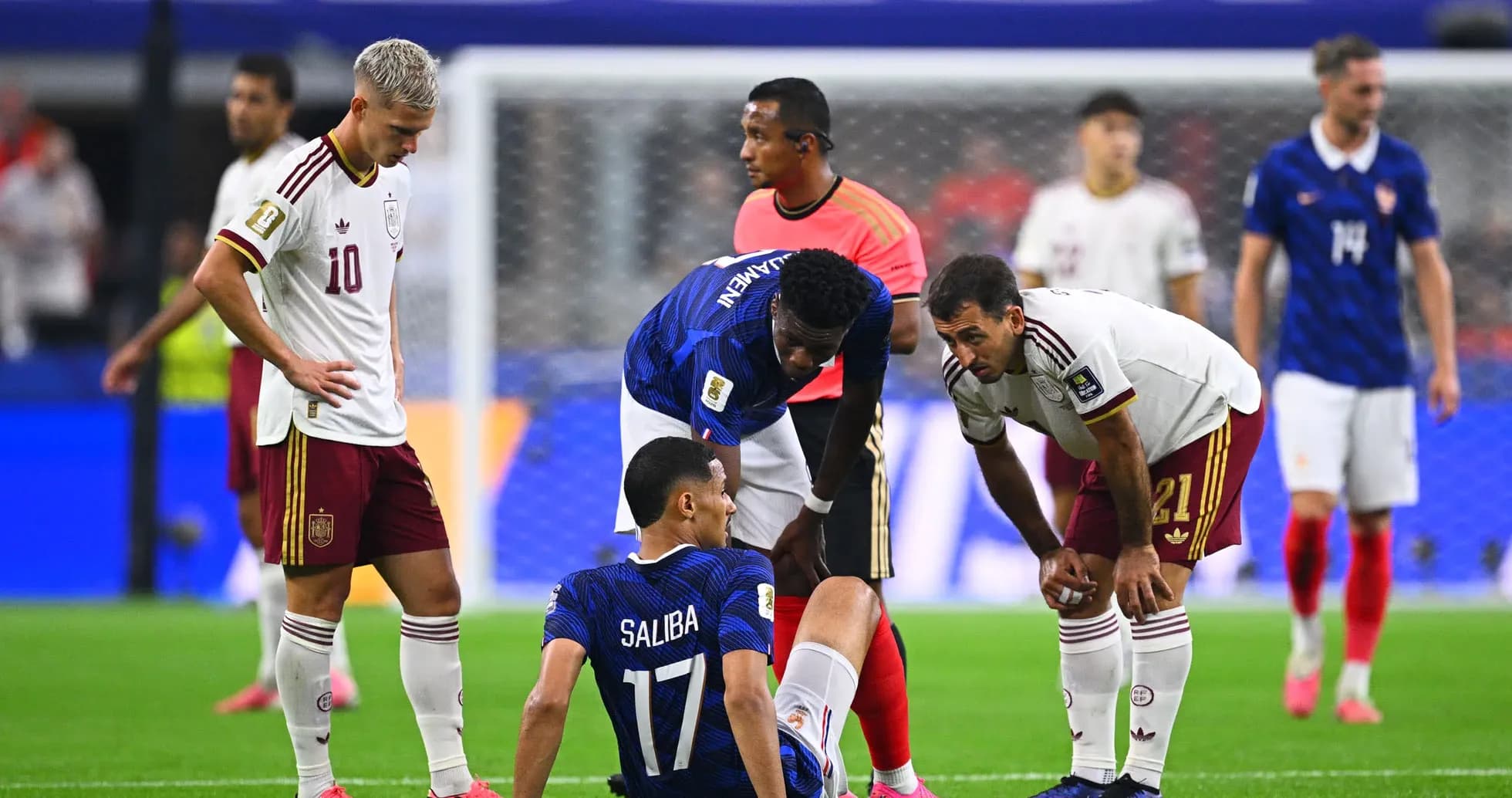
Didier Deschamps doubled down on his established 4‑2‑3‑1, a shape he had used in all 7 matches in total. Mike Maignan started behind a back four of Jules Koundé, Dayot Upamecano, William Saliba and Lucas Digne. Aurélien Tchouaméni and Adrien Rabiot formed the double pivot, with Ousmane Dembélé, Michael Olise and Bradley Barcola supporting Kylian Mbappé as the lone striker.
Luis de la Fuente answered with Spain’s now-familiar 4‑1‑2‑3. Unai Simón was protected by Pedro Porro, Pau Cubarsí Paredes, Aymeric Laporte and Marc Cucurella. Rodri anchored midfield, flanked by Fabián Ruiz and Dani Olmo, while Lamine Yamal and Mikel Oyarzabal flanked Álex Baena across the front line. On paper it was 4‑1‑2‑3; in practice, it became a carousel of rotations that France never fully solved.
II. Tactical voids – where the game slipped away
France’s season statistics hinted at a latent vulnerability that Spain were perfectly built to exploit. In total this campaign, France had kept 4 clean sheets but had also failed to score once – a reminder that when their transitions are slowed, they can be made to look oddly blunt. Their only defeat in total, a 0–2 scoreline at home, foreshadowed this Semi-finals outcome: when opponents refuse to give them open grass, France can run out of ideas.
Spain’s defensive data was the mirror image. Across 7 matches in total, they had kept 6 clean sheets, with their biggest wins including a 4–0 at home and a 2–0 on their travels. They had failed to score just once in total, but crucially had never been beaten. This was not a side that needed chaos; they thrived on denying it.
Deschamps’ choice of a pure front four – Dembélé, Olise, Barcola and Mbappé – left Tchouaméni and Rabiot with vast horizontal distances to cover against Spain’s interior midfield trio. Without a dedicated pressing 10, Rodri often received the ball facing forward, able to dictate tempo and pull France’s block apart.
On the other side, Spain’s potential soft spot was their disciplinary profile. In total this campaign, 50.00% of their yellow cards had come in the 91–105 minute window and 33.33% between 31–45, suggesting late and just-before-half-time nerves. Yet France never managed to stretch the game into a chaotic, card‑heavy contest. Spain’s control of possession and rhythm meant those historic spikes never truly materialised.
III. Key matchups – Hunter vs Shield, and the battle for the engine room
Hunter vs Shield
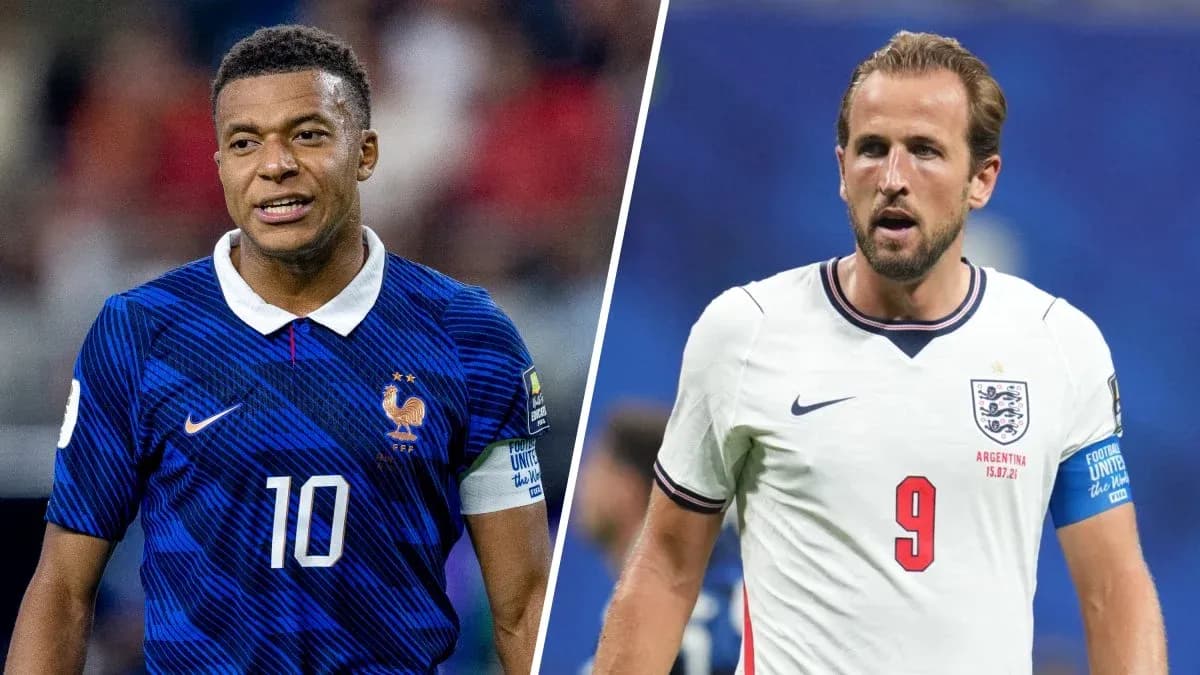
Kylian Mbappé entered as the World Cup’s most devastating finisher: 8 goals and 3 assists in total, from 30 shots with 19 on target. He had also won and scored a penalty in total this campaign, but with one miss from the spot as well, his ruthlessness had a human edge. Spain, however, arrived with just 1 goal conceded in total across 7 games, and 6 clean sheets. The duel was stark: the tournament’s apex predator against the most impregnable defensive unit.
De la Fuente’s answer was collective rather than individual. Rodri’s positioning narrowed Mbappé’s favourite inside‑left channels, while Laporte and Pau Cubarsí Paredes stayed compact, rarely following Dembélé or Barcola wide. Cucurella’s aggression on France’s right further reduced the space for Mbappé to isolate defenders. The result was that Mbappé’s usual vertical lanes – the ones that had produced 29 dribble attempts and 16 key passes in total – were clogged at source.
On the opposite side, Mikel Oyarzabal carried Spain’s main goal threat, with 5 goals and 1 assist in total, underpinned by 20 shots and 11 on target. France’s back line, which had conceded only 4 goals in total this campaign, was tested not by raw pace but by constant movement. Oyarzabal’s drifting into half-spaces forced Saliba and Upamecano to make repeated decisions about stepping out, decisions that gradually eroded France’s compactness.
The Engine Room
If Mbappé versus Spain’s back line was the headline, the true heart of the match lay in midfield. For France, Tchouaméni and Rabiot had underpinned a run of 6 straight wins in total, allowing the front four to stay high. But Spain’s trio of Rodri, Fabián Ruiz and Dani Olmo presented a different problem: three players comfortable receiving under pressure, able to turn and break lines with either passing or carrying.
Rodri, in particular, was the game’s metronome. His presence allowed Spain to maintain their defensive structure even while committing numbers forward. France’s press, which had often forced turnovers high in previous rounds, rarely disrupted him. The knock-on effect was that Olise – the tournament’s top assist provider with 5 in total – was dragged deeper and wider to help, blunting his influence in the final third. His usual combination of 355 passes and 13 key passes in total had been built on receiving between the lines; here, those pockets were suffocated.
IV. Statistical prognosis – why Spain’s plan was built to last
Following this result, the numbers tell a story of a French side who met their tactical antithesis at precisely the wrong moment. France’s profile – 2.3 goals scored per game in total, 0.6 conceded, but with a 50.00% penalty conversion rate due to 1 miss in total – always contained a risk: if the open‑play avalanche didn’t arrive, there was no guarantee of set‑piece salvation.
Spain’s profile, by contrast, was almost purpose‑built for knockout football: 1.9 goals scored per game in total, 0.1 conceded, 6 clean sheets in 7, and a perfect 100.00% from the spot in total. Their biggest away win of 2–0 foreshadowed this exact Semi-finals pattern: score first, then squeeze the oxygen out of the match.
In Dallas, that statistical backbone translated seamlessly onto the pitch. France’s 4‑2‑3‑1, so dominant in earlier rounds, was finally bent out of shape by a side that refused to give them the game state they craved. Spain’s 4‑1‑2‑3, anchored by Rodri and elevated by Oyarzabal and Yamal, turned the Semi-finals into a clinic in control.
In the end, the story of this squad duel is simple: France arrived as the tournament’s most spectacular sprinter; Spain as its most relentless distance runner. Over 90 minutes in Arlington, it was the side built for endurance – structurally, statistically, and psychologically – that ran the other into the ground.