.svg&w=384&q=75 "Pitchgist logo")
England's Heartbreak: Bellingham Reflects on World Cup Loss
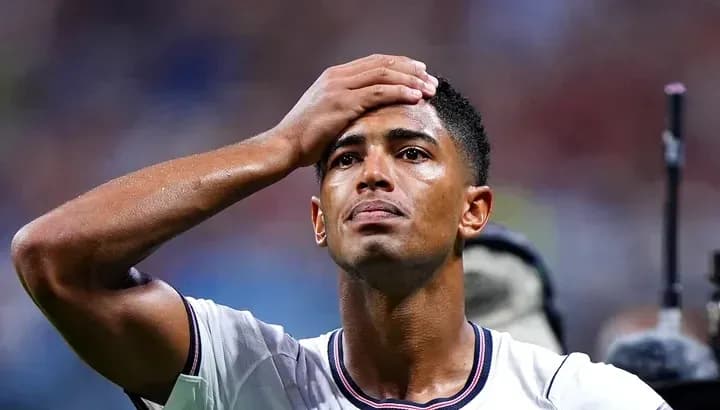
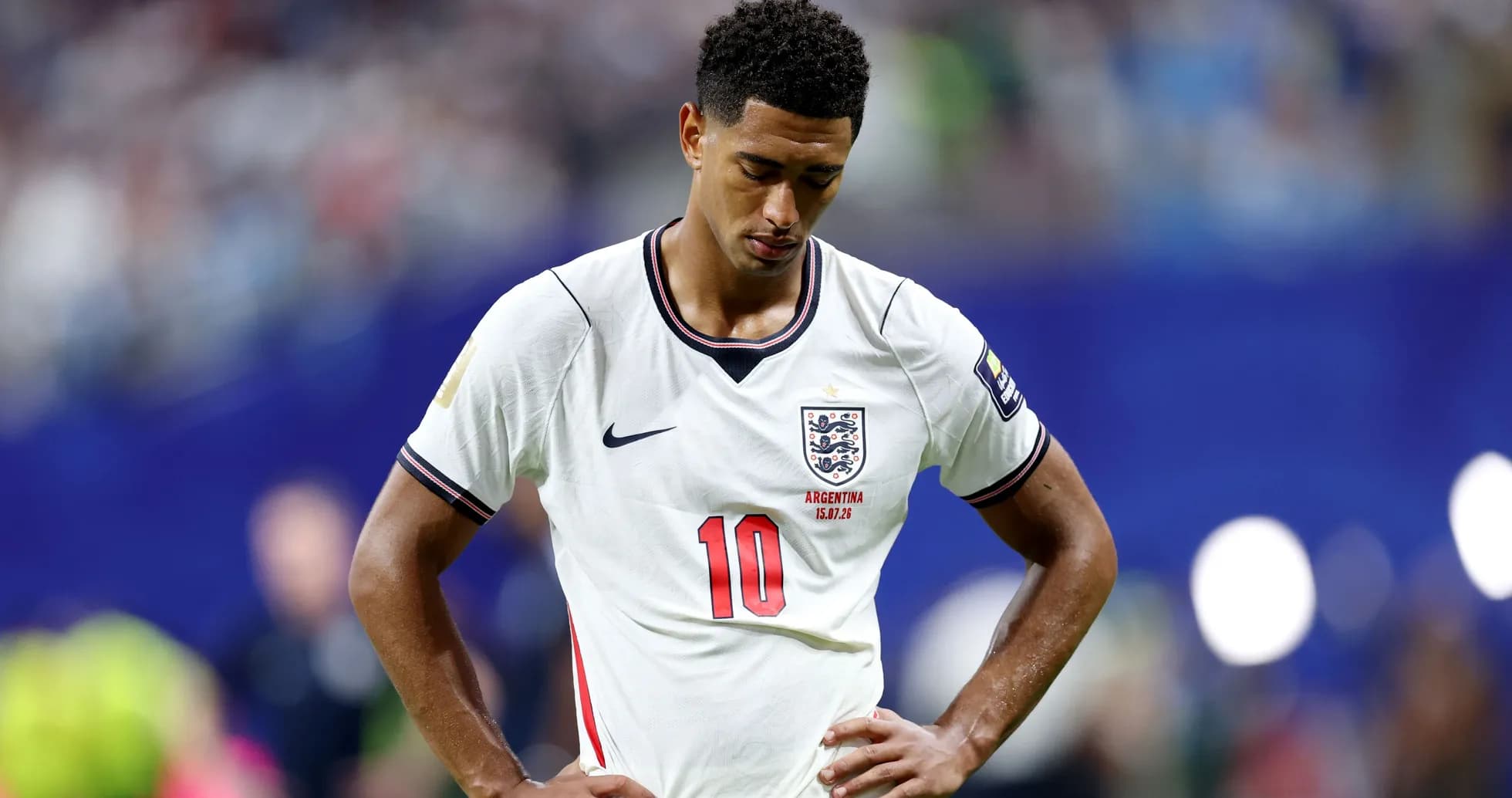
Jude Bellingham stood in front of the cameras with red eyes and a broken voice, carrying the weight of another England heartbreak on his shoulders.
Only minutes earlier, Argentina had ripped the World Cup final from England’s grasp at the death, turning a 1-0 deficit into a 2-1 semi-final win and extending a national wait that stretches back to 1966. For Bellingham, who had dragged England through this tournament with seven goal contributions and a thunderous brace against Norway in the quarter-final, this one cut deeper than most.
The 23-year-old has already lived a career’s worth of anguish in the space of two years: a turbulent season at Real Madrid, the sting of losing the Euro 2024 final, and now this – a World Cup dream torn up in stoppage time.
He did not bother to hide what it meant.
“I think we can take a lot of experience from this, but it is so gutting. I wanted to be a part of an England squad that finally done it and got it over the line. To be here, telling the fans the same things they've heard for years, it's really gutting,” he admitted, every word sounding heavier than the last.
There was no polished media line, no easy comfort. Just a young leader searching for something to offer a country that has heard every post-tournament promise before.
“I wish I could give one more win or two more wins, but at the moment, my head is a bit fuzzy with disappointment, so I'm sorry.”
Those last two words hung in the air. Sorry for the missed chance. Sorry for the familiar story. Sorry that, once again, England’s golden generation had found a new way to fall just short.
Tuchel takes the blame
On the touchline, Thomas Tuchel knew exactly where the spotlight would turn. England had led through Anthony Gordon, looked in control, and then retreated. The shift to a back five invited Argentina onto them, and the South Americans did not need a second invitation.
Tuchel did not dodge the responsibility.
“We decided to go to a back five because the gaps were far too open,” he explained afterwards. Argentina smelled opportunity. “Argentina played with more risk, played with more rhythm and played with the feeling maybe that they had nothing to lose any more, which freed them up and pulled us back.”
England, in contrast, shrank into themselves.
“Because we obviously played suddenly with a feeling that we had a lot to lose. Of course the responsibility is on the coach and if it doesn’t go well it’s easy to say it was wrong.”
The tactical gamble backfired. The initiative flipped. England, who had spent much of the tournament on the front foot, finished it pinned against their own box, clinging on before finally cracking.
Tuchel’s substitutions and formation change will be dissected for months. Why surrender midfield? Why hand momentum to a side built to thrive in chaos? The questions will not stop, but the man in charge has already made it clear he will not walk away from them.
Backing from above
Outside the dressing room, the Football Association moved quickly. FA chief executive Mark Bullingham has given his backing to Tuchel, and the German is expected to remain in charge through to the home European Championships in 2028.
There will be no dramatic resignation, no scorched-earth reset.
“We keep on going with the contract until the home Euros,” Tuchel said, drawing a line under any speculation about his future.
The message is clear: this project survives the pain of one night. The belief, at least from the FA, is that the man who took them to the brink of a World Cup final is also the one to lead them into a tournament on home soil.
A hollow consolation
For now, that feels a long way off. England must pick themselves up for a third-place play-off against France on Saturday – a game that always feels like an afterthought, yet will decide whether this becomes statistically their best World Cup finish in 60 years.
A bronze medal would look good in the record books. It will not heal Bellingham’s raw disappointment, nor erase the image of Argentina celebrating while England players slumped to the turf.
The squad will be told that the journey matters, that experience will harden them, that another chance is coming. Some of that is true. Some of it they have heard too many times before.
What lingers now is the sense of a window that never quite opens wide enough. Two years from hosting the continent’s best, England are left to ask themselves the same question yet again: how many more lessons can this team take before it finally learns how to win?