.svg&w=384&q=75 "Pitchgist logo")
Premier League Calendar Release: Manchester Clubs Gear Up for 2026/27 Season
The Premier League calendar drops today, and in Manchester it feels less like a list of fixtures and more like a statement of intent.
Barely a month has passed since the 2025/26 season closed and the World Cup continues to dominate the summer, yet at 10am the domestic game barges its way back into the conversation. Manchester United and Manchester City will discover the shape of their 2026/27 campaigns, the runs that can make a title charge – or break one.
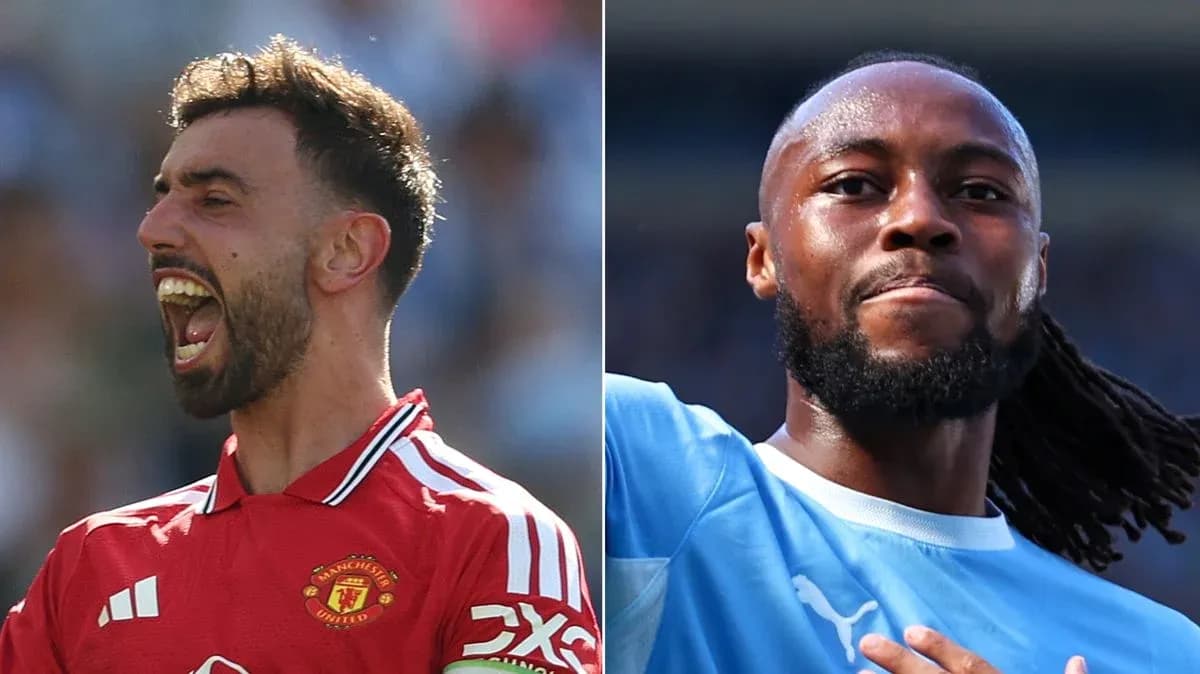
This is the day supporters circle away trips, dread winter runs and quietly plot how many points their side should have by Christmas. For Michael Carrick and the man expected to replace Pep Guardiola, Enzo Maresca, it is the first hard outline of what the next nine months will really look like.
Carrick’s United look to turn momentum into muscle
United head into fixture release day with something they haven’t had for a while: momentum and clarity.
Carrick stepped in for Ruben Amorim in January and did more than steady the ship. He dragged United back into the Champions League with room to spare, and he did it with enough authority to earn the job on a permanent basis. His first win as full-time head coach is already in the books, a calm, controlled victory over Brighton on the final day of last season.
Inside Old Trafford, the mood has shifted. Omar Berrada has spoken publicly about chasing the Premier League title as early as next season. On paper, that still looks ambitious; United finished nine points behind City and 14 adrift of champions Arsenal last term. But ambition is the point. The gap has to close. Third place is not a destination for a club of this size, it is a staging post.
The fixtures will either help that ambition or test it brutally. United will be desperate to avoid a repeat of last season’s start, when Arsenal, City and Chelsea all appeared in the opening five games. Seven points from 15 was respectable given that run, but nowhere near the platform required for a serious title tilt.
This time, Carrick’s ideal scenario is obvious: a gentler opening, room to breathe, and the chance to turn optimism into a bank of early points. If United can keep pace in the first couple of months, belief around the club will swell quickly.
There is also a new layer of intrigue: Europe. United return to the Champions League and will play eight league-phase games. The opponents are still unknown, but the dates are locked in and the calendar tells its own story.
Those Champions League rounds fall on:
- 8–10 September
- 13–14 October
- 20–21 October
- 3–4 November
- 24–25 November
- 8–9 December
- 19–20 January
- 27 January
What comes immediately after those nights matters. Managers loathe long away trips tagged onto European weeks and dread heavyweight clashes when the squad is at its most stretched. Carrick and his staff will scan the list the moment it lands, looking for exactly that: awkward away days after European travel, or a title rival squeezed in between Champions League assignments.
The target is simple, even if the path won’t be: stay close enough to City and Arsenal for long enough that the run-in actually means something.
City’s new era, same old expectations
Across town, the mood is very different: unfamiliar uncertainty wrapped around very familiar demands.
Guardiola has gone, leaving behind a decade-defining legacy and a void that feels impossible to fill. Maresca is widely expected to be the man to step into that space, yet his appointment still hasn’t been confirmed. The delay has left a strange pause at the Etihad. The structure remains, the standards remain, but the figurehead is missing.
That won’t soften expectations. This is a pivotal season for City. They need to prove that life after Guardiola still means trophies, control and a title challenge as a minimum. Anything less and the narrative shifts from “continuity” to “decline” with brutal speed.
The fixture list will provide the first test of that resilience. Last season, City flew out of the blocks with a 4-0 demolition of Wolves away from home, only for the early rhythm to shudder with back-to-back defeats to Spurs and Brighton. A thumping 3-0 derby win over United and a 1-1 draw with Arsenal steadied things, but the tone had already been set: this was a more volatile City.
This year, the question is stark. Will the new regime be handed a soft landing or thrown straight into a gauntlet of title rivals and awkward away grounds? The answer at 10am will shape how Maresca – or whoever takes charge – is judged in those first critical weeks.
City’s aim is not subtle. They need to reclaim the Premier League and show that the machine still runs, regardless of the man in the technical area.
New faces, old stakes: Coventry, Ipswich and Hull return
The calendar will also introduce both Manchester clubs to three new – or returning – Premier League opponents.
Coventry City are back in the top flight as Championship winners, 11 points clear of Ipswich Town. The Sky Blues, led by former Chelsea player and manager Frank Lampard, stormed to the title and now step into a division that has changed enormously since their last extended stay.
Ipswich’s story carried its own drama. Under former United assistant Kieran McKenna, the Tractor Boys sealed automatic promotion on the final day of the campaign. The celebrations were cut with a jolt this summer when McKenna chose to step down to take time away from football. In the search for his successor, one name looms large: United legend Ole Gunnar Solskjaer is among those in contention.
The play-offs delivered the most chaotic tale. Hull City, who finished sixth, ran the gauntlet, beating third-placed Millwall over two legs to reach the final. They were due to face Southampton, only for the Saints to be thrown out of the play-offs for spying on semi-final opponents Middlesbrough, who were then reinstated. Hull didn’t blink. At Wembley, Oli McBurnie struck a last-minute winner to haul the Tigers into the Premier League.
For United and City, these are fresh tactical puzzles and new atmospheres to manage. For Coventry, Ipswich and Hull, the dates against the Manchester giants will be the fixtures everyone looks for first.
Inside the machine: how the calendar is built
The fixture list is not thrown together on a whim. Work on the 2026/27 schedule began six months ago, with the Premier League feeding in Champions League dates, police advice, local event clashes and a long list of logistical demands before the so‑called “supercomputer” arranges the order of games.
It has strict rules to follow:
- Across any block of five matches, each team must have either three home and two away games, or two home and three away.
- No club will ever play more than two home or two away matches in a row. Where possible, teams will alternate home and away either side of FA Cup ties and international breaks.
- No club will start or finish the season with two home or two away fixtures.
- Around Christmas, a team at home in the first round of matches after Christmas Day will be away on New Year’s Day (or the equivalent round) and in midweek rounds.
- The league also tries to preserve a Saturday home-away rhythm where it can.
Those rules become even more important in a season that starts later than usual.
A later start, a heavy calendar – and Boxing Day back
This year’s Premier League campaign begins a week later than last season, on Saturday, August 22. The shift is deliberate. With the global calendar increasingly congested and the 2026 World Cup still looming large, the league has pushed the start back to prioritise player welfare.
The gap from the end of the 2025/26 season to the new campaign will be 89 clear days. There will be 33 days between the World Cup final and the opening weekend of the Premier League. It is a small buffer in a sport that rarely pauses.
The season will run through to Sunday, May 30, with the Champions League final following a week later at the Metropolitano in Madrid on Saturday, June 5.
One tradition looks set to feel more familiar again. Last season, there was just one Premier League match on Boxing Day, a decision that irritated supporters across the country. United fans at least had their festive fix, watching an 8pm kick-off against Newcastle at Old Trafford. The league pointed to the squeeze created by expanded European competitions and a reduced number of weekends, but promised a fuller Boxing Day schedule when the date fell on a Saturday.
That arrives this season. The Premier League has also committed to ensuring no club plays within 60 hours of another match across rounds 18, 19 and 20, building in slightly longer rest periods over the festive period.
The stakes on both sides of Manchester
For United, the mission is clear: turn promise into pressure on the teams above them. The fixture list will not define whether they can close the gap to City and Arsenal, but it will dictate the rhythm of that pursuit. A kinder start could fuel belief. A brutal opening run will demand that Carrick’s new-look side grow up fast.
For City, this might be the most significant season since the Guardiola era began. The fixtures will either ease Maresca into the job or throw him straight into the fire. Either way, the expectation is unchanged. The Premier League title remains non-negotiable.
At 10am, the calendar lands. By tonight, fans on both sides of the city will have mapped out their hopes, fears and must-win games. The numbers on a page will look simple enough.
The reality they shape from August 22 onwards will be anything but.