.svg&w=384&q=75 "Pitchgist logo")
Messi, Ronaldo, and Modric: A Football Rivalry Across Generations
What were you doing on 1 March 2006?
You might have been at Anfield, watching England edge Uruguay 2-1. You might remember Switzerland strolling into Hampden Park and putting three past Scotland. Or you might have been in Zagreb, or in front of a television somewhere, watching a slight, sharp midfielder called Luka Modric take his first steps for Croatia.
That night Croatia beat Argentina 3-2. Lionel Messi scored his first international goal. In Riyadh, Cristiano Ronaldo struck twice in a 3-0 win for Portugal against Saudi Arabia, already chasing records, already looking like a man intent on bending the sport to his will.
Messi and Ronaldo have dominated the conversation ever since. Their goals, their trophies, their rivalry. In the background but never truly in the shadows, Modric has been there too – ticking over, knitting games together, passing when others shot, lasting when others faded.
Now, almost two decades on, the three of them sit in a club so exclusive it barely exists: the men with 200 or more caps. Only four players have ever reached that plateau. Ronaldo and Modric are two of them.
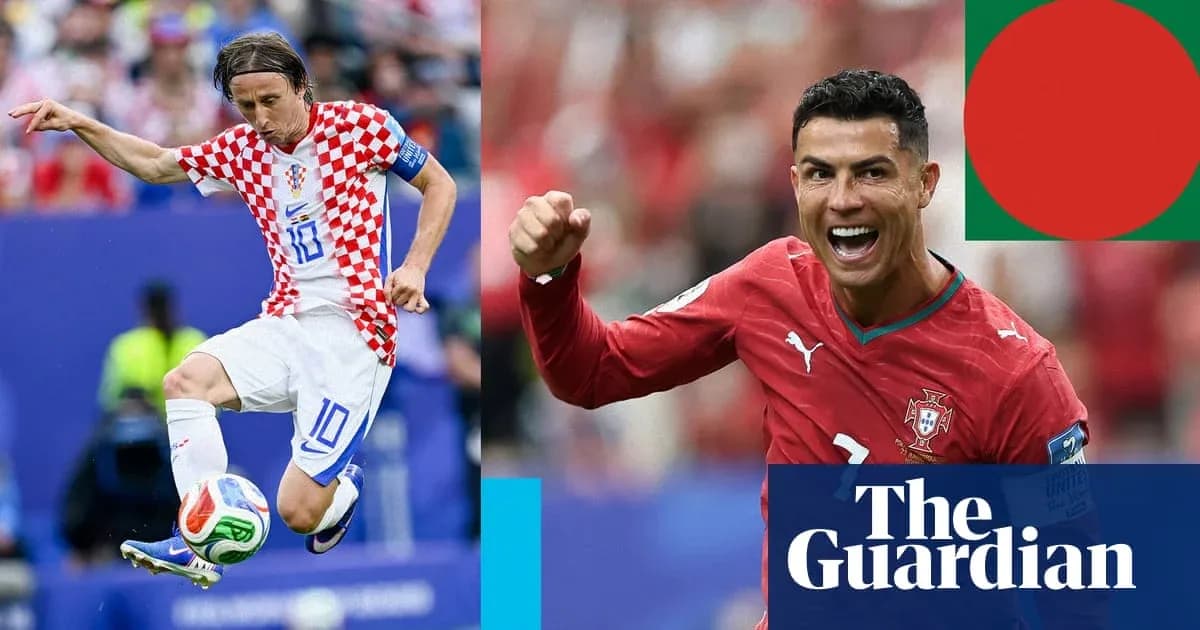
Ronaldo, 41, and Modric, 40, will step out for Portugal and Croatia for the 232nd and 202nd times respectively when they meet in the last 32 of the World Cup. One more match, one more chapter. It might be the last time these giants of 21st‑century football share a pitch, after careers that have overlapped, collided and then merged in white shirts in Madrid.
Their loyalty to the international game demands respect. When Modric made his Croatia debut back in 2006, Ronaldo already had 29 caps. More than 20 years later, the gap has grown by just one. Season after season, tournament after tournament, they have picked up the phone when their country called. No extended sabbaticals, no carefully managed retirements. Just relentless availability.
Their story together really began in England. In the 2008‑09 season, Modric the new arrival at Tottenham, Ronaldo the reigning world player of the year at Manchester United, they met in the Carling Cup final. Both played the full 120 minutes. Both were given a rating of 7. United won on penalties. A small footnote at the time; the first brushstroke in a much bigger picture.
Soon, Ronaldo moved to Spain. The next collision came in the quarter-finals of the 2010‑11 Champions League, Real Madrid against Spurs. Madrid went through, as they so often would in the years to come. A year later, Modric followed Ronaldo to the Bernabéu and their relationship changed from duel to duet.
Across six seasons together at Real Madrid, they formed the spine of a dynasty. Four Champions League titles. Semi-finals in the other two campaigns. Ronaldo the finisher, the phenomenon. Modric the rhythm, the organiser, the man who made the chaos make sense.
If there was a single moment that captured their shared peak, it came in Cardiff in the 2017 Champions League final. Juventus were hanging on, Madrid already 2-1 up, the game still alive. Modric darted to the byline on the right, looked up and cut the ball back. Ronaldo arrived, as he so often did, at exactly the right time to sweep Madrid 3-1 in front. The final turned. The era felt sealed.
That was one of 222 matches they have shared on a pitch. No central midfielder has played more often alongside Ronaldo than Modric. Not at Manchester United, not at Juventus, not with Portugal. The Croatian has been his most constant on-field companion.
Now they meet again, not as team-mates in white but as standard-bearers for Portugal and Croatia, carrying the weight of years and expectation. Between them, more than 400 caps. Between them, a generation’s worth of memories.
How many more can they possibly write?