.svg&w=384&q=75 "Pitchgist logo")
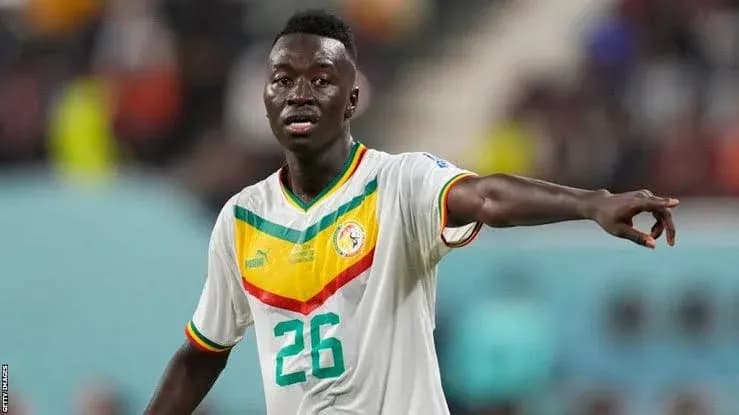
Pape Gueye's Bold Stance After Senegal's World Cup Exit
Senegal’s World Cup exit has left more than just a bruise on the pitch. It has opened a fault line between one of the team’s key players and the man in charge of the dugout.
In the raw aftermath of Senegal’s dramatic elimination by Belgium in qualifying for the 2026 World Cup, midfielder Pape Gueye announced he will not play for his country again while Pape Thiaw remains head coach.
The 27-year-old did not wait for the dust to settle. He went straight to social media, still stung by the manner of the defeat, and made his stance brutally clear.
“I’ll be back to give you a few words regarding elimination… but I announce today that as long as it’s this technical staff I’ll take a break from the selection,” he wrote, drawing a firm line between himself and the current regime.
This was not a measured, end-of-campaign reflection. It was the reaction of a player who had just watched a place in the last 16 slip through his fingers.
For long spells, Senegal had one foot in the knockout rounds. They surged into a two-goal lead and looked in control, the Teranga Lions roaring towards what seemed a statement win. The structure held, the pressing worked, the belief grew.
Then it all unraveled.
Belgium clawed their way back with two late goals, ripping the momentum away just as Senegal were trying to see out the contest. A match that had looked secure suddenly became a storm. Extra time followed, nerves frayed, and the pressure finally told.
Youri Tielemans stepped up from the spot in the added period and buried the penalty that sent Senegal out. One kick, and a campaign that had promised so much was over.
The defeat clearly cut deep in a dressing room that had sensed opportunity. For Gueye, it went beyond disappointment. His message was not aimed at fate or bad luck; it was aimed squarely at the technical staff led by Thiaw.
The midfielder has not yet expanded on his criticism or detailed specific grievances, but the implication is stark: as long as this coaching setup remains, he considers his international future on hold.
For Senegal, the timing is as worrying as the words. A key player, still in his prime at 27, choosing to step away at a moment when the national team should be regrouping and recalibrating for the next cycle, raises serious questions.
What happens next is no longer just about tactics or formations. It is about trust, authority, and whether a fragile bond between players and staff can be repaired after a night that has clearly left scars.
The World Cup dream is gone. The bigger test now may be whether Senegal can prevent this painful exit from turning into a full-blown rupture in the heart of their national team.