.svg&w=384&q=75 "Pitchgist logo")
Liverpool's Era Ends After Disappointing Season
They sang to convince themselves as much as anyone else. “Every little thing is gonna be alright,” rolled down from The Kop, a defiant soundtrack to a season that has been anything but.
Liverpool’s 1-1 draw with Brentford closed the book on a miserable 2025/26 campaign. It also felt like the final chapter of something far bigger. Two more pillars of the club’s greatest modern era have gone. Half of the squad Arne Slot inherited just two years ago has already departed. More are poised to follow Mo Salah and Andy Robertson out of the door in the coming weeks.
The mood was not just end-of-season flat. It was end-of-era heavy.
A Failure, Any Way You Dress It
Strip away the sentiment and the mitigating factors. The numbers scream what the fans already know: this season was an outright failure.
Sixty points. Fifth place. Champions League secured, yes, but only because of an expanded format and a strangely soft points bar. In each of the previous three seasons, 60 points would have left Liverpool outside the Champions League and, twice, outside Europe entirely. This time, it stands as the lowest tally to reach Europe’s top competition since 2003/04, when Gerard Houllier’s reign ended with a handshake, a smile, and a staged farewell on the Anfield pitch.
The run-in was grim. No wins in the final four league games. Just four victories in the last 14 matches in all competitions. This is a club that once lived on long unbeaten stretches and title-race sprints. Now it limped to the line.
For supporters who remember Graeme Souness dismantling Kenny Dalglish’s ageing but title-winning squad in the early 1990s, the parallels are hard to ignore: big names moved on, standards slipping, a manager insisting there is a plan even as the team drifts toward mediocrity.
Salah, never one to court controversy, has still made his concerns clear as his own extraordinary nine-year stay comes to an end. He can see what the fans see. The fear is not just about one bad season; it’s about what comes next.
Slot On The Bench, Salah In The Stands
The final whistle brought the customary lap of appreciation. Or at least, it should have.
Players wandered the pitch, applauding the stands. Supporters stayed to salute those leaving. It is one of Anfield’s rituals, a shared moment after a bruising year.
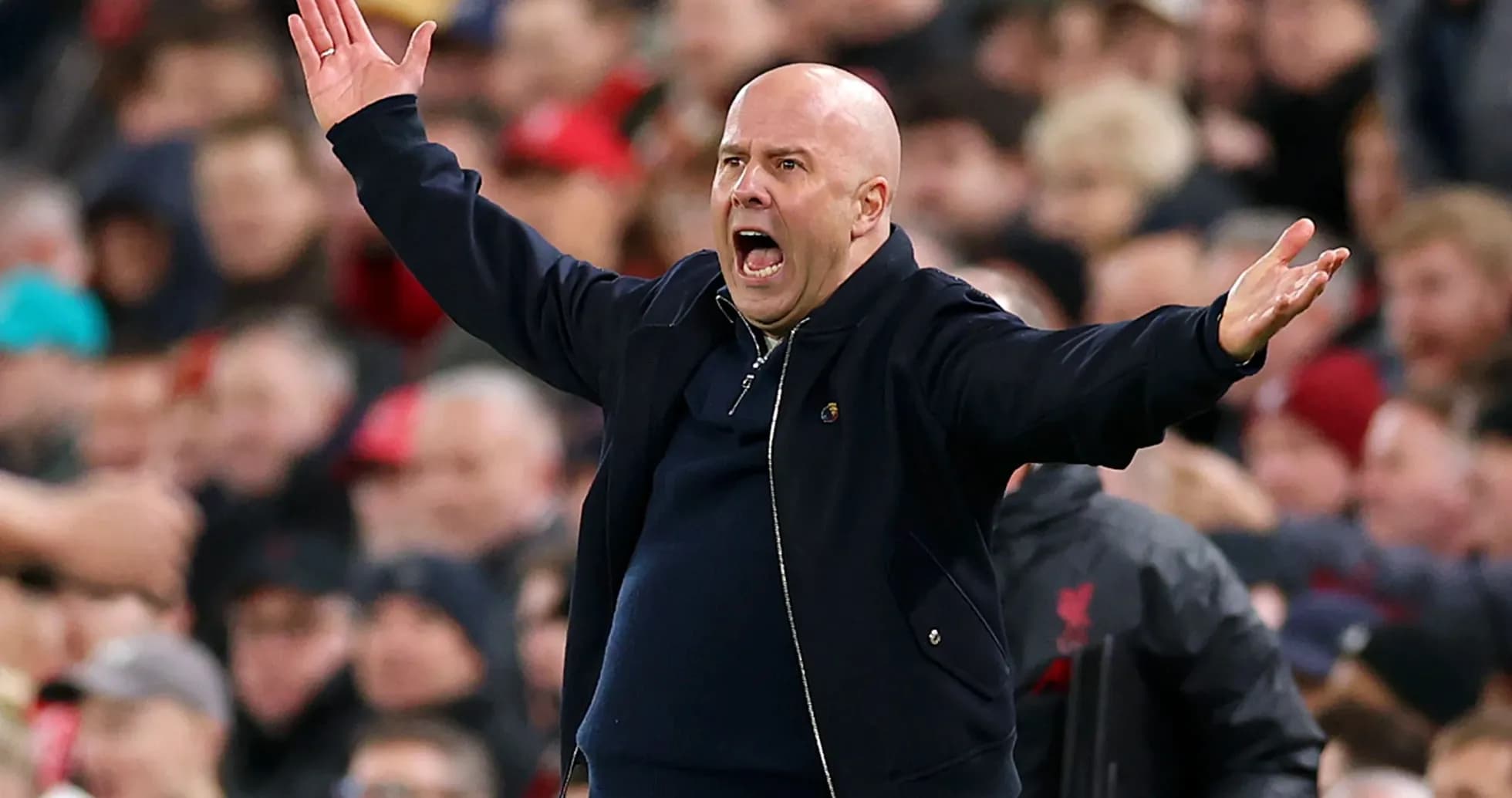
Slot did not join them.
The head coach sat on the bench, expression set, distant from the emotion unfolding a few yards away. Maybe he was simply drained, lost in thought, weighing up a season that has battered his reputation and tested his ideas. But it jarred with a fanbase already questioning his connection to the club.
This was his chance to walk the pitch, to acknowledge the people who watched the lowest win percentage in a decade – just 17 league victories – and still sang until the end. Instead, he remained apart, a solitary figure while the players and supporters tried to stitch together some sense of unity.
Salah, as so often, understood the moment better than anyone. “They [the fans] don’t care that much about the result as long as you sweat and give your blood here, they’ll love you forever,” he told Sky Sports.
That is the Liverpool contract. Show up. Fight. Walk through the storm together. This season has had more than its share of darkness, not least the shock and grief of Diogo Jota’s death in pre-season. The demand, though, never changes: give everything, on and off the ball.
Injuries, A Small Squad, And A Manager’s Own Choices
In his post-match press conference, Slot reached for one word to sum up the campaign: “injury.”
On one level, he is right. Liverpool have been hit hard. Key players missed long stretches. Line-ups shuffled. Rhythm shattered. Any manager would point to that.
But this is the same coach who, back in October, was crystal clear about his preference: a smaller squad, easier to manage, fewer headaches. “This is a decision we have made together,” he said then. “I completely believe in this, because if you have 25 [players] it’s very hard to manage your squad.”
You cannot champion a lean group in autumn, then spend spring lamenting the lack of options, the impact of midweek fixtures, and the toll on legs that never get a rest.
The reality? Liverpool went into a Premier League season, with an expanded Champions League on top, with a squad that was light by design. And when injuries hit, there was nowhere to turn.
Slot spoke in October about the risks: if they ended up with “two, three or four injuries,” then suddenly 15 or 16 players, including youngsters Rio and Trey Nyoni, would have to shoulder almost every minute. He knew the danger. The club accepted it.
Yet those same youngsters barely featured. Nyoni, a hugely rated midfielder who debuted at 16 under Jurgen Klopp, finished the league campaign with just 21 minutes. Federico Chiesa, marginalised again, managed 318 league minutes. Wataru Endo, signed to add depth and control, played only 170.
Kieran Morrison, captain and standout for the Under-21s, sat on the bench 13 times. He got on the pitch once: five late minutes in an FA Cup tie at Wolves.
So the squad was not just small. It was smaller than it needed to be, in part because Slot did not fully trust those on the fringes. Add in the baffling failure to secure a January return for Harvey Elliott, who could have offered quality from the bench during a brutal second half of the season, and the picture looks worse.
Injuries hurt Liverpool. Slot’s own choices made them hurt more.
Heavy Defeats, Heavy Standards
When challenged on the manner of the cup exits, Slot has leaned on the calibre of the opposition. A 4-0 defeat to eventual FA Cup winners Manchester City. A 4-0 loss to PSG, who have gone two full seasons without losing a two-legged European tie.
True, the names are big. The scorelines are bigger.
That argument does not land in a dressing room led by Virgil van Dijk, Robertson, Salah and Curtis Jones, all of whom have been open about the season falling below the standards Liverpool demand. Nor does it soothe a fanbase raised on Klopp’s teams going toe-to-toe with Europe’s elite, not folding to them.
“Being in Liverpool, winning something for Liverpool and winning games is the best thing that could happen to you all,” Salah told his team-mates on his final day at the AXA Training Centre. That is the benchmark he leaves behind.
Slot has tried to frame Champions League qualification as “our lowest base,” pointing out that “big clubs” like Chelsea and Tottenham have missed out on Europe entirely. For some supporters, that only deepens the sense of drift. Liverpool are not supposed to measure themselves by the missteps of others. They are supposed to chase titles and trophies, not consolation comparisons.
The numbers underline how far they have slipped. The longest unbeaten run this season was 13 games, coming straight after the 4-1 humiliation at home to PSV – arguably the nadir of the campaign. Even that sequence flattered. Draws with Leeds (twice), Burnley and Fulham. Seven wins, but two of them against Barnsley in the FA Cup and a West Ham side that would end up relegated.
The veneer of form. The reality of decline.
A Summer Of Questions, Not Answers
What comes next at Anfield is anything but clear.
Slot has one year left on his contract. So do the key figures above him, Richard Hughes and Michael Edwards. The very people tasked with steering this rebuild could themselves be nearing the exit.
On the pitch, the churn could be brutal. Up to nine first-team players might depart. Salah and Robertson are already heading out. Ibrahima Konate is out of contract. Chiesa and Endo could be moved on. Curtis Jones, with a year left and serious interest from Inter Milan, is widely expected to go. Alisson is wanted by Juventus. Joe Gomez, another entering his final year, is vulnerable if the right offer lands. Even Alexis Mac Allister is not untouchable if a major bid arrives.
If that many go, this is not “a little transition.” It is major surgery.
Slot has tried to downplay it, saying this summer will not be as “drastic” as last. On paper, the potential departures say otherwise. Liverpool will start next season with Cody Gakpo as their leading active goalscorer for the club. Behind him? Van Dijk, a centre-back, as the next most prolific.
This is not how elite attacking squads are usually built.
The Kop’s closing soundtrack insisted not to “worry about a thing.” The reality is different. Supporters will spend the summer worrying about everything: the manager, the recruitment, the standards, the soul of a team that once felt unbreakable.
The era that began with Klopp’s arrival and swelled into a cycle of trophies, parades and belief has gone. What replaces it now depends on whether Liverpool still remember who they are supposed to be – or whether this season’s 60-point shrug becomes their new normal.