.svg&w=384&q=75 "Pitchgist logo")
England's Defensive Partnership Under Scrutiny Ahead of World Cup
England’s attack roared. Their defence whispered.
In the heat of Dallas, Croatia felt the full force of England’s frontline, but every surge forward came with a nagging caveat: can this back line really carry a World Cup campaign?
A partnership under the microscope
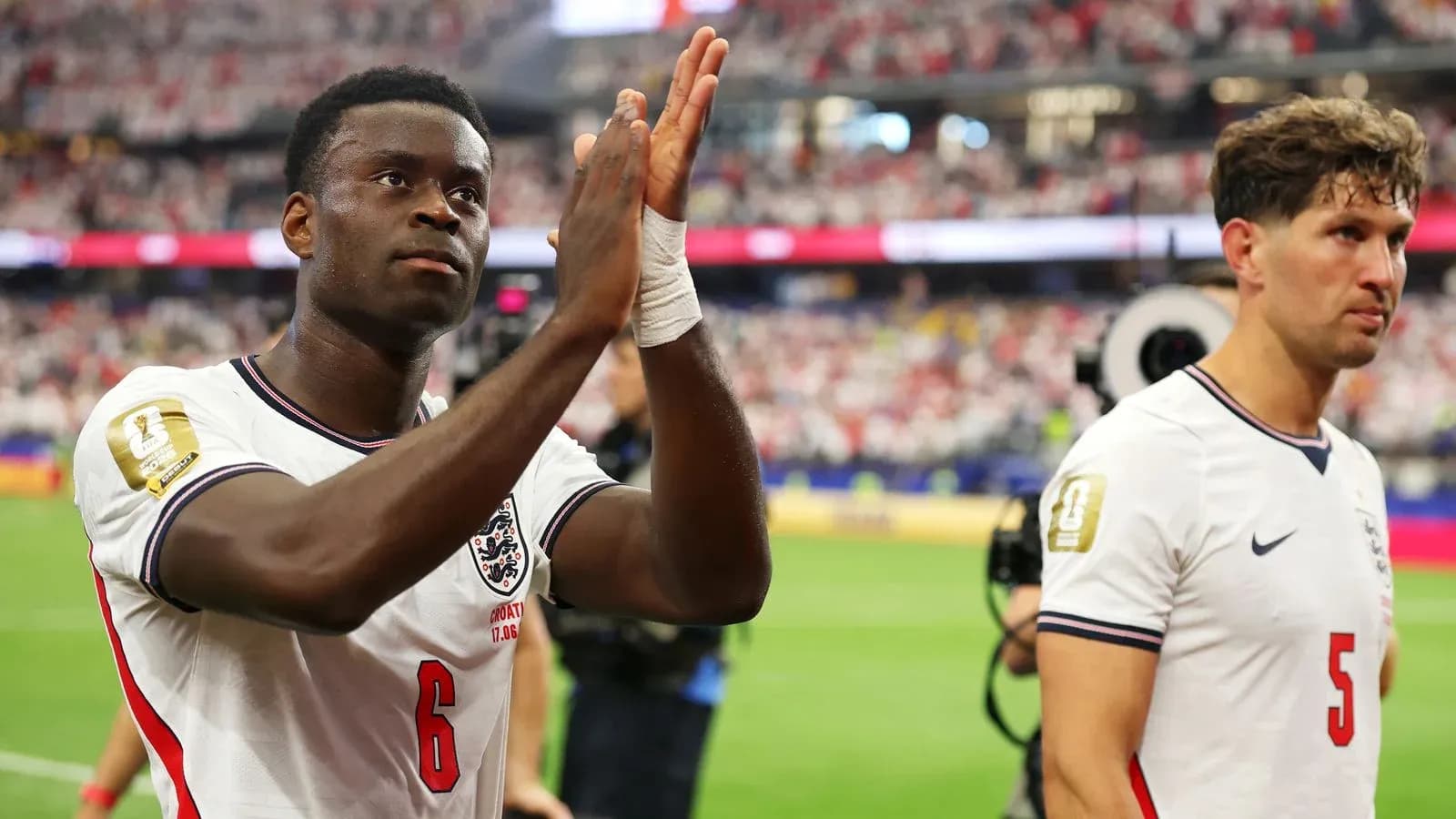
Ezri Konsa and John Stones walked out as Thomas Tuchel’s chosen centre-back pairing, a decision that immediately shoved Marc Guehi’s absence into the spotlight. Ninety minutes later, the questions had only grown louder.
By half-time, Gary Neville had already put it bluntly on ITV: “Is Konsa and Stones a partnership that can win us the World Cup?” It was not a rhetorical flourish. He’d just watched Stones commit early, go to ground and get rolled for Croatia’s first goal. Then he saw Konsa misread a chipped pass in the build-up to the second.
Neville’s warning was clear: “[Declan] Rice and [Elliot] Anderson are going to have to be outstanding and protect our defence rather more than they have in that first half.”
The problem wasn’t just the big moments. Under Croatia’s early high press, England’s build-up from deep looked edgy. Stones and Konsa both coughed up possession in dangerous areas, their passing numbers eventually tidied up by safer work later in the game but not disguising the unease when the pressure peaked.
On paper, some of the data flatters to deceive. Stones finished with strong passing accuracy, yet across his 87 minutes he made just one tackle – unsuccessful – and one clearance, winning four of seven duels. Konsa’s numbers were starker: three of eight duels won, one of five in the air, and no tackles or interceptions recorded at all.
Jamie Carragher didn’t sugar-coat it on Sky Sports News the following morning. “We probably lack something defensively to go all the way,” he said, dragging a little realism back into a mood buoyed by England’s blistering second-half attacking display.
The Guehi question
That’s why Tuesday’s Group L meeting with Ghana already feels like a turning point. Not for the forwards. For the man waiting in the wings.
Marc Guehi’s return to the XI would change the whole conversation. His Premier League form since joining Manchester City from Crystal Palace in January has been that of a defender who relishes the fight as much as the ball. The numbers back it up: since his league debut for City, he ranked among the division’s best for possession won in the defensive third, sat fourth for interceptions, sixth for forward passes and fifth for passes completed in that spell.
He’s not just tidy. He’s assertive.
Crucially, his rise has come at a cost to Stones. The City and England stalwart could not get into Pep Guardiola’s side ahead of Guehi in the run-in. Stones, out of contract and leaving City this summer, made only five appearances for the club in 2026 and started just five league games in the past year. City lost four of those.
Stones insists he was fit and ready. Guardiola still went with Guehi. That choice now hangs over Tuchel. If Guardiola trusted Guehi at club level, should England’s manager do the same on the biggest international stage?
Tuchel has always valued Stones’ experience, leadership and composure on the ball. Those qualities earned him a ticket to this World Cup despite a thin season. But the way he has been used is now under scrutiny.
Playing on the wrong side?
Against Croatia, Tuchel shifted Stones to the left of the pairing to keep Konsa on his more natural right side. The combination had a dress rehearsal against Costa Rica in the final warm-up game, yet it still felt like a compromise.
Modern defending is built on detail. Over the past three seasons at City, Stones has logged just 371 minutes at left centre-back compared with 1,151 on the right. Guehi, by contrast, has spent a large chunk of his career operating on the left, including on that side of a back three at Palace, despite being right-footed.
He can play both roles. So can Stones. But the margins matter at this level, and even Guehi has admitted it.
“When you have been playing on one side for a long time and you switch to the other side it can throw you off a little bit,” he told Sky Sports in December.
Tuchel has already seen the more natural fit. In England’s first World Cup warm-up against New Zealand, he paired Guehi on the left with Stones on the right. It looked like the template for this tournament. After Dallas, it feels like the obvious reset.
Reuniting that duo would restore familiarity: Stones back where he’s most comfortable, Guehi in his natural lane, and a defensive platform that doesn’t feel like an experiment.
What about Konsa?
Then comes the human cost. Tuchel has leaned heavily on Konsa. Under his reign, only Jordan Pickford and Harry Kane have played more minutes for England. At centre-back, Konsa has actually started more games alongside Guehi than alongside Stones.
To drop him after a single World Cup match – one England still won – would be ruthless.
There is, though, a third way. Tuchel has already tested a back four with all three on the pitch. Against Wales in October, Konsa slotted in at right-back, with Stones and Guehi in the middle. It worked well enough to lodge itself in the manager’s mind.
Konsa fits the physical, defensively solid full-back profile Tuchel prefers. He has already overlooked the more adventurous Trent Alexander-Arnold in favour of defenders who can duel, defend the back post and handle one-on-one battles. Konsa ticks those boxes.
The trade-off is obvious. Reece James would have to make way.
James impressed against Croatia, especially when he stepped into midfield late on, and he appears to be Tuchel’s first-choice right-back. He has started there five times under this manager, more than anyone else. But his fitness record looms over every selection call. Before this recent run of starts for England against Costa Rica and Croatia, he hadn’t begun back-to-back games for Chelsea since March.
If Tuchel wants to manage James’ minutes, the logic is there. The dilemma is timing. Do you rest him against Ghana, with qualification and top spot in Group L still in the balance? Or wait for the final group game against a weaker Panama side, when the stakes might be lower?
A delicate balance
Tuchel doesn’t just need a back four. He needs a defensive identity that can live with the chaos of knockout football while England’s attackers run riot at the other end.
Rice and Anderson will have to screen better than they did in that first half against Croatia. The centre-backs will have to look less like a patched-together solution and more like a partnership – or trio – built with purpose.
The firepower is there. The question now is whether Tuchel is brave enough, and decisive enough, to pick a back line that can carry it.