.svg&w=384&q=75 "Pitchgist logo")
Jeremy Doku's Choice: Family First at the World Cup
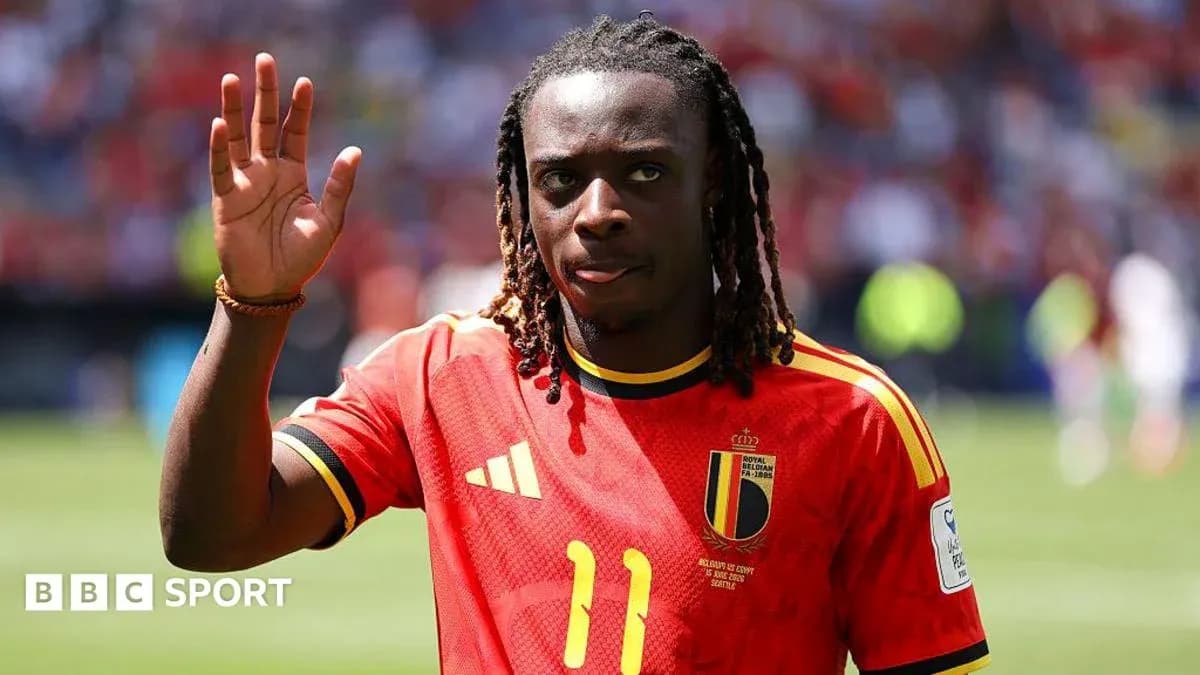
Jeremy Doku has drawn his line. Not on the touchline, not in a tactical meeting, but in his own life.
Family first.
The Manchester City winger is due to become a father next month and has been clear: if Belgium are still at the World Cup when his wife goes into labour, he wants to leave the camp and be there for the birth of their first child.
That simple, human stance detonated a storm.
A TV rant and a swift backlash
On French television, L'Equipe presenter France Pierron described a father as "completely useless" at the birth and called the moment itself "disgusting". The words landed like a slap, cutting across a sport that has long asked its players to be gladiators first and people second.
The response was immediate and almost unanimous. Footballers, unions, family advocates – and plenty far beyond the game – lined up behind Doku.
L'Equipe issued a statement saying Pierron's comments were "very far removed" from its values. The presenter apologised as well, and reports in France said she would not be on air for her show on Monday. The retraction was swift, but the wider debate was already moving.
Because this is not really about a TV rant. It is about who gets to decide what matters most in a player’s life.
Doku’s dilemma
Doku, 24, started Belgium’s World Cup with 86 energetic minutes in a 1-1 draw with Egypt in Group G. Illness kept him out of the 0-0 stalemate with Iran, but when fit he is a key part of Belgium’s attacking plan.
His wife Shireen is due during the second week of July. If Belgium reach the quarter-finals, that timing collides head-on with the business end of the tournament.
"If you ask me what I want, my answer is that nobody wants to miss the birth of their first child," he told Reuters.
Then came the other side of the reality.
"But I also know that football involves many other considerations. I know the federation supports its players and understands their situations. We'll see what we can do."
Those two sentences capture the modern professional: torn between the demands of the shirt and the pull of home. The choice is personal. The pressure is anything but.
Players stand with him
England striker Ollie Watkins, who has two children, did not hide his feelings.
"I think someone labelled it disgusting and I think for a start that's not a way to label a birth," he said. "I've seen what my wife had to go through and that was quite smooth sailing but I know family members and friends that haven't had it that way.
"It only happens once - welcoming your first child to the world - and it is a blessing. There's a lot of times where you're away from family and friends during the season and it's very difficult, so to miss that would be tough and I see where he's coming from."
It was a raw, honest endorsement from a striker who knows the grind of the season and the cost of time away.
The Professional Footballers' Association added its weight, framing this as a workplace issue as much as an emotional one.
"Demands placed on players should not be at the expense of fundamental family moments," a PFA spokesperson said.
"While every situation is different, we believe players should be supported in balancing their professional responsibilities with important life events. Supporting players as people, not just athletes, is an important part of creating a healthy professional working environment."
In other words: you can’t preach player welfare and then turn around and sneer at paternity.
“Gladiators in the Colosseum”
The Fatherhood Institute, which campaigns for men to be hands-on fathers and caregivers, saw something deeper in the reaction to Doku.
"It makes me think of gladiators in the Colosseum," deputy chief executive Jeremy Davies told BBC Sport. "We want these men to be these heroic figures who exist for our entertainment. They get paid lots of money but there are some things that are worth a lot more."
That image lingers. The stadium as arena, the player as performer, the crowd baying for one more sacrifice. Yet away from the cameras, the same players are pacing hospital corridors, staring at their phones, or watching a delivery room via a shaky video call.
The rules and the reality
On paper, the game has started to move. Fifa regulations state maternity leave for female footballers should be "a minimum period of 14 weeks' paid absence" – with eight weeks after the birth.
For fathers? Nothing specific. No global standard for paternity leave, no clear framework for men’s football. Just a patchwork of club policies, manager discretion and personal negotiation.
So players and coaches improvise.
One club kept a car idling outside the stadium for a player whose partner was due at any moment, ready to whisk him away the second the call came. At a top-flight European side, a manager skipped an away trip entirely to stay with his wife as she prepared to give birth to their second child.
He watched the match on television and fed instructions to his staff via an earpiece.
"I was on the earpiece to the bench and 10 minutes into the game she started getting labour pains," said the manager, now working in the Championship.
"We were 2-1 up at half-time but she was getting more into labour. I rang the hospital to say we were going to come in, but had to stop because we got a penalty.
"We scored, I knew we won the game, and we came right in. Our daughter was born two hours later.
It's less common with managers because they are typically older but the game doesn't stop... you need to win the next game."
The story sounds almost comic, but the underlying truth is sharp: even in the maternity ward, the result still intrudes.
Others who walked away – and those who couldn’t
Doku would not be breaking new ground if he leaves a World Cup camp to be with his family.
In 2018, Fabian Delph flew home from England’s base in Russia for the birth of his daughter, returning later to rejoin the squad. David Silva missed two Manchester City matches that same year after the premature arrival of his son. David de Gea was granted extended leave in 2021 during the Covid pandemic when his partner Edurne gave birth to their daughter.
All three chose the hospital over the pitch. Their clubs coped. The world kept spinning.
Not everyone has had that option.
This weekend, Norway defender Leo Ostigard watched his son’s birth on FaceTime while at the World Cup. Ruben Neves went through the same agonising compromise in January 2021, watching the birth of his third child on his phone from Wolves’ team bus after a 1-0 defeat at Crystal Palace. His wife had returned to Portugal to be with her doctor; pandemic travel rules blocked his plans to join her.
The sport’s borders closed. So did his chance to be there.
Across other sports, the same tension plays out. Cricketer Jamie Smith missed England’s second Test defeat by New Zealand last week after the birth of his daughter. Sir James Anderson once flew back between Ashes Tests in Australia to be present for his second child’s arrival in 2010.
In the NBA, Anthony Edwards walked out at half-time of a 2024 game so he could make it to the hospital for his daughter’s birth. In tennis, Sir Andy Murray said in 2016 he would leave the Australian Open early if his wife Kim went into labour.
"I'd be way more disappointed winning the Australian Open and not being at the birth of the child," he said then.
The message is consistent. Trophies matter. Titles matter. But some moments sit above the medal table.
And yet, even here, there is a counter-example. Darts player Rob Cross missed the birth of his third child in 2017 in order to qualify for the World Matchplay. A decision, a sacrifice, a calculation that only he and his family can truly weigh.
What Doku’s choice really represents
So Doku stands at a familiar crossroads for a modern athlete, but with the spotlight of a World Cup and a national team on his shoulders.
He has already been clear about his instinct: nobody wants to miss the birth of their first child. The Belgian federation has indicated understanding. The public reaction, once you strip away the noise of a TV rant, has been overwhelmingly supportive.
What remains is the decision itself, and the message it sends.
Is a player allowed to step away from the biggest stage of his career for the biggest moment of his life? Or must he, as some still seem to believe, live only for the roar of the crowd and the demands of the schedule?
Soon enough, Jeremy Doku will have to answer that not as a winger, not as a World Cup hopeful, but as a father. The question is whether football is ready to live with his answer.