.svg&w=384&q=75 "Pitchgist logo")
Roy Keane Critiques English Arrogance After World Cup Exit
Roy Keane has never had much time for English self‑congratulation. After England’s World Cup semi-final defeat to Argentina in Atlanta, he had even less.
As the inquest raged over another near-miss on the biggest stage, the former Manchester United captain took aim not at Thomas Tuchel or the players, but at the mood music around English football – the hype, the entitlement, the outrage.
Keane: ‘Why Are They Thinking They Should Be Winning It?’
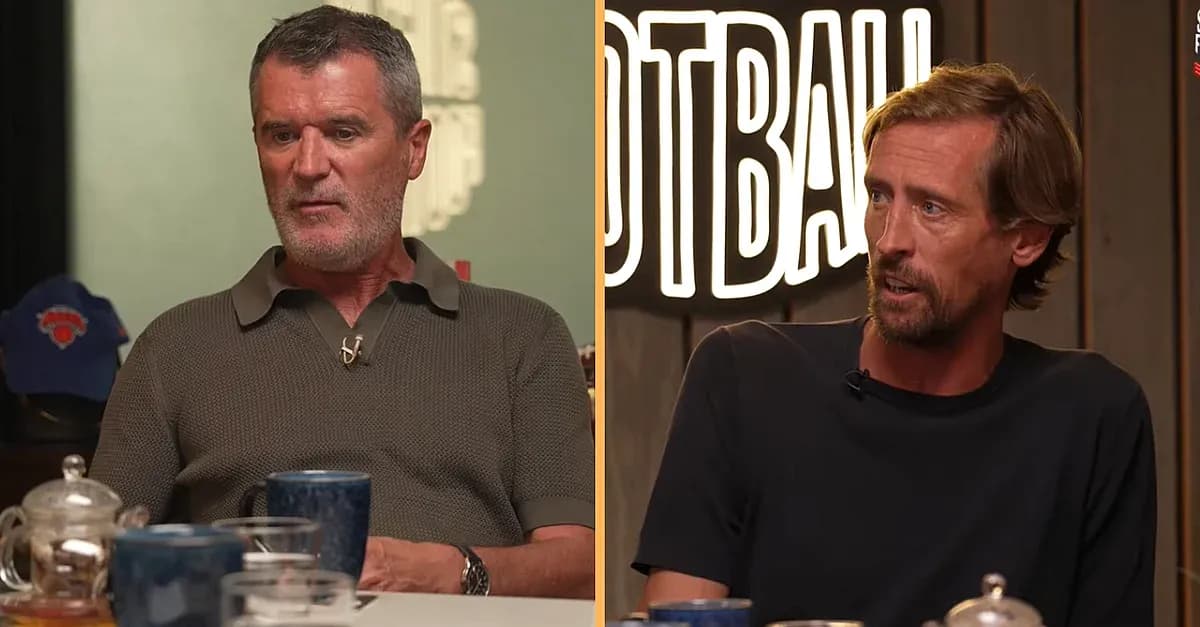
Speaking on the latest episode of Stick To Football alongside Gary Neville, Ian Wright and Peter Crouch, Keane was asked about the reaction back home to England’s 2-1 defeat.
Tuchel’s side had led through Anthony Gordon, only to be overrun late on by Argentina. Enzo Fernández dragged Lionel Scaloni’s team level, Lautaro Martínez completed the turnaround, and the world champions-in-waiting marched into a second consecutive World Cup final.
In England, the knives came out. Tuchel, hired precisely to turn a talented squad into winners, found himself in the crosshairs. The tone was familiar: fury, recrimination, a sense that anything less than lifting the trophy amounted to failure.
Keane was having none of it.
“I think this is the bit of arrogance with English fans comes into it and pundits or whatever,” he said. “Because, what, they got beaten in a semi-final? The World Cup is going on for nearly 100 years and England have won it once. There’s been 23 World Cups so why are they thinking they should be winning it? They’re competing, they came up short, that’s what happens in sport unfortunately.”
No dressing it up. No soft landing. Just a reminder of the cold numbers: one star on the shirt in almost a century of tournaments.
Crouch’s Deleted Tweet And The Backlash
The flashpoint for Keane’s ire was a tweet from Peter Crouch after the Argentina loss – a message that tried to balance disappointment with admiration.
“Gutted we are out,” Crouch wrote, “but watching Argentina was an experience, Messi’s a genius and a hard bastard as well like the rest of them. I’m proud of our lads and what they’ve achieved at the World Cup, some real heroes emerged and it was a pleasure to have been here for it.”
It was hardly a victory parade. A former international, hurting like everyone else, acknowledging both the quality of Argentina and the effort of England’s players.
The replies were vicious.
Crouch was stunned by the vitriol and eventually deleted the post. Keane, though, saw something deeper in the reaction – a long-standing flaw in the English football psyche, where pride in a semi-final run is treated as weakness, and respect for an opponent is branded defeatist.
For him, the fury that met Crouch’s attempt at perspective said more about the fanbase than the team.
Fine Margins, Harsh Judgements
England arrived at this World Cup with a squad many believed could go all the way. The talent was real. So were the expectations. From the group stage onwards, every convincing performance fed the belief that this was finally the year.
Then came Argentina. Then came Lionel Messi, Fernández, Martínez. Then came reality.
Keane’s point was not that England should be satisfied with falling short. It was that, at the elite level, the margins are razor thin. A late swing in momentum, a moment of brilliance, a lapse in concentration – these decide tournaments.
He argued that a semi-final defeat to a side of Argentina’s pedigree is not the catastrophic failure it has been painted as, even if it leaves a scar. England were in the mix, deep into the competition. They “came up short,” as he put it, but they were there.
The reaction, though, has been typically unforgiving. Tuchel’s methods, his selections, his in-game management – all dragged under the microscope. The narrative around the national team has snapped back to its default setting: crisis.
Keane’s challenge cuts through that noise. Strip away the emotion and the expectation, and one question remains: are England willing to accept the reality of where they stand in world football, or will every near-miss be treated as a scandal rather than a step?