.svg&w=384&q=75 "Pitchgist logo")
The Premier League's Greatest Transfers That Never Happened
The Premier League’s greatest players are etched into history. But there’s a parallel universe, just out of reach, where the cast list is even more outrageous.
This is the story of the transfers that never quite happened. The handshakes that didn’t become signatures. The flights that never took off. The sliding doors that reshaped English football without a ball being kicked.
Blackburn Rovers: The Superclub That Never Was
Blackburn Rovers once stood on the brink of something extraordinary.
In 1993, Roy Keane had agreed to join them. Not “almost”, not “considering it”. Agreed. The Nottingham Forest midfielder shook hands with Kenny Dalglish and believed the deal was done.
Then the phone rang.
Manchester United called, and Keane’s future turned. He chose Old Trafford, where he became the snarling heartbeat of seven Premier League title wins. Blackburn, who had him within reach, were left with a ghost of what might have been.
Two years later, Dalglish tried again to tilt the axis of English football. Fresh from the 1994/95 title, Blackburn brought a young Zinedine Zidane and his Bordeaux team-mate Christophe Dugarry to their training ground. They walked the pitches. They spoke to owner Jack Walker.
And then came the line that would echo through history: why sign Zidane when you already have Tim Sherwood?
The deal died. Zidane went on to win the World Cup in 1998, the Ballon d’Or the same year, and redefine what a playmaker could be. Blackburn drifted away from the summit, having twice brushed shoulders with greatness and twice walked on.
By 2010, the names had changed but the pattern remained. Robert Lewandowski, then a prolific young striker at Lech Poznan, had a proposal in place to join Rovers. Talks had gone well. The move was ready to be sealed.
Then a volcano erupted.
The ash cloud from Eyjafjallajokull grounded flights across Europe. Lewandowski never made it to England. Without that visit, without seeing the club and the stadium, his path veered towards Borussia Dortmund instead. From there to Bayern Munich and Barcelona, while Blackburn slid out of the Premier League. A natural disaster helped redraw the European football map.
Arsenal’s Lost Galácticos
No club wears its near-misses quite like Arsenal.
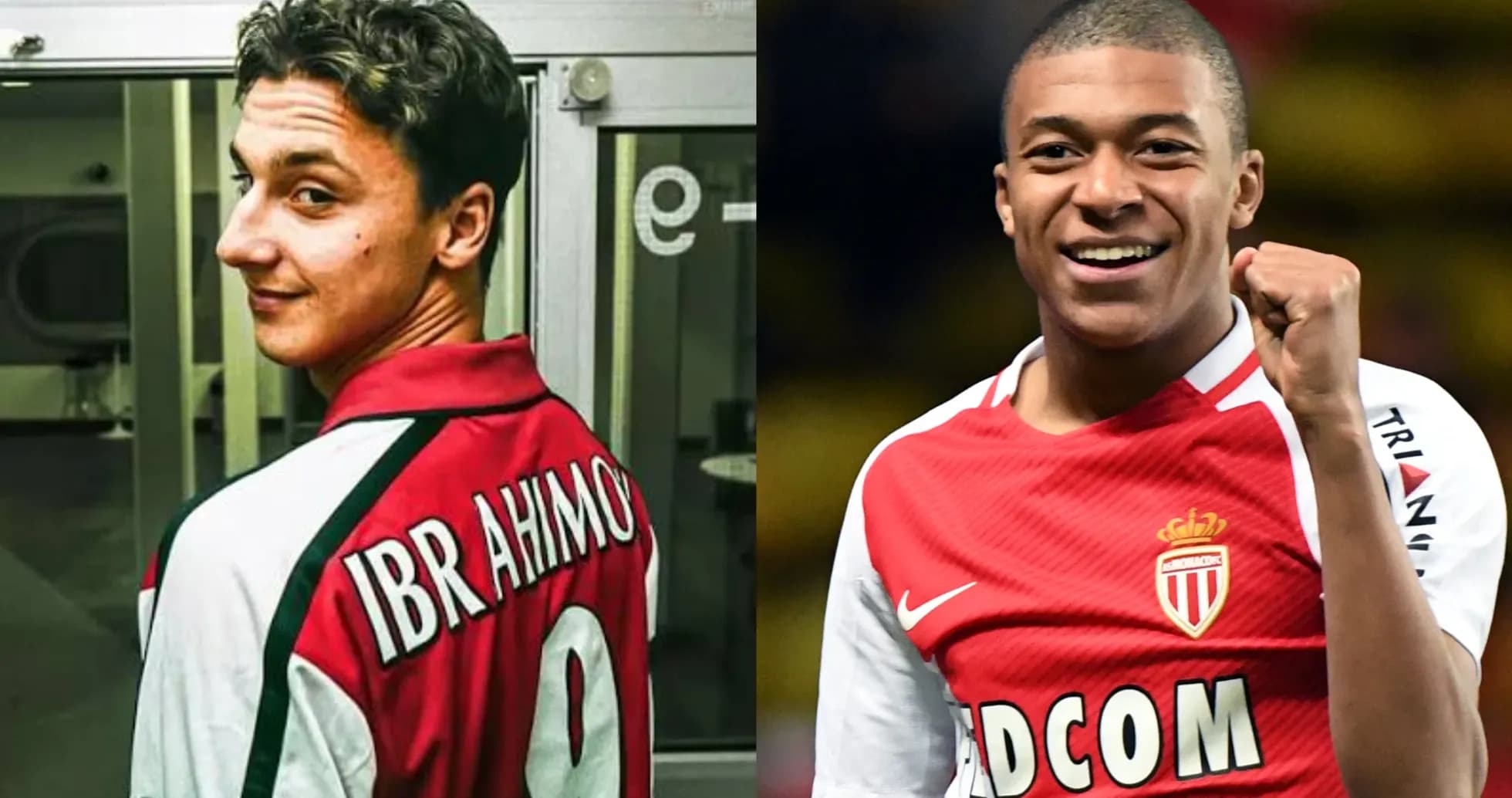
At the turn of the millennium, a 17-year-old Zlatan Ibrahimovic arrived in London, posed in a red No 9 shirt with his name on the back, and looked destined to join Arsene Wenger’s project. The shirt was real. The photos were real.
The contract wasn’t.
Wenger wanted a trial first. Ibrahimovic refused. “Zlatan doesn’t do auditions,” he would later say. He walked away, and the Premier League had to wait 16 more years to see him – in Manchester United colours.
Yaya Toure did pull on an Arsenal shirt, playing in a pre-season friendly against Barnet in 2003 while on trial from Beveren. Wenger wanted him. The player wanted to move. But work permit delays tested his patience. Metalurh Donetsk offered a simpler route, no passport issues, and Toure left.
He eventually returned to England not as a raw talent in north London, but as the driving force of Manchester City’s title-winning machine, lifting the Premier League three times.
Cristiano Ronaldo is the one Wenger has openly called his biggest regret. In 2003, the 17-year-old forward and his mother sat at Arsenal’s training ground, had lunch, toured the facilities, and received a shirt with his name on the back. The club were close.
The fee wasn’t.
Manchester United paid what Sporting Lisbon wanted. Ronaldo moved to Old Trafford, won three Premier League titles, and later collected five Ballons d’Or. Arsenal were left with a memory and a shirt that never saw a competitive minute.
Years later, the pattern repeated with Kylian Mbappé. In 2016, before he had signed his first professional contract with Monaco, Wenger flew to the south of France to meet the teenager and his family at their home. Arsenal tried to convince him to choose north London as his launchpad.
He chose Paris Saint-Germain instead, then Real Madrid, after winning the World Cup with France. Arsenal had once again arrived early at the door of a generational talent, only to watch him step through someone else’s.
Aaron Ramsey, at least, did say yes. But even that story had a twist. In 2008, Manchester United announced they had agreed a fee with Cardiff for the 17-year-old, calling him one of Wales’ brightest prospects. Ten days later, he signed for Arsenal instead, persuaded by Wenger’s personal pitch during Euro 2008. Ramsey went on to spend 11 years in north London and score FA Cup-winning goals. One that got away – for United this time.
Manchester United: The Empire of Near Misses
Manchester United built an empire on signing the right player at the right time. They also watched some era-defining stars slip through their fingers.
Alan Shearer came first. In 1996, the Premier League’s record goalscorer sat down with Sir Alex Ferguson and Kevin Keegan on the same day. He was, by his own account, 90 per cent certain he would choose United. A world-record £15 million move was on the table.
Then the pull of home won. Shearer went back to Newcastle United, where he scored 148 of his 260 Premier League goals. United found other ways to win. Shearer became a monument on Tyneside instead of Old Trafford.
In 2003, the club were “very close” to signing Ronaldinho from Paris Saint-Germain. Ferguson spoke confidently about the deal. It looked like a matter of time.
Time ran out. Barcelona, powered by Sandro Rosell’s promise to the Brazilian, moved faster. Ronaldinho chose Camp Nou, won the Ballon d’Or in 2005, and lifted the Champions League in 2006. United, denied their showman, pivoted again and later built around Ronaldo and Wayne Rooney.
Steven Gerrard never wore United red, but his decision in 2005 reshaped the balance of power in England. Fresh from leading Liverpool to Champions League glory, he handed in a transfer request and came close to joining Jose Mourinho’s Chelsea, not United – but the ripple was felt everywhere.
Mourinho dreamed of a midfield of Claude Makelele, Gerrard and Frank Lampard. Gerrard admitted in his autobiography that “Jose turned my head”. The move looked on. Then, after talks with his family, he stayed. Liverpool kept their captain, Chelsea kept hunting for that final piece, and English football kept one of its defining loyalties intact.
United’s more recent near-misses cut even deeper.
In December 2019, Ole Gunnar Solskjaer flew to Austria to try to sign Erling Haaland from Red Bull Salzburg, having already recommended the striker to the club 18 months earlier. He had managed Haaland at Molde and knew exactly what was coming.
United hesitated the first time. By the time they moved, everyone was watching. Haaland chose Borussia Dortmund, then Manchester City, where he has already collected two Premier League titles and three Golden Boots. United’s misstep allowed their neighbours to sign the most devastating finisher of his generation.
Jude Bellingham was another. At 17, with Europe circling, he visited Carrington with his family. Solskjaer was there. So were Sir Alex Ferguson, Bryan Robson and Eric Cantona. United rolled out royalty to sell the club.
They left that meeting believing he would sign. He didn’t. Bellingham chose Borussia Dortmund, then Real Madrid, and is now the face of both club and country’s future. United are left wondering how different their midfield – and their decade – might have looked.
West Ham, Bolton and the Almost-Icons
Not all of these stories belong to the giants.
In 1999, West Ham United brought a 17-year-old Andriy Shevchenko in for a trial. Harry Redknapp organised a game against Barnet reserves. Shevchenko scored twice. The staff liked him.
The price – around £1 million – felt too steep for a teenager. Redknapp and assistant Frank Lampard Snr decided against it. Shevchenko went on to win the Ballon d’Or in 2004 and eventually arrived in the Premier League with Chelsea, long after West Ham had let the chance pass.
Bolton Wanderers went even closer to something surreal. In 2004, chairman Phil Gartside stood at Goodison Park with a fax in his pocket. Rivaldo, World Cup winner and Ballon d’Or recipient, wanted to come. The Brazilian had accepted the financial terms. Bolton offered him the challenge of taking the club into Europe for the first time in their history. Rivaldo publicly called it “an exciting time”.
The deal never crossed the line. He signed for Olympiacos instead. Bolton, under Sam Allardyce, still built a cult-favourite side, but the sight of Rivaldo in white at the Reebok Stadium remains one of football’s great “what ifs”.
When Klopp and Wenger Chased Mbappé
If any pursuit summed up the modern transfer arms race, it was Kylian Mbappé’s.
After Wenger’s 2016 visit to Mbappé’s family home, Liverpool made their move a year later. Jurgen Klopp and his staff took a private jet, circled in the air, and spent the flight talking with Mbappé and his family over a meal. Liverpool “pulled out all the stops”, as Klopp later put it.
The charm offensive wasn’t enough. Mbappé chose PSG, then Real Madrid. Arsenal and Liverpool both had the right ideas, the right timing, even the right conversations. They just didn’t get the signature.
The Sliding Doors of a League
Put all of these together and the picture is staggering.
Keane and Zidane at Blackburn. Ronaldo and Ibrahimovic at Arsenal. Ronaldinho at Manchester United. Rivaldo at Bolton. Lewandowski in Lancashire. Haaland and Bellingham in red instead of blue or white.
The Premier League is already the sport’s great theatre. Yet, in the margins of faxes, ash clouds, work permits, transfer fees and second thoughts, an even wilder version of history slipped away.
The question now is simple: which of these deals, if it had gone through, would have changed everything?