.svg&w=384&q=75 "Pitchgist logo")
Boavista: The Rise and Fall of a European Foe
Boavista are gone. Not relegated, not reborn under a new badge, but ordered to cease all activities by the end of July 2026. A club that once stood toe‑to‑toe with Europe’s elite, that once blocked Celtic’s path to a European final for 178 tense minutes, has been forced into extinction by the cold, grinding weight of debt.
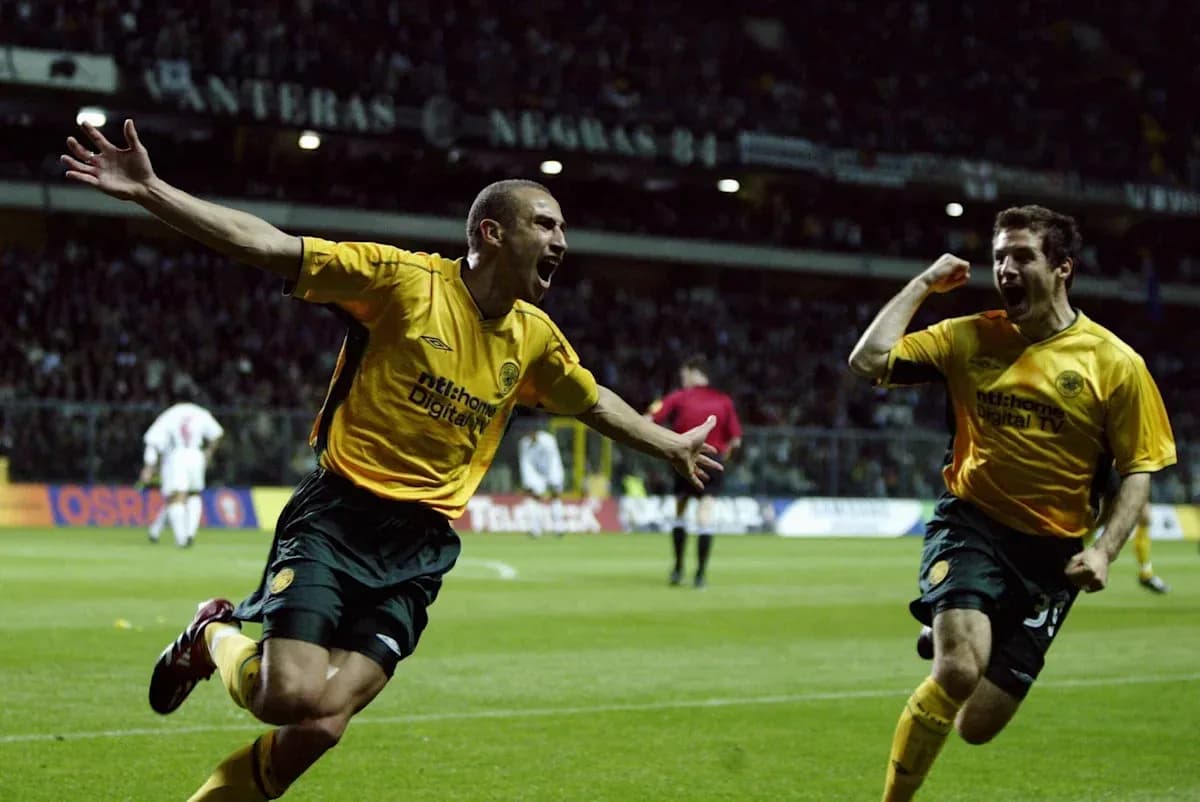
For Celtic supporters, the name Boavista stirs two very different sets of memories. One belongs to the 1970s, grainy photographs and black‑and‑white headlines. The other is vivid, loud, and green and white — the spring of 2003, when Henrik Larsson dragged Martin O’Neill’s side past the Porto club and into a UEFA Cup final.
Both now sit in the past, untouched by a future that no longer exists for Boavista.
First Meetings and First Numbers
Celtic first crossed paths with Boavista in the 1975 Cup Winners’ Cup. It was a different era, a different European map. Boavista were an ambitious Portuguese outfit, Celtic a seasoned continental force still carrying the glow of Lisbon.
The first leg in Porto finished 0-0. Functional, disciplined, forgettable. The real story came a fortnight later at Celtic Park.
On 5 November 1975, under the Glasgow lights, Celtic won 3-1 to take the tie 3-1 on aggregate. Kenny Dalglish, Shuggie Edvaldsson and Dixie Deans supplied the goals, names that still echo around older conversations in the stands. Deans, the penalty‑box predator, finished the job. Edvaldsson, the Icelandic defender with a striker’s instinct, left his mark as well.
That night carried another small but lasting footnote in Celtic history. It was the first time the club wore squad numbers on the back of those famous hooped jerseys. A quiet revolution stitched into the fabric of a European win.
Boavista, then, were just another obstacle overcome. A good side, but not yet a defining one.
The Larsson Semi-Final
Fast‑forward nearly three decades. By 2003, Boavista had grown into something more substantial. Founded in 1903, they had built a proud, awkward identity in Porto’s shadow. In 2001 they did the unthinkable, winning the Primeira Liga and becoming the first — and still the only — club outside Benfica, Porto and Sporting Lisbon to be crowned champions of Portugal.
That achievement alone should have secured them a permanent place in the European conversation. It made their fall all the more brutal.
For Celtic fans, though, Boavista’s greatest significance lies in that UEFA Cup semi-final.
The first leg at Celtic Park on 10 April 2003 ended 1-1. Boavista were stubborn, organised, and cynical when required. They nicked an away goal and walked off the pitch with the tie tilted in their favour. Celtic had dominated spells but left with work to do.
The second leg in Porto on 24 April turned into a test of nerve as much as quality. The Bessa Stadium felt tight, claustrophobic, every misplaced pass magnified. For long stretches, the Portuguese side looked like they might smother Celtic’s dream.
Then Larsson intervened. Of course he did.
The Swede scored in Glasgow to level the first leg. He scored again in Porto, the decisive goal in a 1-0 win on the night and a 2-1 victory on aggregate. One man, two goals, a club propelled into a historic final against Boavista’s city rivals, Porto.
The final in Seville still stings. Celtic ran out of legs, Porto ran out with the trophy, and the less said about the detail the better. But the semi-final? That remains a cherished chapter, and Boavista were central to it.
From Champions to Collapse
Boavista’s decline did not come overnight. The financial rot set in long ago, but the last few years turned slow erosion into collapse.
Transfer bans piled up. The club were prohibited from signing players across five separate windows. When the restrictions finally lifted, they lurched in the opposite direction, signing nine players in a single day in February 2025. It felt desperate, a last throw rather than a carefully laid plan.
The 2024/25 season delivered the inevitable sporting punishment. Boavista finished bottom, relegated after a 4–1 defeat away to Arouca on the final day. Some 2,000 travelling fans watched their team collapse, then spilled onto the pitch in a raw, emotional invasion that said everything about how far and how fast their club had fallen.
The Portuguese league authorities then barred Boavista from playing in Liga Portugal 2. Oliveirense, who had been relegated, received a reprieve. Boavista, once champions, found the door slammed in their face.
The spiral deepened. In 2025, the club were refused registration in both the third‑tier and fourth‑tier Campeonato de Portugal. To stay alive in any form, there was a change of company and a reset. The “new” entity started life in the Liga Pro, the elite league of the Porto Football Association, far from the bright lights of the national stage.
The original club tried to keep a presence by entering a team in the fourth division of the district leagues. It was a gesture, an act of defiance, but it came without the structure or resources to sustain it. Failures to turn up for fixtures led to defeats by default. By the end of October, that team had withdrawn from competition altogether.
The football had stopped long before the court did.
The Final Order
On 16 July 2026, the inevitable became official. A court order instructed Boavista to cease all activities by 31 July and hand over their premises. Years of unpaid obligations to creditors had finally caught up with them. Previous attempts to restructure the debt had not been enough.
The language of insolvency is cold. It strips away the colour, the noise, the banners, the songs. It reduces a club — a century of matches, of heroes and villains, of joy and heartbreak — to a balance sheet that no longer balances.
Boavista failed to pay what they owed. The punishment is absolute. The club, as it existed, is now confined to history.
What Remains
The badge can disappear from league tables. The stadium can change hands. The company can be wound up. What stays is memory.
For Celtic, Boavista will always be the club Dalglish, Edvaldsson and Deans put away in 1975, the team that shared the pitch when squad numbers first appeared on the hoops. They will always be the stubborn semi-final opponents from 2003, the side Larsson had to beat twice to drag Celtic to Seville.
In Porto, they will remain the outsiders who broke the big three’s grip and lifted the title in 2001.
Will something rise from the wreckage — a “new” Boavista, a phoenix club, a fresh company with an old soul? The legal entity is gone, but the idea of Boavista, the black‑and‑white chequered shirts and the memory of what they once were, will not vanish so easily.