.svg&w=384&q=75 "Pitchgist logo")
Argentina Declares Holiday After World Cup Defeat
Argentina lost the final. The government declared a holiday anyway. In a country that measures itself in stars above the crest, that decision landed like a thunderclap.
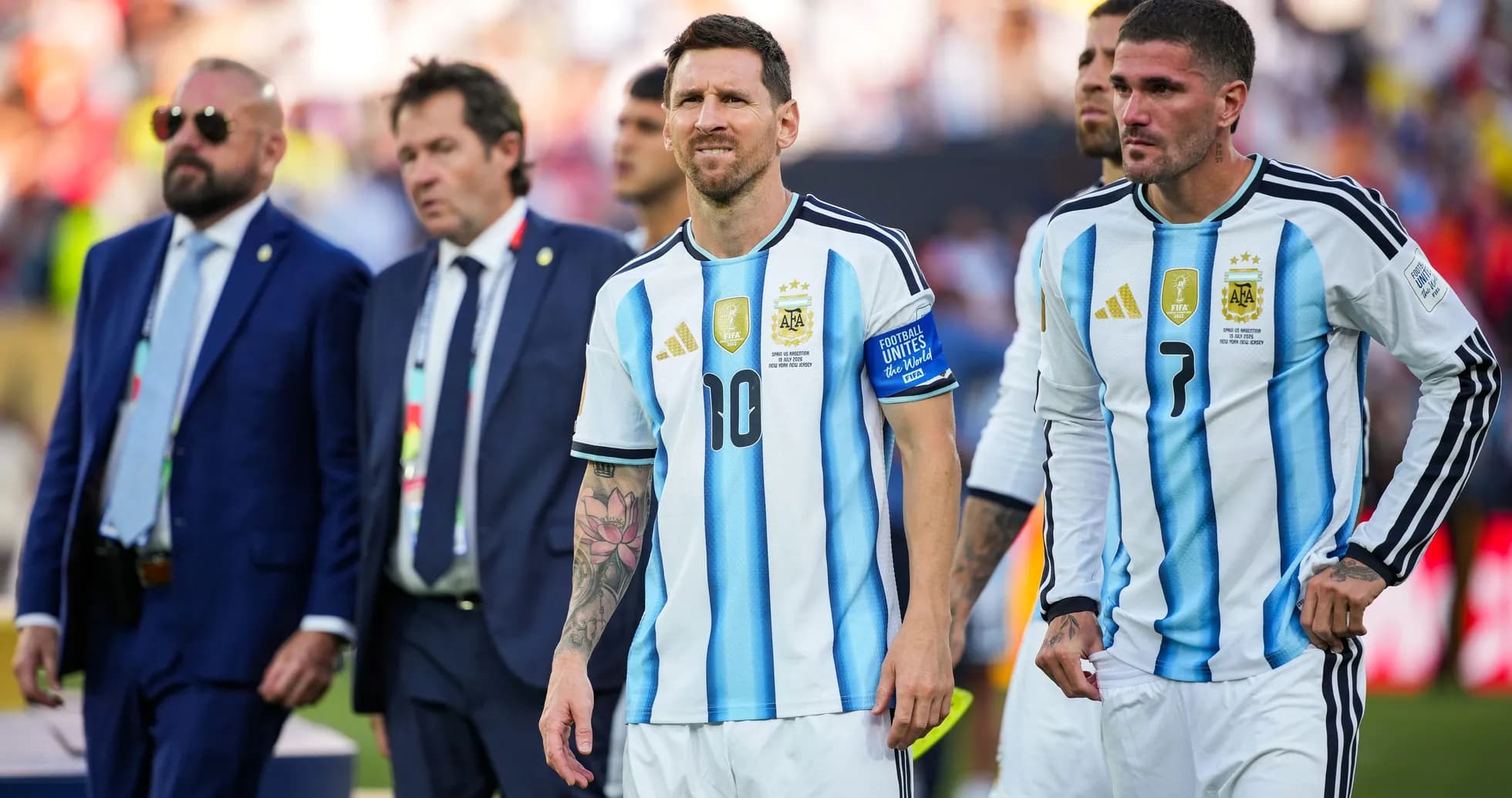
Lionel Scaloni’s side fell 1-0 to Spain in New York, undone in extra time by a Ferran Torres strike. It was a flat, blunt performance from the Albiceleste, who failed to register a single shot on target as their reign as world champions slipped away. No trophy, no glory parade, no cathartic explosion of joy on the streets of Buenos Aires.
Yet the president moved to turn their campaign into a day of national celebration.
A Defeat, a Holiday, and a Backlash
Javier Milei, who pointedly skipped the showpiece itself because of his own superstitions, announced on X that the players and staff would be allowed to choose a date that would then be declared a national holiday.
“Given the concern about the celebrations for the achievement reached by the Argentine National Team,” he wrote, “I inform the population that, depending on what the Players and the Technical Staff decide regarding the day to celebrate, it will be declared a national holiday.”
The reaction was instant and ferocious.
In a football culture that venerates World Cups and Copa América titles, many Argentines recoiled at the idea of formally celebrating second place. Confusion spread. Some even suspected a technical error. Others saw it as a tone‑deaf gesture at odds with the team’s limp display in the final.
For a significant section of the public, a national holiday is reserved for unarguable feats: lifting a trophy, ending a drought, delivering something historic. Finishing runners‑up, especially in such a toothless manner, did not meet that bar.
Messi Defended, Pride Protected
Milei doubled down, this time moving from policy to emotion. In a separate post, he addressed Lionel Messi and his team‑mates directly:
“Thank you so much, players. [We fought] until the end with our boots on. Argentina always at the top.”
The message captured the other side of the national mood. Beyond the anger and mockery, there is a deep instinct to protect this generation, to defend Messi’s legacy and the group that finally ended the long wait for a world title in Qatar.
The president’s words tried to tap into that sentiment: that reaching another final, even in defeat, keeps Argentina “at the top” of the game, that effort and consistency deserve recognition even when the final step goes missing.
But the dissonance remained. A proud football nation was being asked to treat a silver medal like gold.
Players Caught Between Country and Clubs
While the political storm raged, another question surfaced: what do the players actually want?
Many supporters argued that the squad would prefer to slip quietly back to their clubs rather than front a parade for a lost final. The season clock is already ticking. Club managers will be watching minutes, recovery, travel. Players, too, will feel the physical and emotional drain of a long tournament that ended with nothing in their hands.
A holiday, a parade, a fresh round of public appearances — all of that sits uneasily with a group that has set its own standards sky‑high. For a team that defines success in titles, not near‑misses, the idea of celebrating this outcome jars.
The End of an Era Looms
Behind the noise lies a more significant turning point. This campaign is expected to mark the last World Cup for Messi, his sixth, even if the Inter Miami star has not formally confirmed the end of his Argentina career at 39.
The veteran core that carried the Albiceleste through a golden cycle is nearing the exit. The coaching staff now face a hard, urgent task: blood new talent, reshape the spine of the side, and build a team that can live without the greatest player in the country’s history.
That process will not be eased by political gestures or social media storms. It will be built in quieter moments: training camps, friendlies, the first competitive matches where new faces must cope with the weight of the shirt and the expectation that Argentina should not only reach finals, but win them.
The debate over a holiday will fade. The question that will linger is sharper, and far more important: when the next World Cup comes around, will Argentina still be “always at the top” without Messi to drag them there?