.svg&w=384&q=75 "Pitchgist logo")
Ángel Di María Reflects on Argentina's World Cup Defeat
Ángel Di María was no longer on the grass when the final whistle cut through Argentina’s World Cup defence. But he didn’t stay silent for long.
Within hours, the veteran winger reached for his phone and did what he has always done for this generation: he led. This time, not with a left foot from the touchline, but with a message that tore through the gloom on his Instagram story.
“A country is proud of you. A country was united once again thanks to the love and the b*lls you put into this World Cup,” he wrote, refusing to let a single night stain a decade of dominance.
“You are history, you are legends, and no one can ever take that away from you. The best national team in the history of our country. Five consecutive finals, no one will ever be able to take that away from you. THANK YOU SO MUCH FOR EVERYTHING.”
In one breath, Di María summed up what many in Argentina were struggling to articulate. This wasn’t just a defeat. It was a brutal, static end to a reign that had reshaped the identity of the national team.
A Final That Never Caught Fire
On the pitch, the defending champions never found a pulse. The decisive match drifted away from them, minute by minute, until an ugly statistic underlined just how far they were from their best: they became the first team ever to fail to register a single shot during normal time in a World Cup final.
No shots. No rhythm. No release.
The game turned into a grind. High tension, heavy collisions, and a constant sense that one more clash might tip the whole thing over. It almost did.
Lisandro Martínez, one of the side’s fiercest competitors, was forced off in the first half with a severe injury, a moment that seemed to drain what remained of Argentina’s composure. The duels grew harsher, the spaces tighter, the frustration more visible.
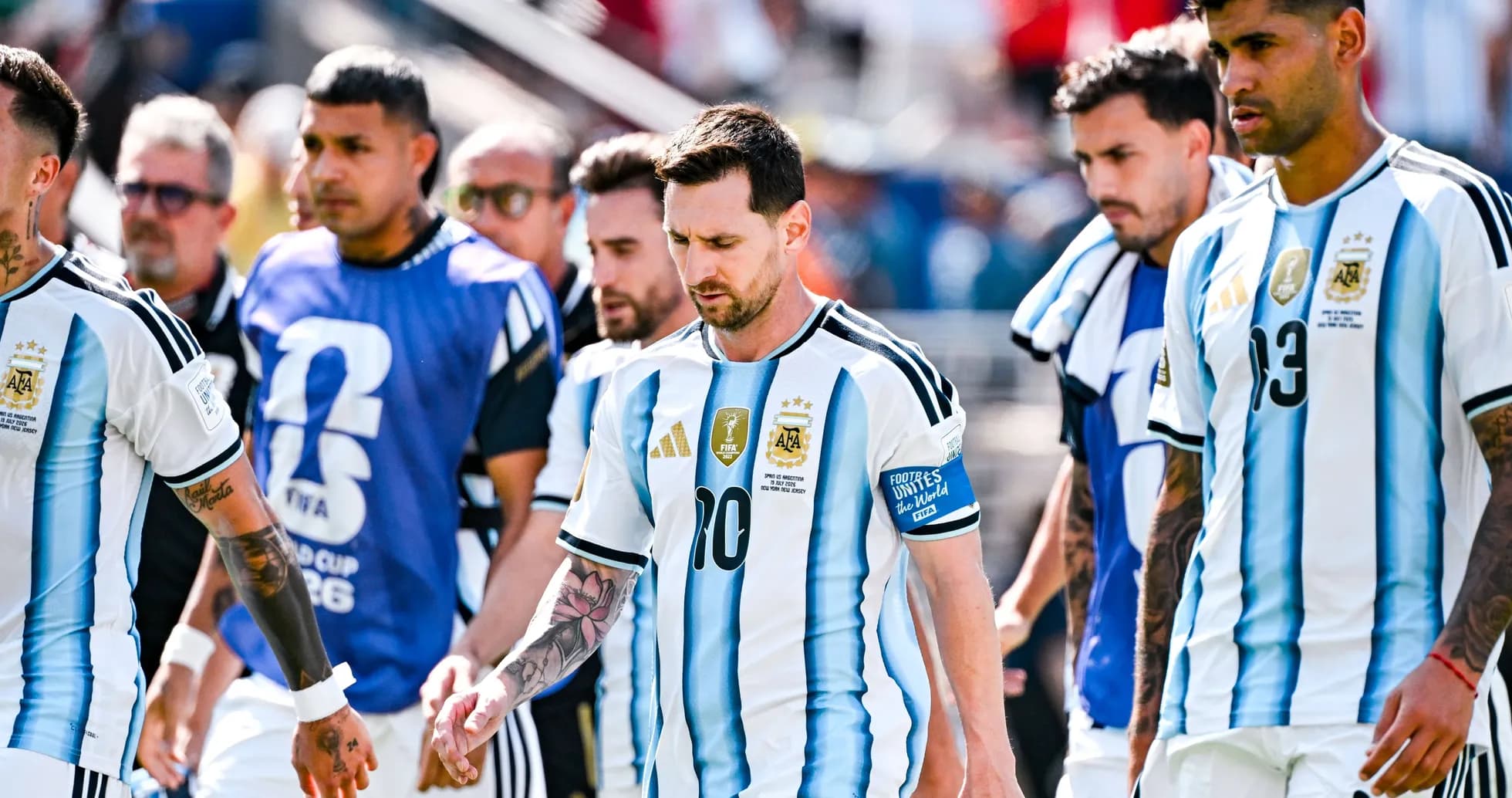
Then came the breaking point. Just as extra time loomed as a possible reset, Enzo was sent off shortly before the additional period, leaving Argentina to stare down the final stretch a man light and emotionally drained.
The champions never recovered.
Spain Rise as Argentina Watch an Era Close
While Argentina wrestled with the reality of their fall, Spain celebrated a historic ascent. The European side became the first nation ever to hold both the men’s and women’s world titles at the same time, a landmark achievement that underlined a power shift on the global stage.
One camp danced. The other watched, knowing what this likely meant.
For Argentina, this was more than the end of a tournament. It felt like the closing chapter of a golden era that had delivered trophies, finals, and a level of consistency the country had never seen before. Five consecutive finals. A run that turned a talented group into a reference point in world football.
Di María’s words cut through the silence left by defeat. They didn’t erase the pain, or the image of a final without a single shot. But they did something else.
They framed this generation not by how it ended, but by how long it stood at the very top.