.svg&w=384&q=75 "Pitchgist logo")
Paolo Maldini's Quest for Guardiola: Italy Awaits
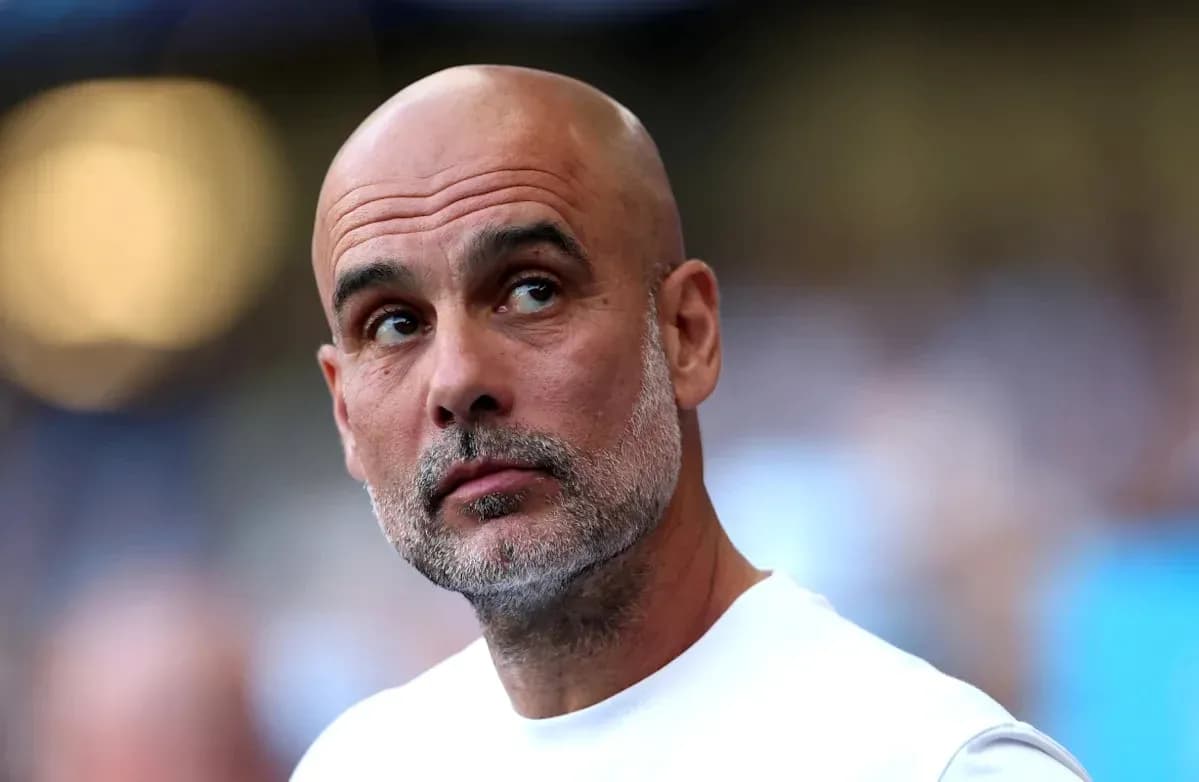
Paolo Maldini’s audacious play for Pep Guardiola has dragged Italy into a rare kind of suspense: the wait for a yes that almost everyone expects to be a no.
Sky Sport Italia first revealed that the new Italy technical director, accompanied by his advisor Leonardo, flew to Barcelona over the weekend. Their mission was as simple to describe as it is monumental to execute: convince Guardiola to become the next coach of the Azzurri.
Italian outlets lined up on Tuesday to confirm the story and colour in the details. Talks were held. The proposal is real. And now, the country is holding its breath.
A near-impossible dream
The consensus from the major Italian newspapers is blunt. Corriere della Sera calls Maldini’s attempt “nearly impossible.” Not just because of money, though the financial package required to tempt Guardiola is substantial, but because of timing, life, and history.
Guardiola has just come off a gruelling decade at Manchester City, a cycle of relentless pressure, trophies, and scrutiny. Only days ago, he spoke openly about needing a break, about stepping away from the dugout to recharge. He wants time with his family. He wants time with his 95-year-old father. Those priorities have not shifted.
On paper, that should end the conversation. It hasn’t.
The pull of a grand project
Repubblica reports that Guardiola has not dismissed the offer out of hand. Instead, he has asked for time to evaluate it and could give a definitive answer as early as tomorrow. That alone has kept the door open, if only a crack.
What is keeping him at the table is the scale of the project. This is not just about managing Italy’s first team. As Tuttosport underlines, the proposal is for something deeper: a chance to reshape Italian football culture from the ground up, to leave a structural legacy comparable to what Johan Cruyff did at Barcelona and, by extension, Spain.
For a coach obsessed with ideas and identity, that kind of challenge carries its own seduction. It is not simply another job. It is an invitation to rewrite a footballing language.
A bond that matters
There is also the relationship. Guardiola and Maldini are not strangers crossing paths in a boardroom. They share a mutual respect built over years at the top of the game.
When Guardiola lifted his first Champions League as a coach in 2009, beating Manchester United with Barcelona at the Olimpico in Rome, he dedicated that triumph to Maldini. That gesture did not go unnoticed in Italy, and it certainly has not been forgotten now.
That bond gives Maldini’s pitch a personal edge. He is not just selling a project; he is asking a colleague he admires to join him in reshaping a national team.
Italy’s Plan B – and C
Behind the romance of the Guardiola chase sits a far more pragmatic reality. The FIGC cannot wait forever, and the list of alternatives is already drawn up.
If Guardiola says no, Andrea Pirlo and Roberto Mancini top the federation’s shortlist, with Antonio Conte lurking in the background as another heavyweight option.
The Italian press is split on who would step in. Gazzetta leans towards Pirlo as the favourite if Guardiola declines, pointing to his profile and the symbolic continuity he would offer. Corriere dello Sport instead highlights Mancini as the leading candidate in that scenario, a coach with a proven track record at international level and deep familiarity with the Azzurri environment.
None of those names lack stature. All of them, however, operate in the shadow of the one that now dominates every headline.
Waiting for Pep
Right now, everything hangs on Guardiola’s answer. The logic says he will turn it down: exhausted after Manchester City, committed to a sabbatical, anchored by family priorities. The emotional pull, the footballing romance, lies on the other side of the scale – a historic nation asking him to lead not just a team, but a transformation.
Maldini has made his move. Leonardo has played his part. Italy has dared to dream big.
Now it comes down to Guardiola, a decision, and the question that will define the Azzurri’s next era: does he choose rest, or does he choose revolution?