.svg&w=384&q=75 "Pitchgist logo")
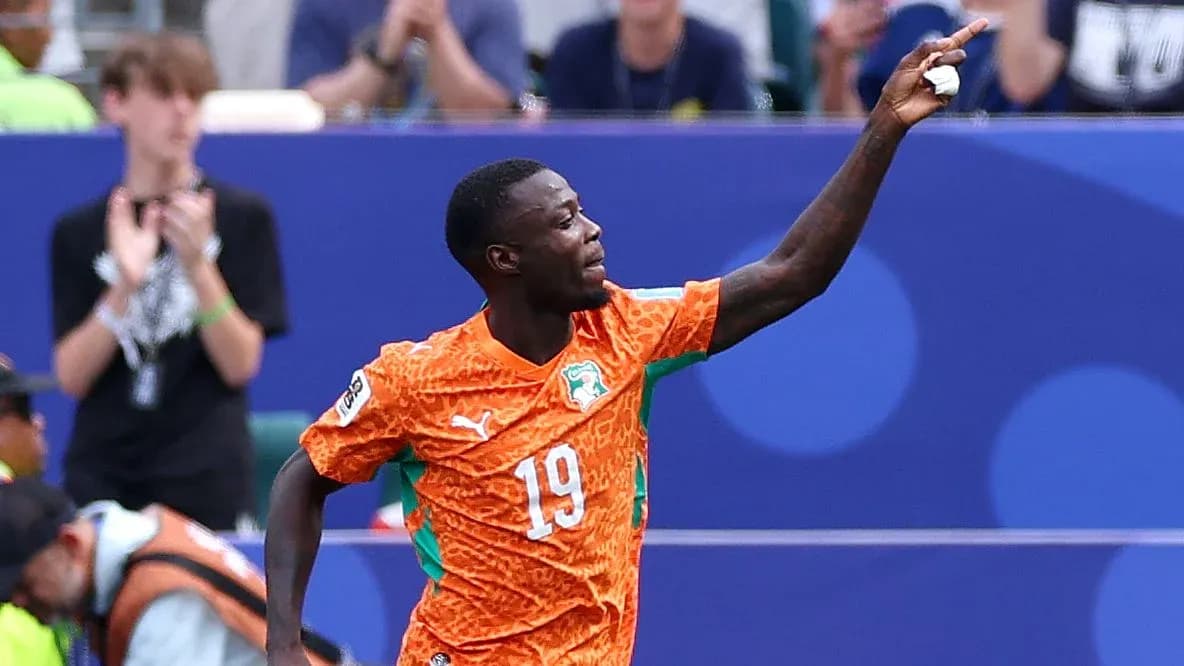
Nicolas Pepe Leads Ivory Coast to Historic World Cup Knockout
Nicolas Pepe was supposed to be yesterday’s man. Seven months ago he watched the Africa Cup of Nations from home, cut from the Ivory Coast squad and seemingly drifting away from the international stage. In Philadelphia, he walked back into the spotlight and took the tournament by the collar.
Two chances. Two goals. One statement.
Ivory Coast beat Curaçao to reach the World Cup knockout rounds for the first time in their history, and it was Pepe – the discarded winger reborn in Spain – who dragged them there.
Pepe rewrites his Ivorian story
The game had barely settled when Pepe struck. Seven minutes in, Curaçao hesitated at the back, a loose exchange inviting danger. Yan Diomande pounced, slid the ball into space, and Pepe did the rest – a calm, low finish that punished the mix-up and settled Ivorian nerves.
That early blow changed the whole feel of the night. Ivory Coast, so often paralysed on this stage in previous generations, suddenly played with a freedom that used to desert them at World Cups. The touch was cleaner, the press sharper, the body language of a side that believed this tournament might finally belong to them.
Pepe’s second, midway through the second half, carried the swagger of a player who has found himself again at Villarreal. Cutting in from the right, the angle opening just enough, he whipped a trademark left-footed strike into the top corner. Vintage Pepe. The kind of finish Arsenal fans saw in flashes, now delivered when his country needed it most.
Emerse Fae’s decision to recall him already looked justified before the ball hit the net. By the 65th minute, it felt inspired.
From golden generation to breakthrough side
For years Ivory Coast carried the weight of names: Didier Drogba, Yaya Toure, Kolo Toure. A golden generation that dominated club football but never escaped the World Cup group stage. Three attempts – 2006, 2010, 2014 – three early exits.
This team has finally broken that barrier.
Six points, second place in Group E, and a place in the round of 32. On paper it looks simple. In context, it is seismic. A psychological wall, knocked down in an American city far from Abidjan, by a squad at its first World Cup and a coach who only recently stepped into the job.
Fae wanted his players to feel the scale of it. “My message to fans would be to enjoy this historic qualification, celebrate it,” he said afterwards. He talked about the clean sheet, the lift to morale, the need to “bask in this victory” before turning to the next challenge. It was the voice of a man who understands how fragile confidence can be at this level – and how powerful.
Yet he refused to let the night become a one-man show. The coach kept returning to the idea of a group that is “growing”, a team that “sticks together”, where even direct rivals for positions “are laughing together, always together”. It sounded like a dressing room that has decided ego can wait.
On the pitch, that togetherness showed in their control. Ivory Coast did not create a flood of chances, but they carried a clinical edge Curaçao lacked. When the West Africans stepped up the tempo, they looked like a side that has learned how to manage tournament football rather than be consumed by it.
Curaçao bow out with heads high
Curaçao leave the World Cup, but not the memory of it.
The smallest nation by population ever to qualify did far more than make up the numbers. They took a point off Ecuador and forced Ivory Coast to work for everything in Philadelphia. There was nothing romantic about their effort; it was hard, disciplined, and at times dangerously close to spoiling the Ivorian party.
Their best moment came just before half-time. Juninho Bacuna found himself with a golden chance to level the scores, the kind of opening that can flip a group on its head. He missed, and you could almost feel the air shift. Those are the margins at this level. Curaçao never stopped competing, but they never again had a clearer look at Yassin Fofana’s goal.
Fofana, assured and unflustered, turned away what did come his way. Curaçao finished with only two shots on target, a statistic that underlined the discipline of the Ivorian back line as much as any highlight reel save.
For Dick Advocaat, there was pride rather than regret. “This team has outdone itself against world-class sides,” he said, pointing to the value of Ivory Coast’s wide players – “worth 50m each” in his words – as evidence of the level his team had faced. The original target was the Gold Cup. Once that was achieved, the World Cup became the dream. They reached it, and they did not look out of place.
Asked whether Curaçao can come back to this stage, Advocaat did not hesitate. The way they played in their second and third games, he said, was “very promising”. It did not sound like a goodbye.
A dangerous outsider emerges
As the tournament steps into the round of 32, Ivory Coast move with a different kind of energy. The historical baggage has lightened. The narrative has changed.
Waiting for them will be a heavyweight: either Kylian Mbappe’s France or Erling Haaland’s Norway. On paper, Ivory Coast will not be the favourite in either tie. That may suit them perfectly.
They have a winger in form, scoring the sort of goals that decide knockout games. They have a defence that just posted a clean sheet when the pressure spiked. They have a coach who has convinced his players that internal competition can be healthy, not corrosive.
For years, the Elephants were the side everyone expected to make a deep run and never did. Now they arrive in the knockouts without that suffocating expectation, but with something far more dangerous: belief.
The question is no longer whether Ivory Coast belong here. It is how far this version of them is willing to go.