.svg&w=384&q=75 "Pitchgist logo")
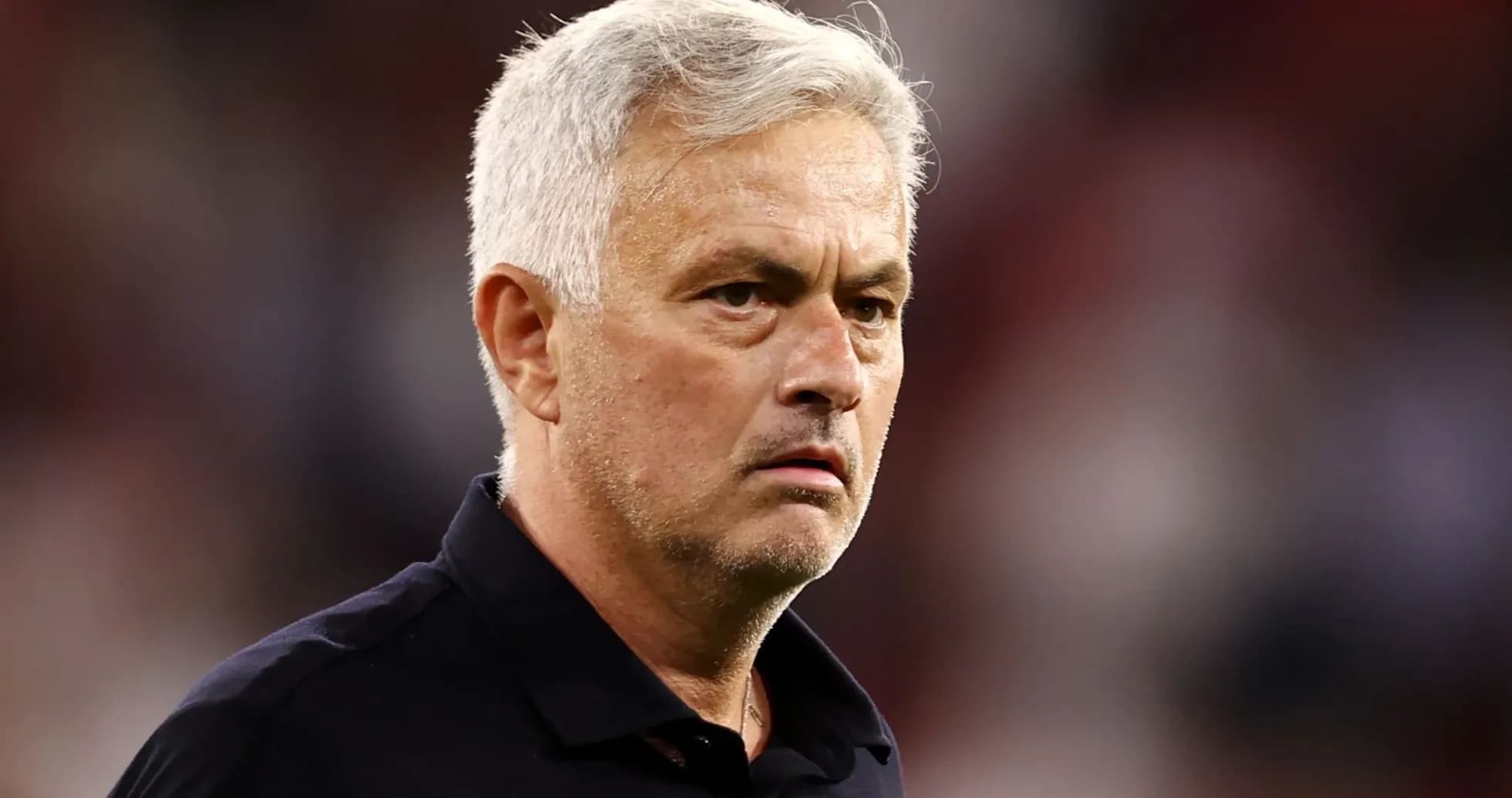
José Mourinho: The Coach Who Revived Roma's Glory
José Mourinho has lived enough football nights to fill a lifetime. European finals, title deciders, bitter rivalries on three continents. Yet when he is asked to name the one game he would replay if he could, his mind goes straight back to Budapest and a scar that still burns.
“Roma - Sevilla, Europa League final. Without Anthony Taylor!”
The line comes with a familiar edge. The same defiance that has followed him from Porto to Chelsea, from Inter to Real Madrid, from the touchline at Old Trafford to the Olimpico. Years have passed, jobs have changed, but that night against Sevilla still gnaws at him.
The one that got away
Mourinho’s spell at Roma was anything but quiet. He walked into a club starved of success and dragged it back onto the European stage with a force of personality that felt perfectly matched to the city.
He took Roma to back-to-back European finals. First, the 2022 Europa Conference League, where Feyenoord were beaten and history was made. That victory did more than end an 11-year wait for major silverware in the capital. It completed Mourinho’s unique UEFA treble: Champions League, UEFA Cup/Europa League and Conference League, a set no other manager has ever assembled.
Roma’s fans responded as only that city can. The streets turned into a rolling wave of red and yellow, the club’s long frustration washed away in a single, cathartic night.
Then came Sevilla. Penalties. Agony. And a first European final defeat for Mourinho, who left the pitch raging at a Premier League-based refereeing team led by Anthony Taylor. He has not softened his view.
The careers of everyone involved have moved on. Sevilla lifted yet another Europa League. Roma reset. Taylor continued in the spotlight. Mourinho himself now prepares for a second act at Real Madrid. But emotionally, that game has never really ended for him.
A city that “went mad”
For a coach who has won in Portugal, England, Italy and Spain, picking a single proudest achievement is no simple task. He has league titles with Porto, Chelsea, Inter and Madrid. He has Champions League crowns with Porto and Inter. He has domestic cups scattered across Europe.
Yet when he looks back over 26 years in the dugout, his thoughts keep circling back to that first season in Rome and a competition many initially shrugged at.
“I did a few!” he said on the Beast Mode On Podcast with Adebayo Akinfenwa, when asked for the achievement that fills him with the most pride. “When we won the Conference League in Roma, that city went mad.”
“I believe that we did to that city what Champions League winners cannot do in other cities. Roma is a city where people are really, really, really in love with that club. A giant club with incredible passion. Absolutely incredible.
“Of course, when we won the Conference League it was the first season of the Conference League, I don't think Europe was giving [recognition] to the Conference League what it is giving now. When we arrived in Rome and we went for the parade around the Colosseum, Circus Maximus, you realise what you gave to those people.”
It was not the most prestigious trophy of his career. It may, though, be the one that best captured what Mourinho has always craved: a visceral bond between his team and its people, a city living every minute with him.
Anfield’s roar and Madrid’s room
Mourinho has never shied away from hostile environments. He has embraced them, thrived in them, weaponised them. Yet when pressed on the toughest away ground he has faced, he does not hesitate.
Anfield.
The home of Liverpool, with its steep stands and suffocating noise, remains the stadium that most tested him. He has gone there with Chelsea, with Inter, with Manchester United, and felt that famous surge from the Kop. For a man who relishes confrontation, that admission says plenty.
At the other end of the spectrum sits the dressing room he rates above all others. For that, he goes back to Real Madrid – and to the one he is about to inherit again.
He has already signed a three-year contract with the Spanish giants. Waiting for him are Jude Bellingham, Kylian Mbappé and Vinícius Júnior, a frontline that looks built in a video game rather than a boardroom. Mourinho calls it the best dressing room, and he will walk into it with unfinished business.
Back to the Bernabéu
His first spell at the Santiago Bernabéu, between 2010 and 2013, brought a Liga title and a Copa del Rey. Those trophies came in the teeth of peak Barcelona, a side many consider one of the greatest in history. The battles were fierce, the politics draining, but the football was ferocious and often brilliant.
Now he returns to a club that has hardly forgotten how to win but still demands more. The expectation is not just trophies; it is dominance, identity, control of the European stage.
Mourinho wants to put Madrid “back on the trophy trail” again, even if the club never truly stepped off it. This time he arrives older, more scarred, but still burning. The memories of Rome, of Budapest, of parades around the Colosseum and arguments in tunnel corridors, all come with him.
He knows exactly what it feels like to give a city something it thought it might never see. The question now is simple: can he do for Madrid, again, what he once did for a Roma that went mad for him?