.svg&w=384&q=75 "Pitchgist logo")
Sweden and Japan's Thrilling Match Ends in Draw
Japan and Sweden spent 45 minutes shadow-boxing. The second half turned into a brawl.
A cagey, goalless opening gave way to chaos after the interval as Group F finally caught fire. Japan struck first on 56 minutes, Daizen Maeda finishing off a sharp, one-touch move that sliced through yellow shirts and seemed to tilt the group against Sweden.
The response was instant, and it was ruthless.
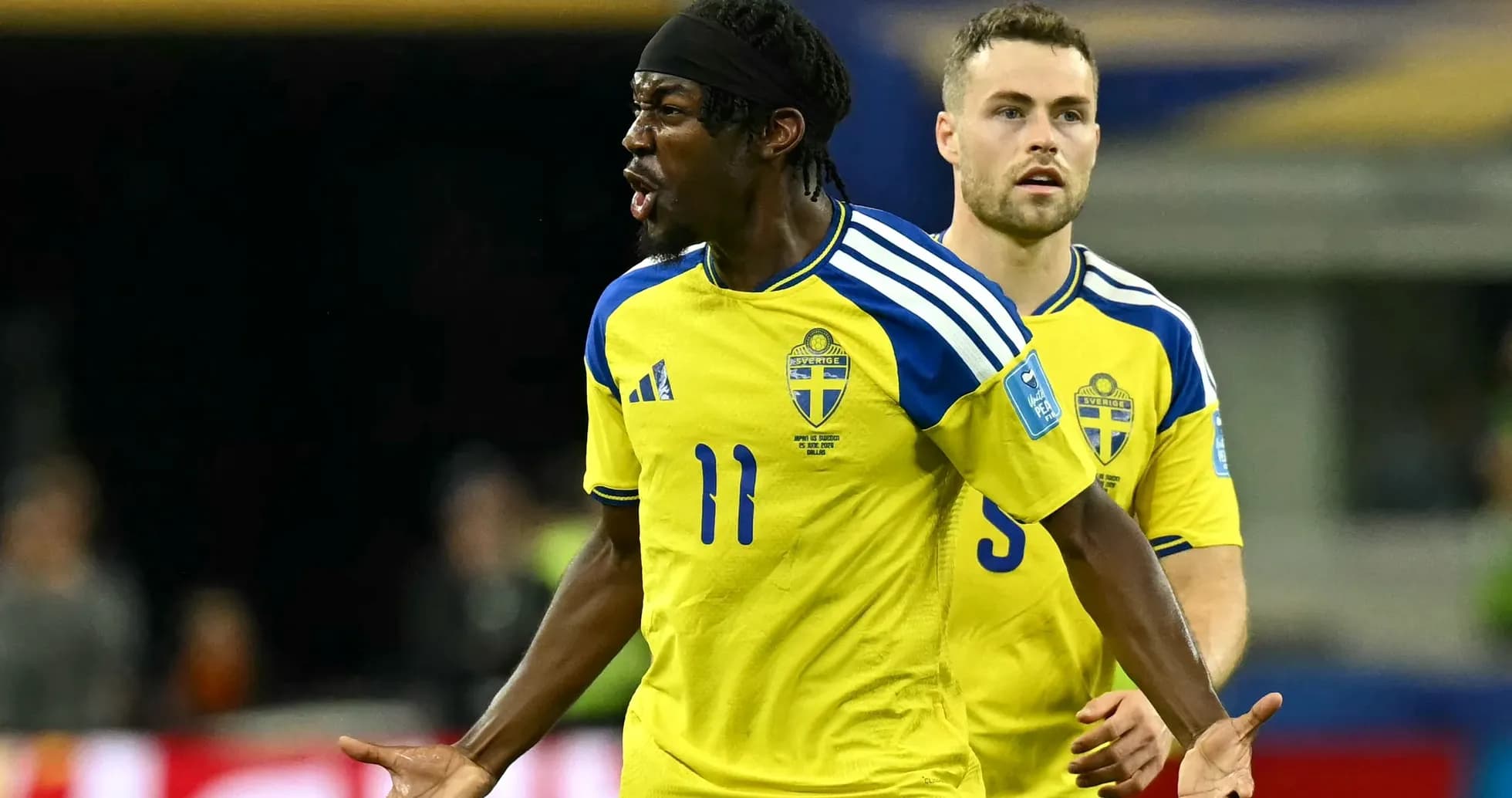
Anthony Elanga, starting from the right, drove infield, opened his body and whipped a glorious left-footed strike beyond the keeper. Supposedly his weaker side. On this evidence, not by much. His second goal of the tournament dragged Sweden level and, as it turned out, dragged them into the knockouts.
From there, the match frayed at the edges. Nerves, space, chances. Sweden, knowing a point should be enough to sneak through as one of the best third-placed teams, never quite settled. Japan, already qualified, refused to let them.
The crossbar shuddered late on when Alexander Isak rose and thundered a header against the frame. For a split second, the entire Swedish bench thought the forward had completed the turnaround. Instead, the ball bounced out, the chance gone, and the tension cranked up another notch.
Sweden clung on. The draw left them behind the Netherlands and Japan in Group F, but crucially on the right side of the line.
On the touchline, calculators and permutations ruled. On the pitch, Elanga wanted no part of it.
"I was just screaming: 'Come on, we can go for more'. I’m glad we’re through, I didn’t know that at the end," the forward admitted afterwards. While staff tried to relay the live table, he kept chasing the winner, running on adrenaline and, eventually, cramp.
"I think they were trying to scream to me," he said. "I obviously wanted to keep running. I got cramp at the end but didn't want to stop running. I'm happy and the whole team is too."
Isak could barely believe it. The Liverpool striker revealed he gave his team-mate "a bit of a telling-off" once he realised Elanga had no idea a point would be enough. "He was a little frustrated towards the end of the match, and you can understand why now," Isak sighed, half exasperated, half amused.
Manager Graham Potter took it all with a grin. "That explains a few things. We couldn't have been clearer... Bless him! But I love him," he chuckled, the exasperation giving way to affection. Captain Victor Lindelof joined in, joking that Elanga must have slept through the pre-match permutations briefing: "He can't have been awake enough."
Behind the jokes sat a serious selection call that paid off. Potter, stung by the heavy defeat to the Netherlands, shook up his side for this decisive fixture. Elanga came into the XI, Jacob Widell Zetterstrom came into goal, and Sweden looked more secure, more dangerous on the break, more like a team that belonged in the knockouts.
"We analysed the game against the Netherlands. We had to defend the box and wide areas better [today]," Potter said. "We decided to use Jacob's attributes because I think he's a fantastic goalkeeper. His distribution was very impressive. Anthony comes in and offers a counter-attack threat and his pace is destabilising for the opponent."
The tweaks gave Sweden a harder edge. They still flirted with disaster, but this time they bent without breaking.
Finishing third has its quirks. Sweden have sidestepped a direct collision with Brazil, who now face Japan, but the path ahead is hardly gentle. Potter’s side are likely to meet the winner of Group I on June 30, with France and Norway still to settle that pool. Germany, champions of Group E, also lurk as a potential opponent.
Elanga, though, showed no sign of blinking.
"Both are good teams. It will be a challenge. All teams are good, but we are ready for what comes," he insisted, speaking like a man who has found his stage and doesn’t care who shares it with him.
Four points, a neutral goal difference, and a sense that the pieces are finally beginning to align. Sweden have survived the turbulence of the group. Now comes the real question: is this just a narrow escape, or the start of something more dangerous in the knockout rounds?