.svg&w=384&q=75 "Pitchgist logo")
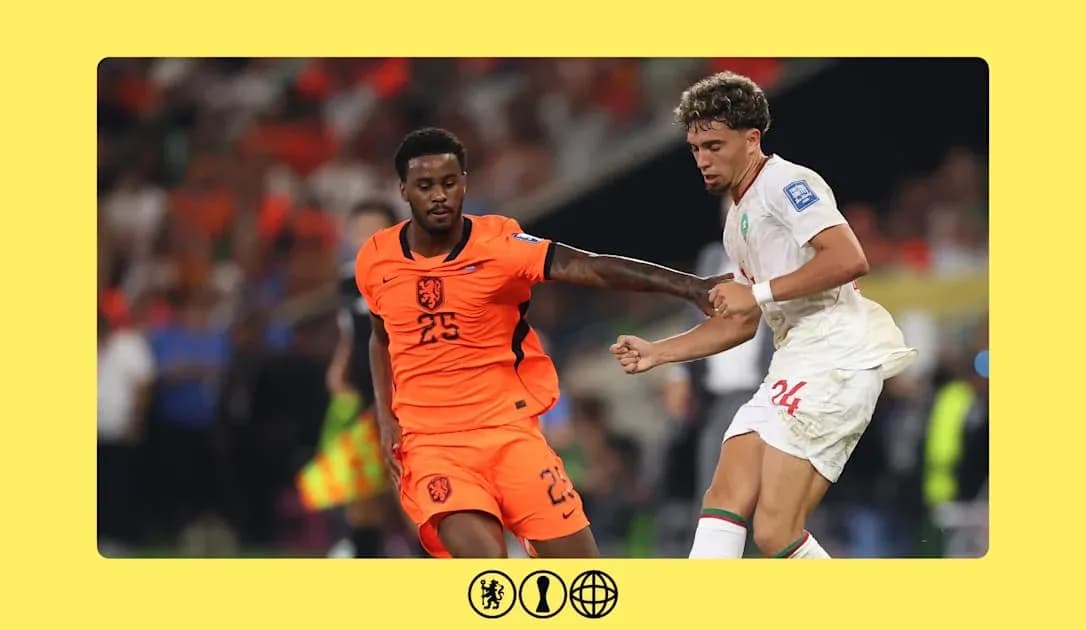
Morocco Shocks Netherlands in World Cup Penalty Drama
For 72 minutes, it looked like the Netherlands had done enough. Tight game, one clear chance taken, control without brilliance – the kind of knockout football that usually carries a heavyweight through a dangerous night.
Then the match turned. Then the World Cup turned.
Cody Gakpo’s goal, drilled home in the 72nd minute, had put the Dutch on the brink of a place in the last 16. It was the moment that seemed to validate their patience, their structure, their refusal to be dragged into the chaos Morocco were trying to create.
But Morocco never went away. They pressed, they ran, they shot from distance, they attacked the box with conviction. Bart Verbruggen, increasingly, became the only thing standing between them and parity.
He saved low. He saved high. He watched Achraf Hakimi crash a strike against the bar. The Dutch back line creaked, then bent, then finally snapped in stoppage time.
Barely a minute into added time at the end of the 90, Fulham defender Issa Diop thundered in a header to level it at 1-1, a goal that felt like the inevitable reward for Morocco’s persistence. Diop’s finish was ruthless, the contact clean, the message clear: Morocco were not just here to entertain; they were here to knock someone out.
The Netherlands, who had been managing the game, suddenly found themselves hanging on to it.
Extra Time
Extra-time belonged to the goalkeepers. Verbruggen, already excellent, produced a save that will live with this tournament. Morocco substitute Soufiane Rahimi looked certain to score, only for the Dutch keeper to explode across his line and claw the effort away, a reaction stop that drew gasps and disbelief in equal measure.
At the other end, Morocco’s belief only grew. They sensed Dutch anxiety. The legs of both sides grew heavy, but the North Africans kept forcing the issue, forcing mistakes, forcing questions the Netherlands struggled to answer.
The whistle for penalties felt inevitable. So did the tension.
What followed was a shootout that veered from the dramatic to the surreal. Both teams missed two of their first four spot-kicks, and not one of those failures even hit the target. These were not near-misses or heroic saves; they were dragged, sliced, skied – the kind of penalties that tell you the occasion has crawled inside a player’s head.
Then came the decisive twist.
Crysencio Summerville stepped up with the weight of a nation on his shoulders. Yassine Bounou stood on his line, reading, waiting. The Morocco goalkeeper moved early to his right before the ball left Summerville’s boot, but still managed to throw out a strong hand and beat the penalty away. It was a huge, commanding intervention, the sort of moment that changes not just a shootout, but a campaign.
Suddenly, Morocco had the chance to finish it.
Ismail Saibari did not waste it. He strode forward, calm where so many had been frantic, and lashed his penalty home to seal it. No hesitation, no nerves on show, just a clean strike and an eruption of Moroccan joy.
The Netherlands, chasing a first-ever World Cup triumph, saw that dream cut down from 12 yards. For the second Round of 32 tie in a row – after Germany’s exit to Paraguay – a supposed dark horse had knocked out another, and done it the hard way.
Morocco leave this night with more than just a place in the next round. They leave with a statement: they can suffer, they can chase, they can ride their goalkeeper when required, and when the moment comes, they can finish.
For the Dutch, the question now is brutal and simple: how many more times can a golden generation watch a World Cup slip away like this?