.svg&w=384&q=75 "Pitchgist logo")
Bellingham's Masterclass Creates Tuchel's Dilemma for England
Thomas Tuchel walked away from England’s 2-0 win over Panama with the victory he wanted and a problem he didn’t. A good problem, yes, but a problem all the same.
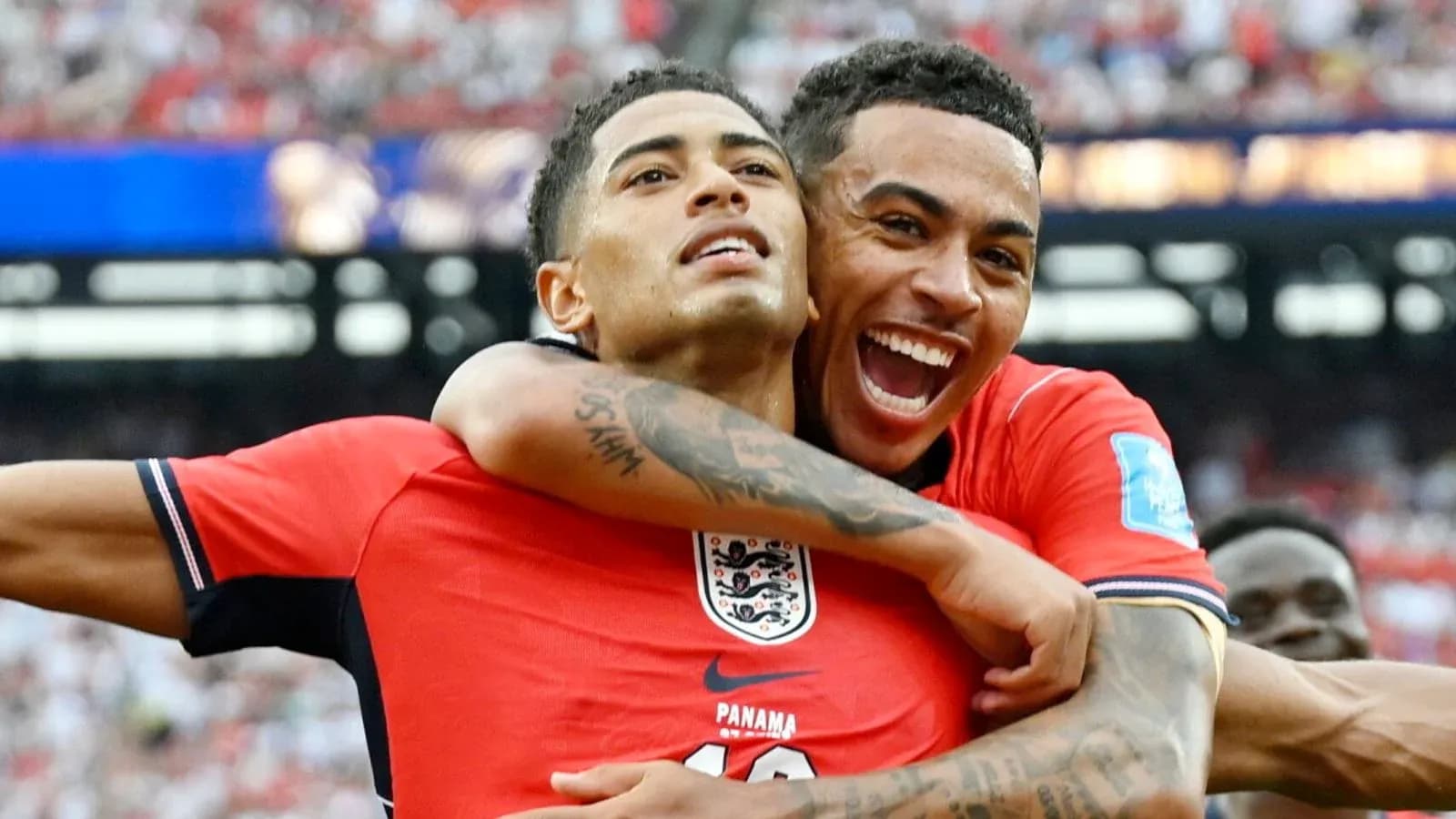
Jude Bellingham, unleashed from a deeper role alongside Elliot Anderson, ran the game, scored one, made another and turned what looked like a straightforward group fixture into a tactical grenade for his manager on the eve of the knockout rounds.
Declan Rice is fit again. Rice starts. Everyone knows it. So where does that leave Bellingham?
Bellingham’s deeper masterclass – and Tuchel’s dilemma
Against Panama, Bellingham didn’t just impress. He dominated.
Operating from deeper, he saw more of the ball, drove past lines, and arrived late in the box with that restless energy that makes him look like the best kid in the playground who refuses to come off. Goal, assist, constant involvement. It was the complete midfielder’s performance.
The catch? That patch of grass belongs to Rice.
For Paul Merson, that’s the crux of it. Rice, if available, anchors England’s midfield. He gives you control when the opposition are better, stronger, smarter than Panama. And those teams are coming now.
But Bellingham, from that same area, is harder to track. When he starts deeper, defenders lose sight of him. He can surge past them rather than wait between them. In the No 10 role against Ghana, he barely influenced the game. The space was choked, Ghana sat deep, and he was starved of service.
Morgan Rogers found the same problem against Panama. Given the keys to the No 10 position, he hardly touched the ball. Another body lost in traffic.
That contrast is what sharpens Tuchel’s headache. Bellingham flourished with the pitch in front of him. Yet that is exactly where Rice usually stands guard.
So Tuchel has to decide: Rice plus Bellingham as a pair? Or Rice holding with Bellingham pushed back into the No 10 role that has already looked claustrophobic in this tournament?
The No 10 conundrum
On paper, Rice and Bellingham together sounds irresistible. In reality, it creates another problem.
If Bellingham drops next to Rice, what happens in the No 10 slot? Rogers hasn’t grabbed it. Bellingham didn’t sparkle there against Ghana. But England still need someone between the lines who can receive under pressure and turn games.
Merson’s concern isn’t just who wears the shirt. It’s how England actually get the ball into that player’s feet.
Against Ghana, Bellingham kept showing, demanding the ball, but his teammates didn’t find him. The passes never came. England played around the block, not through it.
The comparison with Lionel Messi is not about talent, Merson stresses, but about intent. Argentina feed Messi relentlessly, even in tight spaces. England, by contrast, still hesitate to fire the ball into Bellingham when he’s marked. He’s willing to receive it under pressure. The team has to be brave enough to give it to him.
That won’t get easier against DR Congo. They will sit deep. Ten behind the ball. Another low block, another congested central zone, another night where the No 10 position can feel like a cul-de-sac.
If Bellingham goes back there, he’ll need more than enthusiasm. He’ll need the ball. Often. And England haven’t proved yet they can do that against a packed defence.
Wide men stuck in second gear
Out wide, the story isn’t much clearer.
England’s wingers are seeing plenty of the ball. They just aren’t hurting teams yet.
Panama doubled up on the flanks, and every time an England player received it near the touchline, two or three defenders swarmed. The ball moved quickly to the wings, but the end product never really followed.
Marcus Rashford finally got the start many had called for ahead of Anthony Gordon. He saw a lot of the ball in the first half. He didn’t do much with it.
Bukayo Saka, usually England’s most reliable outlet, looks short of his usual spark. Maybe he’s carrying something, maybe not. But Merson can’t picture a serious England side, in a serious World Cup knockout game, without Saka in the XI. He still has to play.
The wingers, in Merson’s eyes, have been six out of ten so far. Functional, not frightening. If that rating jumps even a couple of marks as the knockouts begin, England suddenly look far more dangerous. Somewhere in that group of wide players, there are match-winners. They just haven’t arrived at the tournament yet.
England still in second gear – and still in the race
Across the group stage, Merson puts England at a seven out of ten. Professional against Croatia, frustrated but effective enough against Ghana, handled Panama without fuss. Job done, but not much more.
The concern is obvious. You can’t just flick a switch and become a different team when the opposition improves. You have to build towards it, game by game.
That building starts now against DR Congo.
The wider landscape doesn’t offer any comfort either. France look devastating going forward. Spain are Spain – technically immaculate, always in control, but they tend to keep you in the game rather than blow you away. Colombia, with their pace and energy and familiarity with the conditions, have caught the eye too.
It feels like an open World Cup. On any given day, almost every contender has someone who can ruin you.
England sit in that group. Harry Kane has his goals. The defence held firm against Ghana. Bellingham took centre stage against Panama. They’re not leaning on just one star, and that matters in a long tournament.
There have been reality checks. Ghana exposed flaws. Panama, despite the scoreline, did the same in spells. That’s the worry.
But England are still here. In the last 32. With Rice ready, Bellingham surging, Kane scoring, and a set of wingers who surely can’t stay this subdued forever.
Tuchel now has to solve his midfield puzzle without blunting his best weapon. Get it right, and England can start to look like the side that handled Croatia on opening day. Get it right, and this “open” World Cup suddenly has another serious contender on its hands.