.svg&w=384&q=75 "Pitchgist logo")
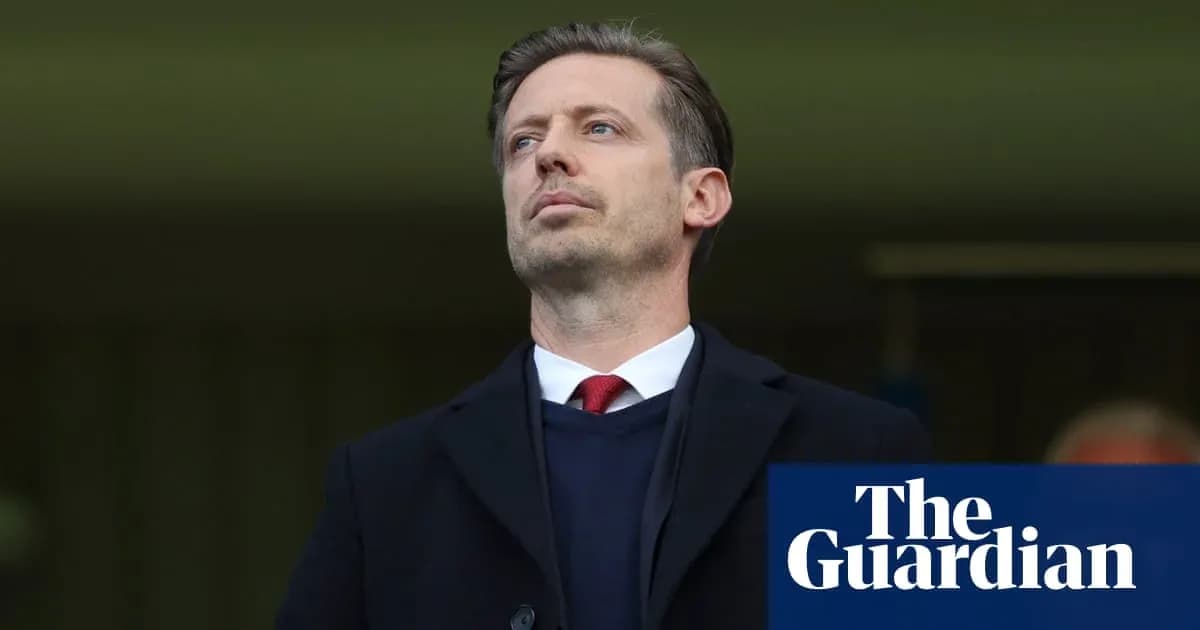
Michael Edwards Resigns from Fenway Sports Group: A New Era for Liverpool
Michael Edwards has walked away from Fenway Sports Group for a second time – and this one feels final.
The architect of much of Liverpool’s modern success has resigned as FSG’s chief executive of football, a role effectively built around him, after the ownership group shelved plans to build a multi-club empire. He informed FSG in the autumn of 2025 that he would go once he felt Liverpool’s future was mapped out. On Friday, the owners made it official, having tried to convince him to stay.
This is not a routine boardroom reshuffle. Edwards was tempted back into the fold in March 2024 with a mandate that went far beyond his old sporting director brief. He was asked to steer Liverpool through the post-Jürgen Klopp transition and, at the same time, to design and drive FSG’s broader football strategy.
The pitch was clear: Liverpool would be the flagship in a wider network. Multi-club ownership, strategic partnerships, a portfolio to rival the biggest operators in the modern game. That was the challenge that lured him back.
The reality never caught up with the vision. FSG explored options – Getafe and Bordeaux among the clubs considered – but nothing matched their criteria. The search dragged, then stalled. Last year, the ownership quietly pushed the project to one side.
Once that happened, Edwards’ role started to look exposed. His job title referenced FSG, not just Liverpool, for a reason. With the multi-club push on ice, the unique position created for him lost its central purpose. He leaves with a year still to run on his contract and, because the decision is his, without the payoff that usually accompanies such high-level exits. There is no guarantee FSG will even seek a like-for-like replacement.
“It has been a privilege to return to Fenway Sports Group and Liverpool Football Club at such an important moment,” he said. “I leave believing Liverpool is in a strong position, with outstanding people, a clear direction and the foundations in place for continued success.
“When I returned, I was excited not only by the opportunity to help guide Liverpool through an important period of transition, but also by the chance to help shape FSG’s wider football ambitions. While that broader project ultimately evolved differently to how we had originally envisaged, I am proud of the work our team undertook in presenting ownership with a broad range of thoughtful and well-developed options for the future.”
For supporters, the immediate question is obvious: what does this mean for the summer?
On that front, the message from inside the club is calm. Liverpool’s transfer business is being run by sporting director Richard Hughes, and plans for this window are described as well advanced. Edwards’ departure is not expected to derail recruitment.
The bigger concern lies above the dugout. Edwards’ exit strips away another layer of the leadership that rebuilt Liverpool over the past decade. And Hughes, the man now fronting transfer strategy, may not be far behind.
Hughes, whose contract runs until 2027, has been strongly linked with a lucrative move to Al-Hilal in the Saudi Pro League. His fingerprints are already on some of the club’s most consequential recent decisions: he dismissed Arne Slot and brought in Andoni Iraola, working closely with Edwards on that change. The prospect of him following Edwards out of the door once the window closes adds another thread of uncertainty to an already delicate period.
Inside FSG, the response is to look back to a familiar figure. Mike Gordon, the group’s president and long-time powerbroker in Liverpool’s football operations, is expected to step back into a more hands-on role. Gordon was central to the structure Edwards first helped build after arriving at Anfield in 2011, and again when he returned to reshape the club’s leadership in his second spell.
Gordon’s tribute underlined just how much influence Edwards has wielded.
“Throughout both periods he has consistently demonstrated exceptional judgment, integrity and an unwavering commitment to building a strong football organisation for the long term,” Gordon said. “His return to the organisation saw Liverpool successfully navigate a significant period of transition before securing the club’s historic 20th English league title, an achievement to which Michael made an important contribution. While we are naturally disappointed to see him leave, we will always be grateful for everything he has given.”
That 20th title, the long-awaited landmark that finally drew Liverpool level at the summit of English football, now looks like the closing chapter of the Edwards era. He was there for the first great surge under Klopp, left, came back to steady the club through the manager’s departure and the handover that followed, and departs again with the team champions and the structure, in his words, “in a strong position”.
Liverpool insist the foundations are solid. The squad is competitive, the recruitment plan is mapped out, the coaching change has been made. Yet the game moves quickly, and so does power. With Edwards gone, Hughes tempted by Saudi riches and Gordon stepping back into the spotlight, FSG now have to prove that the system Edwards helped design can outlast the man who built it.