.svg&w=384&q=75 "Pitchgist logo")
Jorge Jesus Takes Over Portugal Coaching Role: Ronaldo's Future in Question
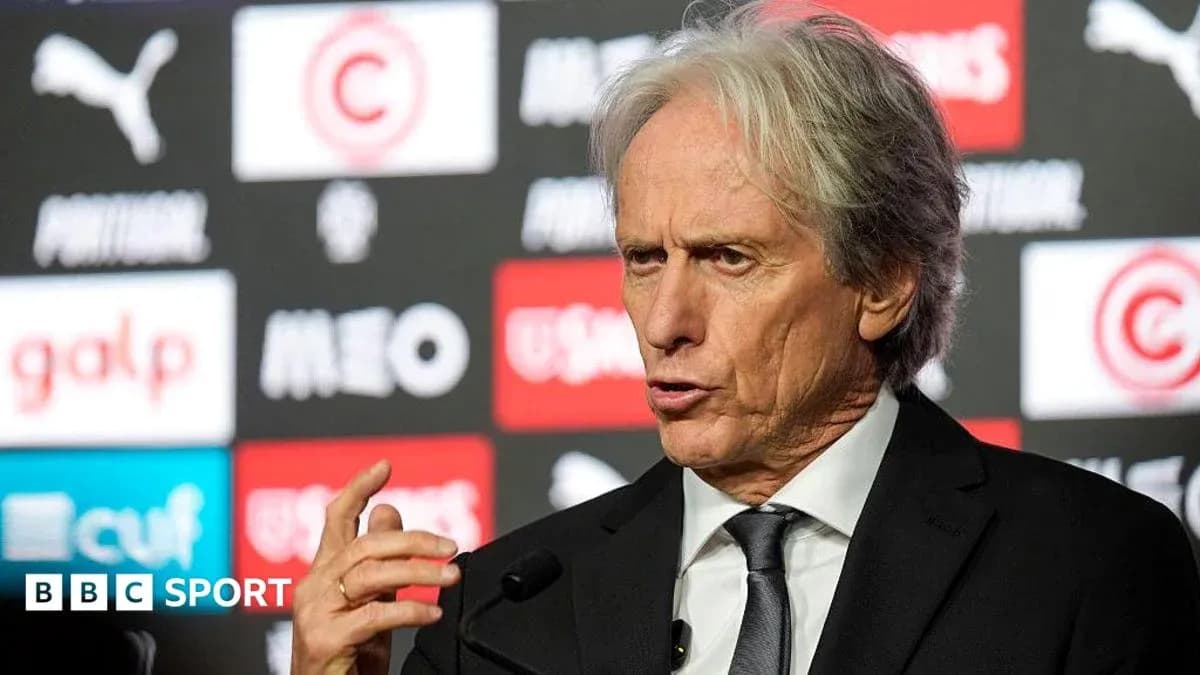
Portugal have turned to one of their most seasoned coaches for the next World Cup cycle, appointing Jorge Jesus on a four-year deal that runs to the 2030 tournament the country will co-host with Spain and Morocco.
At 71, Jesus steps into a role vacated by Roberto Martinez after Portugal’s limp exit in the last 16 this summer, a 1-0 defeat to Spain that felt like the end of a chapter. The federation has responded by choosing a man who has seen almost everything the game can throw at him – and who already knows the captain better than most.
A familiar face for Ronaldo
Jesus worked with Cristiano Ronaldo at Al Nassr last season, the pair delivering the Saudi Pro League title together. That shared success now forms the backdrop to one of the defining questions of this new era: how long does Ronaldo remain at the heart of the national team?
Ronaldo, 41, confirmed after Portugal’s elimination that this World Cup was his sixth and final. He stopped short of announcing a full retirement from international football, leaving the door open just wide enough for debate to rage.
Jesus, at least publicly, has no doubts about the forward’s status.
He described Ronaldo as a “symbol of Portuguese football” and made it clear he will not turn his back on that symbol lightly. As long as the Al Nassr striker is playing and in the right condition, Jesus said he will select him – “within certain limits and under the conditions that I consider best for the national team”.
There was no drama, no hint of a looming power struggle. Jesus admitted he has not yet spoken to Ronaldo but dismissed any suggestion the veteran could complicate his rebuild.
“[He] is never going to be a problem for the national team. Not for the national team, nor for me,” he said, reflecting fondly on their year together in Saudi Arabia and calling it “easy to work with him”.
The message was blunt: Ronaldo remains an option, but on the coach’s terms.
A serial winner with a global footprint
Jesus arrives with a bulging CV and a reputation forged in several football cultures.
In Portugal, he is best known for his first spell in charge of Benfica, where he won three league titles in 2010, 2014 and 2015 and helped shape some of the club’s most dynamic sides of the past two decades.
He then exported that intensity to Brazil. At Flamengo, during a whirlwind year in 2019, he collected five major trophies, including the Brazilian title and the Copa Libertadores, turning the Rio giants into a relentless machine.
His most recent work came in Saudi Arabia with Al Hilal, where he completed a domestic treble in the 2023-24 season. That success, combined with his league triumph at Al Nassr, has left him as one of the most decorated foreign coaches to work in the Saudi game.
Portugal are not getting a coach learning on the job. They are hiring a man who has lifted trophies in three different countries and who has built teams that attack with conviction and defend with edge.
Nations League first, World Cup on the horizon
The new era begins quickly. Jesus’ first game in charge will be a Nations League Group D opener against Wales on 24 September. It’s hardly a soft landing, but it offers an immediate look at his choices: how bold he is with younger players, how he reshapes the midfield, and whether Ronaldo’s name appears on that first squad list.
Every decision will be viewed through the prism of 2030. Portugal, as co-hosts alongside Spain and Morocco, will not only be expected to qualify. They will be expected to contend.
By tying Jesus down to a contract that runs through that tournament, the federation has signalled a desire for continuity and a clear identity. This is not a caretaker appointment to steady the ship after Martinez. It is a bet that a demanding, title-hardened coach can knit together a generation rich in talent but still searching for a second great peak after Euro 2016.
The stage is set: a veteran coach, an ageing icon whose shadow still stretches across the dressing room, and a World Cup that will be played on Portuguese soil in four years’ time.
How long those two veterans – Jesus on the touchline and Ronaldo on the pitch – walk that road together may define what Portugal become by the time the world arrives.