.svg&w=384&q=75 "Pitchgist logo")
Mexico City Transforms into World Cup Carnival
The warning signs were there the night before a ball was even kicked.
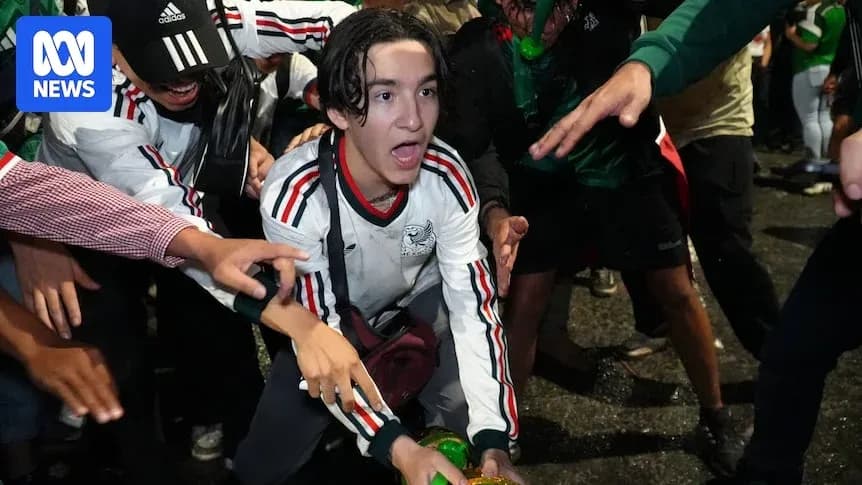
On street corners and crowded pavements, fans scrambled for green Mexico jerseys from last-minute vendors. Around El Ángel de la Independencia, the city’s beating sporting heart, hundreds gathered in a rolling street party of drums, flags and flares. Car horns joined the chorus, blaring into the early hours.
If this is how Mexico marks the eve of a World Cup opener, what followed was always destined to be bigger.
A city turns into a World Cup carnival
The players did their part first. A composed 2-0 win over South Africa in the tournament’s curtain-raiser — shared across Mexico, Canada and the USA — lit the fuse.
Then Mexico City exploded.
Paseo de la Reforma, usually a busy artery of traffic, morphed into a pedestrian-only river of green shirts and waving flags. It felt less like a road and more like a stadium concourse stretched for miles, only louder.
Beer arced through the air in foamy showers. Fake snow hissed from spray cans. Conga lines snaked around plastic World Cup trophies held aloft as if the real thing had already been secured. Street stalls did roaring trade in tacos, snacks and souvenirs. Glow sticks flickered in the dark as a free concert thumped out a soundtrack to a nation’s release.
For an outsider, it might have looked like overkill for a group-stage victory. For Mexico, this is the drill. This is what happens when the national men’s team wins big: a pilgrimage to their own version of Fed Square, a monument marooned on a swirling roundabout, and a party that tests the limits of human stamina.
They do not go home early. They do not want the night to end.
Noise, nerves and a nation on edge
The build-up inside the stadium matched the street.
Traditional performers warmed up the crowd outside, but once fans poured through the turnstiles, the volume went up another level. The opening ceremony became a singalong, with 80,000 voices rising as Shakira — World Cup royalty by now — took centre stage.
Yet all of that was just the prelude.
The real sound, the one that rattles your ribs, arrived with the goals. The roars felt primal, especially for Raúl Jiménez, whose headed finish carried more weight than a simple opener. Years on from a horrific head injury, his celebration was part catharsis, part defiance. The stadium understood the journey and responded in kind.
Then came the future.
When 17-year-old Gilberto Mora stepped off the bench in the second half, the reaction was almost as deafening. His name rolled around the stands in unison, a rare tribute usually reserved for icons, not teenagers. It was a welcome and a warning: this is the kid many here believe can reshape Mexican football.
On the touchline, coach Javier Aguirre, a veteran of Mexico’s 1986 World Cup, watched his players wrestle with the occasion.
“The start of the World Cup, is a brutal scenario, it makes your legs shake a little,” he said afterwards. “You come from the training centre to here, the people, the fans are in the street and that tells the player, ‘Wow, wow, wow.’
“Never, never in 25 matches we had one case of cramps, today we had three players with cramps. It’s a very strong emotional state.”
The emotion that cramped muscles also loosened voices. Inside and outside the stadium, this was a country letting out a long-held breath.
Players reset, fans refuse to
For Aguirre and his squad, the job now is to seal the emotion back in the bottle and get ready for the next group game. The World Cup does not wait for anyone drunk on their own opening-night story.
The supporters have no such obligation.
“It means everything. It means a lot,” one fan said amid the celebrations. “It’s putting us back on the map. It shows that Mexico is present in the world of football.”
For them, the World Cup is not a 90-minute event. It is a rolling festival. The team clocks off at full-time; the people clock on.
Infantino’s “chillax” wish and a bigger question
High above the chaos, one man in a suit will have allowed himself a quiet smile. FIFA president Gianni Infantino had spent the previous day swatting away criticism of the organisation’s handling of the tournament build-up, even dipping into early-2000s slang as he urged everyone to “chillax”.
Now, with the football finally underway and Mexico throwing a party that could be seen from space, his message has, for the moment, landed. The chill pills have been swallowed. The noise has drowned out the noise.
He can breathe easier. For now.
The wider tournament, though, will not be judged on one city’s love affair with the game. Mexico lives and breathes football, but across the border the landscape is different. In Canada and the United States, “soccer” still plays understudy to other sports.
Big names and blockbuster fixtures will pull in the crowds. The question lurks behind the fireworks: will high ticket prices leave the so-called off-Broadway matches playing to half-empty stands? And in the US, will the presence of Immigration and Customs Enforcement — ICE — cast a shadow over what is meant to be a global celebration?
Those debates will gather pace as the tournament unfolds. For now, in Mexico City at least, the answers are drowned out by drums, chants and car horns.
The football has started talking. The world will decide how much it wants to listen.