.svg&w=384&q=75 "Pitchgist logo")
FIFA Clears VAR Official Evans After Controversial Gesture
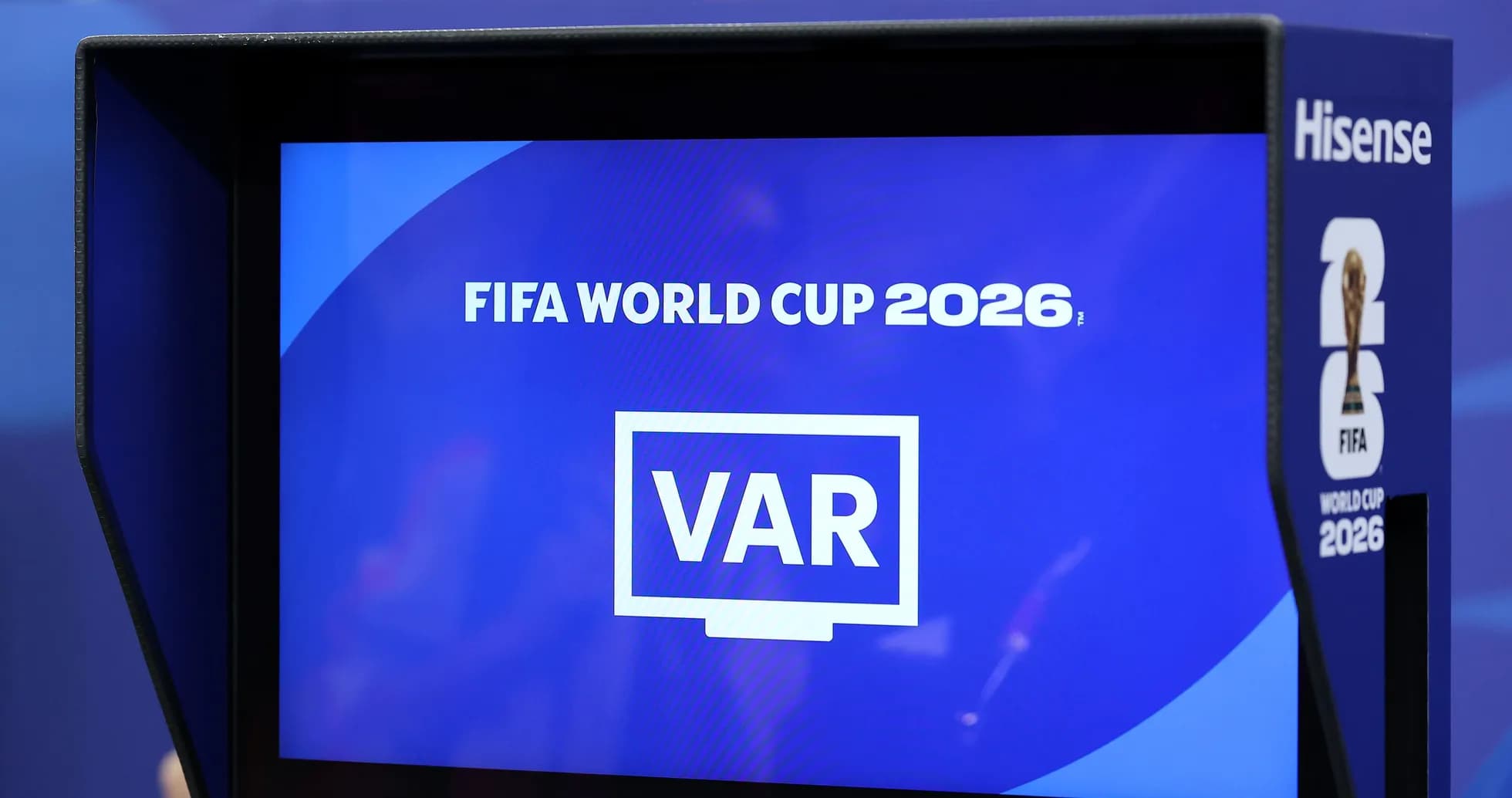
FIFA has cleared VAR official Evans of wrongdoing after an investigation into a controversial hand gesture he made on camera before Germany’s 7-1 win over Curacao at the World Cup.
The Australian, working from the referees’ centre in Dallas, appeared briefly on the global broadcast feed making an upside-down “OK” sign with his right hand. What might once have passed as a throwaway prank quickly turned into something else. Screenshots spread online, the gesture framed and refocused, because that same symbol has been co‑opted in recent years by white supremacist groups.
The scrutiny was instant. The stakes were obvious. A World Cup official, a live global feed, and a gesture that sits uncomfortably on the fault line between internet joke and hate symbol.
After reviewing footage from the Dallas centre and examining the incident, FIFA concluded there was no evidence Evans had breached the FIFA Disciplinary Code. He remains part of the tournament’s officiating team.
Evans, 38, did not duck the issue. He issued a strong denial that there was any intent behind the movement or any message attached to it.
“The coverage following this incident simply does not reflect who I am,” he said in a statement. “Of course, I understand how the gesture has been interpreted and I regret this, however I want to be very clear and categorically say that I did not knowingly or deliberately make the hand symbol suggested.
“Images taken later during the match showed that I repeated this movement many times while holding a pen between my fingers. Officiating at the World Cup is the biggest honour of my career and I look forward to supporting my colleagues for the rest of the tournament.”
His explanation was simple: an unconscious physical habit, not a coded signal.
The incident, though, did not unfold in a vacuum. Anti-discrimination organisations reacted quickly, among them Fare, a long-standing partner of both FIFA and UEFA on discrimination issues in football. Before FIFA published its findings, Fare made clear how its experts viewed the footage.
“Advice from our experts is that the gesture used clearly resembles an upside down ‘OK’ hand symbol used as a ‘white power’ symbol in global far-right circles,” the organisation said.
That assessment reflected a wider cultural shift. The Anti-Defamation League added the upside-down “OK” symbol to its database of hate symbols in 2019 after it was adopted as a trolling device by extremist groups and, in some cases, as an explicit marker of far-right allegiance. What once might have looked like a throwaway hand sign is no longer read so innocently.
This is the landscape in which modern officials now operate: every movement televised, every frame clipped, slowed, shared and interpreted through a political and social lens as much as a sporting one. One gesture, one freeze-frame, and a video assistant referee finds himself at the centre of a global debate.
FIFA’s verdict allows Evans to continue in his role, his name cleared under the governing body’s code. The questions that linger sit beyond one man and one replay booth. In a sport watched by billions, how many more of these cultural flashpoints lie just outside the camera’s frame?