.svg&w=384&q=75 "Pitchgist logo")

Indy Eleven's Statement Win Over Forward Madison in USL League One Cup
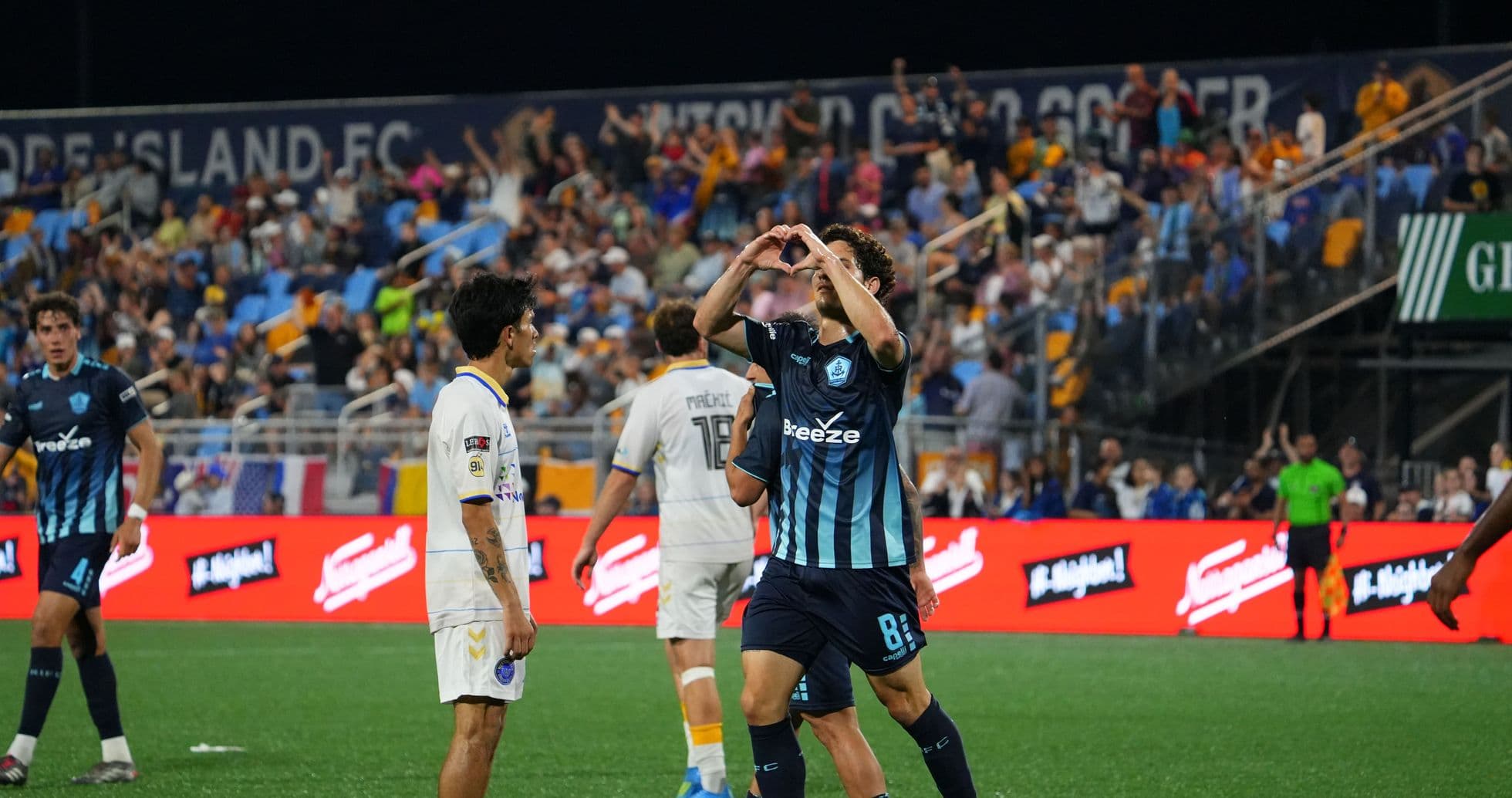
Under the lights at Michael A. Carroll Stadium, Indy Eleven’s 2–0 win over Forward Madison felt less like a routine group-stage result and more like a statement about where these two squads stand in the USL League One Cup’s emerging hierarchy.
I. The Big Picture – Group 4 fault lines
Following this result, the table tells a stark story. Indy Eleven sit 4th in Group 4 on 5 points, with a goal difference of 3 after scoring 8 and conceding 5 overall. Forward Madison, by contrast, are marooned in 7th with 0 points and a goal difference of -5, having scored just 2 and shipped 7.
Indy’s season profile has been clear: an assertive, front-foot side. Overall, they average 2.0 goals for per game, split between 1.5 at home and 3.0 on their travels. They concede 1.3 overall (1.0 at home, 2.0 away), a balance that underpins a clean sheet count of 1 in total so far. Forward Madison are almost a mirror image in reverse: 0.7 goals scored per game overall (0.0 at home, 1.0 away) against 2.3 conceded (1.0 at home, 3.0 away), with no clean sheets and 2 matches in which they failed to score.
Within that statistical frame, Indy’s 2–0 home win fits their pattern: control at Carroll Stadium, enough firepower to put games away, and a defensive unit that, at its best, can suffocate opponents. For Madison, this was another chapter in a grim early-cup narrative: three defeats from three, the “LLL” form line now more warning sign than blip.
II. Tactical Voids – Discipline, risk, and the unseen absences
There are no explicit absentees listed for either side, so we judge the “voids” by structural tendencies rather than missing names.
Indy’s disciplinary map is relatively controlled. Their yellow cards are spread, but there is a noticeable concentration in the 31–45 and 61–75 minute ranges, each accounting for 28.57% of their cautions. That suggests a side that pushes the line at key transition moments: just before half-time and just after the hour, when games often tilt. Importantly, they have no red cards recorded in any time band, which reflects a managed aggression rather than reckless edge.
Forward Madison’s discipline is more volatile. They take 25.00% of their yellows in the opening 0–15 minutes, another 37.50% between 46–60, and 25.00% from 61–75. The profile is of a team that starts anxious, then becomes increasingly stretched as they chase games. Crucially, their single red card this campaign has come in the 76–90 band, where 100.00% of their dismissals occur. That late-game loss of control is symptomatic of a side under scoreboard pressure and physically and mentally fraying.
In a match where Indy already had the attacking edge, Madison’s propensity for late disciplinary collapse only amplified the tactical gulf. Even without individual booking data from this fixture, the season-long patterns help explain why Indy were able to close the game out without drama.
III. Key Matchups – Hunter vs Shield, and the Engine Room
With no explicit top-scorer or assist charts, we turn to roles and structures visible in the lineups.
For Indy, the “Hunter” collective is led by a forward line in which E. Kizza (shirt 19) and K. Williams (10) are the obvious reference points. Around them, J. Blake (8) and B. Rendon (27) offer the connective tissue between midfield and attack, while J. O'Brien (5) and C. Lindley (6) hint at a double pivot capable of both screening and progressing the ball. The back line, anchored by the likes of P. Craig (37), M. Rasheed (21), and L. Neidlinger (17), sits in front of R. Charles-Cook in goal, whose presence underpins Indy’s single clean sheet so far.
The Shield they faced in this one, Forward Madison’s defence, has been porous on their travels: 3.0 goals against per away game, 6 conceded in 2 away fixtures. The central defenders J. Shannon (5) and K. Toure (33) have been asked to protect a unit that concedes too many high-value chances, while full-back profiles like M. Segbers (8) and R. Torres (12) are often dragged into emergency defending rather than proactive positioning.
The “Engine Room” duel was equally decisive. Indy’s central operators – Lindley and O'Brien – were set against Madison’s midfield triangle of G. Kanyane (6), H. Karamoko (21), and J. Bolma (7). Heading into this game, Madison’s inability to control tempo had already shown up in their numbers: they have failed to score in 2 of 3 matches, and when they do open up to chase goals, they are punished, as reflected in their 4–2 away defeat in their biggest away loss. That structural imbalance again surfaced here, with Madison’s engine forced to cover too much ground between defence and the front line of R. Carmichael (9) and C. Ngoubou (11).
Indy, by contrast, benefit from a more stable spine. Their biggest away win, 2–3, shows they can both absorb and respond in transitional battles, and that same adaptability appeared at home: when they needed to protect a lead, their midfield narrowed and tightened; when space appeared, Williams and Kizza stretched Madison’s already fragile back line.
IV. Statistical Prognosis – xG shadows and defensive solidity
We are not given explicit xG numbers, but the season data sketches the underlying shot-quality landscape.
Indy’s overall goals-for average of 2.0 and goals-against of 1.3, combined with a positive goal difference of 2 (6 scored, 4 conceded in the statistical block) and a clean sheet count of 1, points to a side whose xG for is likely consistently above their xG against, particularly at home where they concede just 1.0 per game. Their record of never failing to score – 0 matches without a goal, both home and away – reinforces the idea of a team that reliably manufactures chances.
Forward Madison’s statistical profile implies the opposite xG tilt. With 0.7 goals scored per game overall and 2.3 conceded, plus 2 matches in which they failed to score and no clean sheets, their xG against is almost certainly outstripping their xG for by a wide margin. The away split – 1.0 scored, 3.0 conceded – is especially damning. Even if their attackers like Carmichael and Ngoubou can generate moments, the structural leakiness behind them drags the overall expected goals balance sharply negative.
Following this result, the narrative of Group 4 is hardening. Indy Eleven look like a side whose squad construction – a stable spine, reliable attacking output, and controlled aggression – gives them a platform to push deeper into the competition. Forward Madison, meanwhile, are trapped in a cycle where every tactical adjustment is made under duress, with a defence overburdened and an attack starved of stable platforms.
In the long arc of this USL League One Cup campaign, this 2–0 at Michael A. Carroll Stadium may be remembered less for its scoreline than for what it confirmed: Indy Eleven’s squad is built for the demands of knockout football, while Forward Madison must first solve their structural and disciplinary fractures before they can even begin to dream of turning performances into points.