.svg&w=384&q=75 "Pitchgist logo")
Rhode Island Dominates Westchester SC in 3–0 Victory
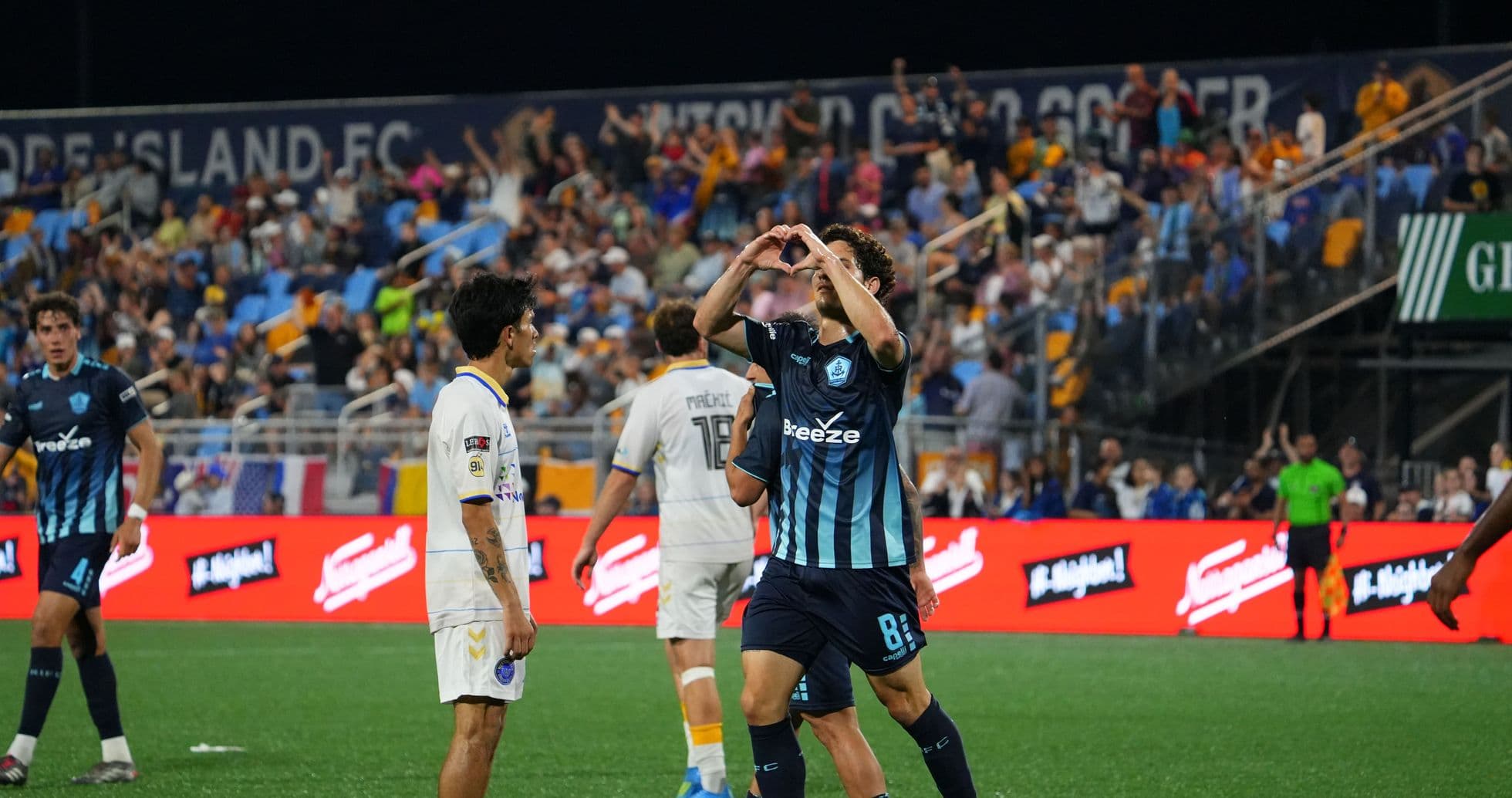
Under the lights at Centreville Bank Stadium, Rhode Island delivered a commanding 3–0 home victory over Westchester SC, a result that crystallized both sides’ early identities in the USL League One Cup, Group 5. The match, finished in regular time, saw Rhode Island translate their season-long statistical promise into a complete performance: ruthless at home in front of goal, disciplined without the ball, and emotionally in control where Westchester were not.
Heading into this game, Rhode Island’s season numbers already hinted at a side built on sharp attacking bursts and defensive control. Overall, they had scored 5 goals and conceded just 2 in 3 matches, with an overall goals-for average of 1.7 and goals-against at 0.7. At home, the profile was even more emphatic: 3 goals for, 0 against, averaging 3.0 scored and 0.0 conceded. This fixture simply extended that pattern, reinforcing a home-ground identity of front-foot aggression paired with clean-sheet assurance.
Westchester, by contrast, arrived as an open, volatile side. Overall, they had scored 5 and conceded 8 in 3 games, with an overall goals-for average of 1.7 but an overall goals-against average of 2.7. On their travels, the warning signs were clear: away, they had yet to score and had conceded 3, with an away goals-for average of 0.0 and away goals-against at 3.0. The 3–0 scoreline in Rhode Island simply mirrored that away fragility.
In the standings snapshot for Group 5, Rhode Island sit 3rd with 5 points and a goal difference of 3 (8 scored, 5 conceded overall in group play), while Westchester occupy 6th with 2 points and a goal difference of -3 (9 scored, 12 conceded overall in the group). Following this result, the table reflects exactly what the eye test at Centreville Bank Stadium suggested: Rhode Island look like a side trending upward; Westchester remain wild and porous.
Tactical voids and discipline: who held their nerve
With no official list of absences, both coaches, Khano Smith for Rhode Island and George Gjokaj for Westchester SC, leaned heavily on their core groups. The lineups showed continuity and intent rather than experimentation.
Smith’s Rhode Island XI was built around a solid spine: Koke Vegas in goal, a defensive unit anchored by K. Yao, F. Nodarse, A. Sanchez, and H. Bacharach Capdevila, and a midfield-attack blend featuring A. Shapiro-Thompson, N. Fuson, C. Holstad, A. Rodriguez, and J. Williams. This is a group that, heading into this game, had already produced 2 clean sheets in 3 matches overall and had yet to fail to score, home or away. That dual reliability—never blanking in attack, rarely breached in defense—framed the way Rhode Island managed the contest: assertive, but rarely reckless.
The disciplinary data backs that up. Overall, Rhode Island’s yellow cards this season cluster in the 46–60 and 91–105 minute windows, each accounting for 50.00% of their cautions. In other words, when they are booked, it tends to be in the early second half or deep into added time—moments of intensity but also game management. In this match, their control of tempo and territory meant they rarely had to chase, preserving shape rather than lunging into desperate challenges.
Westchester’s disciplinary pattern is more alarming. Overall, 50.00% of their yellow cards come between 31–45 minutes and another 50.00% between 76–90 minutes. That paints a picture of a side losing control at the end of each half—exactly when concentration and composure are most critical. In a hostile away environment like Centreville Bank Stadium, that tendency to fray late in halves left them vulnerable to Rhode Island’s surges, especially with the home side’s comfort in scoring at home and keeping clean sheets.
Key matchups: hunter vs shield, engine room battles
Without official top-scorer or assist tables, the “hunter vs shield” narrative here is more collective than individual, but it is no less stark.
Rhode Island’s attacking “hunter” is essentially the whole forward band. Heading into this game, at home they had already scored 3 goals in a single fixture and had never failed to score overall. J. Williams, leading the line in the number 9 shirt, operated as the focal point, with A. Rodriguez as a creative 10 drifting between the lines, and wide or advanced support from N. Fuson and C. Holstad. Behind them, A. Shapiro-Thompson provided connective tissue, linking phases and recycling possession.
The “shield” they were up against was a Westchester back line that, statistically, was brittle. Overall, Westchester had conceded 8 goals in 3 games, with an overall goals-against average of 2.7. Away, that defensive shield was even thinner: 3 conceded in 1 away match, an away average of 3.0. Centre-back pairing T. Timchenko and C. Dickerson, supported by full-backs M. Jennings and J. Jimenez, simply could not withstand Rhode Island’s layered attacks, especially once the home side found rhythm in front of their own crowd.
In midfield—the “engine room”—Rhode Island’s structure, with H. Bacharach Capdevila and A. Shapiro-Thompson central, squared up against Westchester’s trio of S. Powder, A. Armas, and B. Vasquez. Westchester’s season profile shows a team that can hurt opponents (5 goals overall, with a 2.5 goals-for average at home) but becomes disjointed on their travels, where they have yet to score and concede heavily. That disconnect was visible here: the engine room struggled to protect the back line or progress the ball cleanly through Rhode Island’s compact middle block.
On the flanks, Rhode Island’s wide players pinned back Westchester’s full-backs, limiting the away side’s ability to get S. Powder and B. Vasquez into advanced, dangerous zones. With K. Evans and E. Mackic unable to consistently stretch Rhode Island’s back four, Koke Vegas enjoyed one of the more controlled evenings a goalkeeper can ask for in cup play.
Statistical prognosis and narrative verdict
From an analytical standpoint, this 3–0 result fits almost perfectly with the underlying season numbers. Rhode Island’s home attacking average of 3.0 goals and home defensive average of 0.0 conceded were essentially replicated on the night. Westchester’s away pattern—0.0 goals scored, 3.0 conceded—was also mirrored exactly.
If we overlay a notional xG framework on these trends, Rhode Island’s high-volume, efficient home attack and repeated clean sheets suggest they are consistently generating better chances than they allow, especially in front of their own fans. Their record of never failing to score overall, combined with 2 clean sheets in 3 matches, points to a side whose xG for and xG against are both trending in their favor.
Westchester’s numbers, conversely, hint at an xG profile where they give up too many high-quality chances, particularly away, and struggle to manufacture clear opportunities on the road. Conceding 8 goals overall with an overall goals-against average of 2.7, while failing to score at all away, signals structural defensive issues and an attack that cannot travel.
Following this result, the narrative is clear. Rhode Island look like a dark horse in Group 5: a team whose statistical backbone—3.0 home goals-for average, 0.0 home goals-against, overall clean-sheet reliability—now has a marquee 3–0 performance to match. Westchester, meanwhile, remain an enigma: capable of scoring freely at home, but on their travels, a side whose defensive leaks and late-half disciplinary spikes repeatedly undo them.
At Centreville Bank Stadium, the story was not just 3–0. It was the confirmation of Rhode Island’s emerging identity: a measured, ruthless cup side whose numbers and narrative are now fully aligned.