.svg&w=384&q=75 "Pitchgist logo")
Spokane Velocity vs Boise: Tactical Clash in USL League One Cup
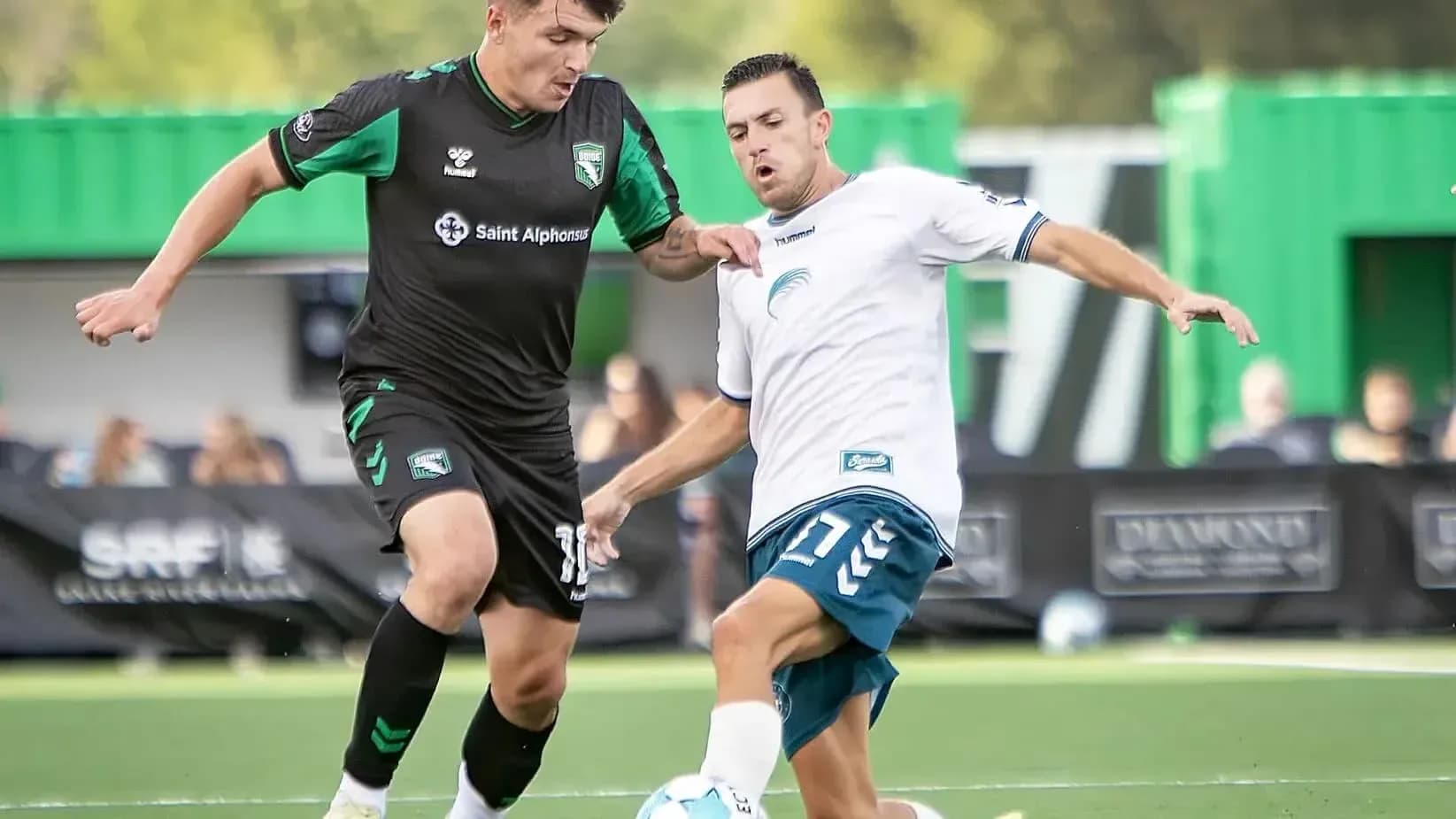
Under the lights at One Spokane Stadium, Spokane Velocity and Boise met in a Group Stage tie that felt more like a knockout rehearsal than an early-summer cup date. The USL League One Cup may be in its 2026 infancy, but both clubs arrived with clearly defined identities: Spokane, compact and efficient at home; Boise, chaotic and goal-rich on their travels. The night ended 2–1 to Spokane, a scoreline that fit the campaign’s statistical contours as neatly as it did the narrative arc on the pitch.
Heading into this game, Spokane’s season had been built on home control. They had played 3 matches overall, winning 2 and losing 1, with 3 goals scored and 5 conceded in total. At home, though, the numbers told a different, sharper story: 2 wins from 2, 3 goals for and only 1 against, an average of 1.5 home goals scored and 0.5 conceded. On their travels they had been humbled 4–0, but in front of their own supporters they were a different animal.
Boise came in with the opposite profile: volatility and volume. Across 3 matches overall, they had 1 win, 1 draw and 1 loss, with 10 goals for and 8 against in the standings snapshot, but 7 scored and 6 conceded in the detailed statistics block for the same competition. The shape of their campaign was still unmistakable: a team that plays open, high-risk football. At home they had scored 4 and conceded 3; away, 3 for and 3 against. Their overall averages in the stats were 2.3 goals scored and 2.0 conceded per game, with no clean sheets anywhere. Boise do not shut games down; they lean into the chaos.
I. The Big Picture: Styles Colliding
This fixture, kicking off at One Spokane Stadium with the group table tight, pitted Spokane’s home solidity against Boise’s commitment to trading punches. Spokane’s overall goal difference in the standings was -2 (3 scored, 5 conceded), a reminder of that heavy away defeat, but their home GD was +2 (3 for, 1 against). Boise, by contrast, carried a positive overall GD of 2 (10 for, 8 against) in the table, but their defensive record – 6 conceded in 3 matches in the detailed stats – underlined how fragile they could be when stretched.
The match’s 2–1 finish slotted neatly into those trajectories: Spokane again winning by a single goal at home, Boise again scoring but failing to keep things tight.
II. Tactical Voids and Discipline: Edges in the Margins
There were no recorded absences in the data, so both coaches essentially had full decks. For Spokane, Leigh Veidman could call on a spine that blended experience and athleticism: S. Lewis in goal, S. Fitch and G. Margvelashvili anchoring the back line, with C. Miller and D. Waldeck rounding out what looked like a physically robust defensive unit.
In front of them, the creative and transitional work fell to the likes of C. Fernandez and A. Lewis, with L. Gil and J. Gallardo offering guile between the lines and wide channels. Up top, N. Brett led the line as the primary reference point.
Boise’s starting XI suggested an intent to play front-foot football even away from home. J. Mazzola guarded the net behind a back line featuring J. Ricketts, J. Yaro, J. Crull and N. Moon. In midfield, the presence of P. Mayaka and M. Ndiaye hinted at a double pivot capable of both screening and stepping into pressure, while D. Kostyshyn and B. Bodily offered attacking thrust. The front line of T. Amang and T. Moshobane promised pace and directness in transition.
Disciplinary trends framed an undercurrent of risk for both sides. Spokane’s yellow-card distribution heading into this game showed a clear late-mid-game spike: 42.86% of their cautions arriving between 61–75 minutes, with additional cards scattered across 16–30, 31–45, 46–60 and even 91–105. They also had a red card on their record between 46–60 minutes, a reminder that their intensity can spill over just after half-time.
Boise’s yellows were more evenly spread but still telling: 16.67% between 0–15 minutes, 33.33% between 31–45, and then a steady 16.67% in each of the 46–60, 61–75 and 76–90 windows. They are prone to picking up cautions throughout the contest rather than in one isolated phase. Neither side had missed a penalty; both had taken none, with 0 total penalties and 0% conversion.
III. Key Matchups: Hunter vs Shield, Engine vs Enforcer
Without explicit top-scorer data, the “Hunter vs Shield” duel had to be read through roles rather than raw tallies. For Spokane, N. Brett was the natural focal point, supported closely by L. Gil and J. Gallardo. Their task was to exploit a Boise defence that, in the stats, had conceded an average of 1.5 away goals and 2.0 overall. The 2–1 outcome suggests Spokane’s attacking trident did enough to bend that fragile back line without ever fully overwhelming it.
On the other side, Boise’s attacking quartet – with D. Kostyshyn as a creative hub and B. Bodily, T. Amang and T. Moshobane providing width and verticality – faced a Spokane defence that, at home, conceded only 0.5 goals per game heading into this fixture. Breaking that shield even once, as Boise did, was an achievement, but not enough to flip the balance of the night.
The “Engine Room” battle revolved around Spokane’s midfield pairings – likely built around C. Fernandez and A. Lewis, with D. Waldeck offering cover – against Boise’s P. Mayaka and M. Ndiaye. Boise’s season so far suggested they could drive games into end-to-end patterns; Spokane’s numbers implied a preference for controlled, lower-scoring contests at home. Over 90 minutes, Spokane’s structure won out, containing Boise to a single goal and keeping the game within their preferred rhythm.
IV. Statistical Prognosis and What the Result Tells Us
We lack explicit xG values, but the underlying season data allows for a reasonable reading. Spokane’s home attack, averaging 1.5 goals, slightly over-performed with 2 here, while their home defence, usually at 0.5 conceded, bent to 1. Boise’s attack, averaging 1.5 away goals, landed exactly on that scale in terms of threat, but their defence again matched the pattern of conceding at least once – and in this case, twice.
Following this result, the story of the group is one of contrasting but complementary truths: Spokane remain a formidable home side, grinding out narrow wins and leaning on defensive discipline; Boise continue to be a high-event team whose attacking verve is constantly undercut by their inability to keep clean sheets.
In narrative terms, this 2–1 feels less like an outlier and more like a confirmation. Spokane’s identity as a home fortress with just enough cutting edge holds. Boise’s as an entertaining, dangerous, but defensively vulnerable outfit persists. If these two meet again later in the competition, the tactical blueprint is already written: Spokane will look to compress the game into their controlled channels, while Boise will try to drag it into the open field – and somewhere between those two visions, the next chapter will be decided.

