.svg&w=384&q=75 "Pitchgist logo")
Union Omaha's Statement Win Over Fort Wayne in USL League One Cup
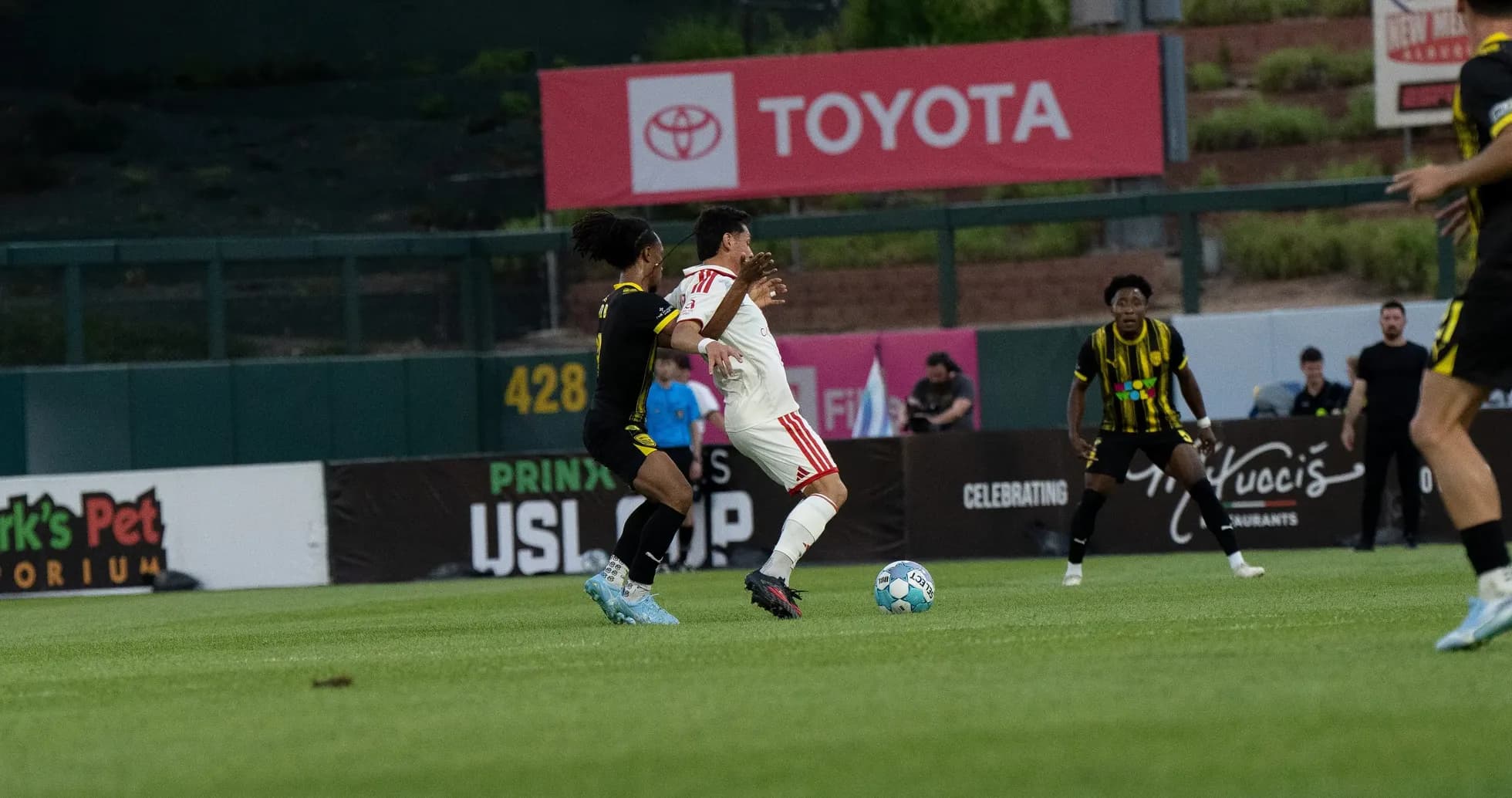
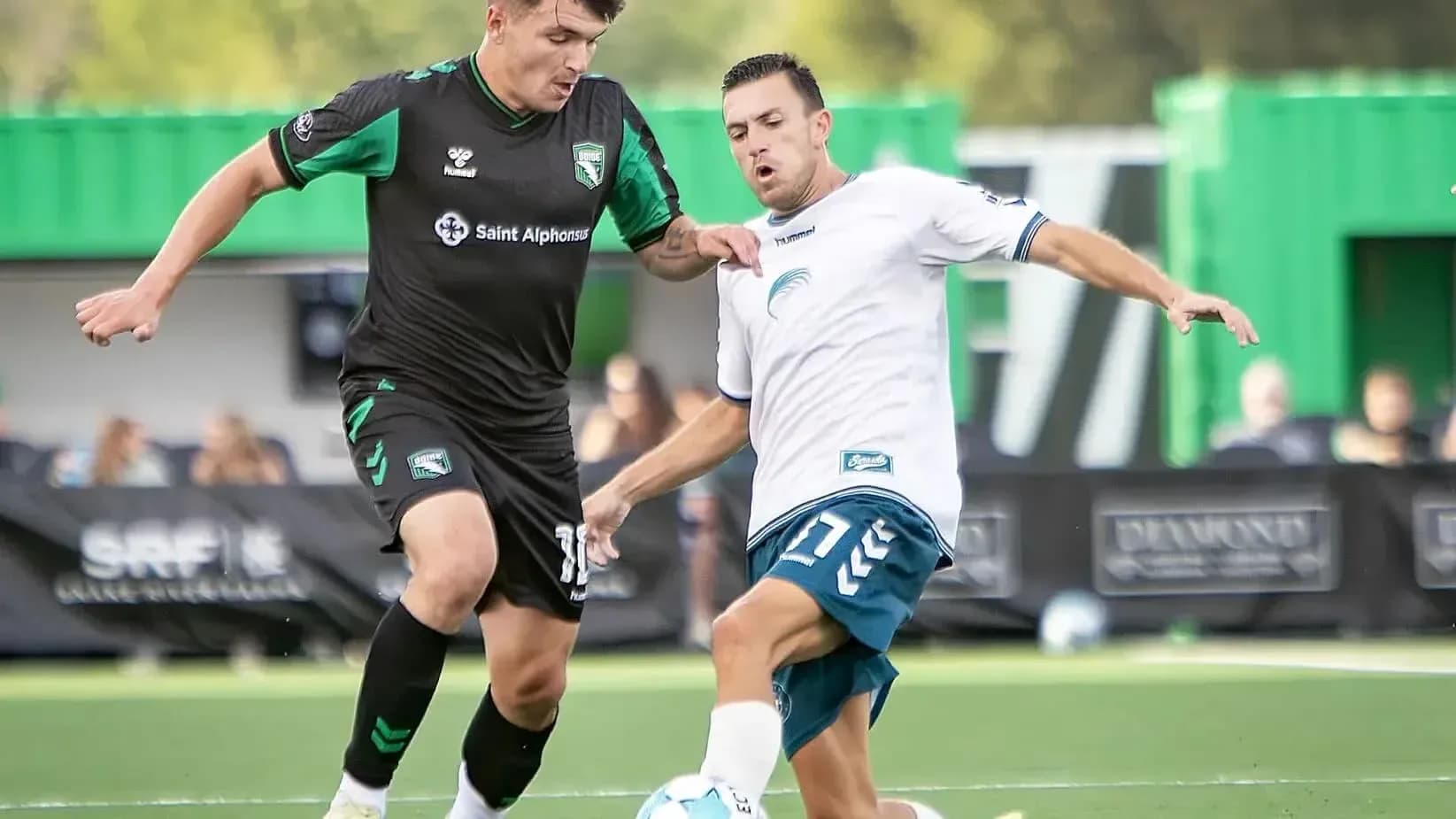
Under the Werner Park lights, Union Omaha’s 4–2 win over Fort Wayne felt less like a routine group-stage fixture and more like a statement of intent in the USL League One Cup. Following this result, the table tells a stark story: Union Omaha sit 2nd in Group 4 on 6 points, while Fort Wayne are marooned in 6th with just 1 point and a bruising goal difference.
Across the group campaign in total, Union Omaha’s identity has been that of a wild, open-side. They have scored 7 and conceded 8, giving them a total goal difference of -1 despite two wins from three. At home, the pattern is even more extreme: 5 goals for and 7 against from only 2 matches. This is a team that leans into chaos, trusting its attacking pieces to outgun opponents even as the back line walks a tightrope.
Fort Wayne, by contrast, have struggled to find any kind of balance. In total this campaign they have 5 goals for and 10 against, for a total goal difference of -5 in the statistics snapshot, and -6 in the standings. On their travels, the numbers are even harsher: 3 scored and 7 conceded across 2 away fixtures. The form line – LLL – underlines a side that has been repeatedly stretched and punished, particularly when asked to defend space.
Tactical Overview
Tactically, this match-up was always going to tilt towards Union Omaha’s front line. Coach Marco Candela Lopez Vincenzo named an aggressive XI built to dominate the ball and attack in waves. C. Jensen, wearing 99, is the reference point in goal, but the real story begins in front of him with the spine: S. Owusu and B. Malone anchoring the defensive line alongside the energetic R. Jiba and the versatile C. Lawrence. This back unit has not delivered clean sheets – Union Omaha have zero in total this campaign – but they are comfortable living high, compressing the pitch to keep the game in the opponent’s half.
Ahead of them, Gabriel Cabral and S. Ors Navarro form the brain of the side. Cabral’s role as the metronome is clear: he links the first and second phases, ensuring Union Omaha can recycle possession quickly after turnovers. Ors Navarro, with shirt number 20, pushes higher to connect with the attacking trio of A. Gavilanes, D. Borczak, and A. Gomez. Each of those three offers a different threat profile: Gavilanes drifts into pockets, Borczak attacks space aggressively, and Gomez provides a direct vertical outlet. At the tip, P. Botello Faz wears 9 as the penalty-box presence, constantly looking to occupy centre-backs and attack crosses.
The substitutes’ bench underlines the flexibility at Candela’s disposal. B. Kallman and J. Orson give defensive cover, while K. Tekiela, L. Wootton, and D. Gutierrez can all change the attacking rhythm when legs tire. R. Nuhu offers additional depth across the back or flanks. This depth is crucial for a side whose tempo and pressing intensity are core to their identity.
Fort Wayne's Structure
Fort Wayne’s XI, meanwhile, is built around grit rather than control. A. Echevarria, with the high shirt number 96, anchors them from the back. In front of him, J. Smith, R. Sproat, J. Solis, and A. Hernandez form a back line that has been under siege all tournament, conceding an average of 3.0 goals at home and 3.5 on their travels. The midfield of E. Nieto and J. Garay tries to screen and distribute, but the structural cracks have been evident: Fort Wayne have yet to keep a clean sheet, and in total they concede 3.3 goals per game.
Further forward, K. Gafar and J. Thomas are tasked with providing width and transitional threat, while D. Oyetunde and R. Becher carry the burden of goals. The problem is not a complete lack of firepower – 5 goals in 3 matches in total, with 2.0 at home and 1.5 away, is respectable – but rather the inability to protect what they create. The bench of B. Schipmann, J. Musa, L. Ricol, J. Jordan, C. Awoudor, and N. Burns suggests options for fresh legs, but not necessarily the defensive solidity they so badly need.
Discipline and Card Distribution
Discipline has been another fault line. Union Omaha’s yellow-card profile shows a clear pattern: 25.00% of their cautions arrive between 31–45 minutes, 50.00% between 61–75, and 25.00% between 76–90. That late-game cluster hints at a team that grows increasingly stretched and reactive as matches wear on, often forced into tactical fouls to protect a lead. They have also seen a red card between 61–75 minutes (100.00% of their reds in that window), underlining how quickly control can slip if emotions spike.
Fort Wayne’s card distribution is even more telling. In total, 44.44% of their yellows come in the 76–90 minute band, with 22.22% between 16–30 and another 22.22% between 31–45. This is a side that starts on the edge and finishes over it, frequently chasing games and resorting to desperate interventions late on. The absence of any red cards so far is a small mercy, but the pattern points to mental and physical fatigue in closing stages.
Comparative Analysis
In the “Hunter vs Shield” lens, Union Omaha’s attack – averaging 2.3 goals in total, 2.5 at home – meets a Fort Wayne defence conceding 3.3 in total and 3.5 on their travels. The numbers alone tilt heavily towards the hosts. Union Omaha’s biggest home win, 4–2, and heaviest home loss, 1–5, both underline the same truth: high-variance, high-scoring encounters are their natural habitat. For Fort Wayne, whose biggest away defeat in the stats is 4–2, this fixture played directly into their vulnerabilities.
In the “Engine Room” battle, Gabriel Cabral and S. Ors Navarro’s capacity to dictate tempo and press the Fort Wayne midfield of Nieto and Garay was decisive. With Union Omaha failing to keep any clean sheets but also never failing to score in total this campaign, the onus was always on Fort Wayne’s double pivot to slow transitions and protect their centre-backs. They were unable to do so for long enough.
From an xG and defensive-solidity perspective, the prognosis for Fort Wayne going forward is sobering. A team conceding over 3 goals per match in total, with no clean sheets and a late-game yellow surge of 44.44%, is structurally fragile. Union Omaha, for all their defensive leaks, at least marry their openness with a ruthless attack and a perfect penalty record so far (1 taken, 1 scored, 100.00% with no misses).
Following this result, Union Omaha look like a volatile but dangerous contender from Group 4 – a side whose matches will likely continue to be defined by wild swings and high scores. Fort Wayne, by contrast, must rebuild from the back, or risk seeing every tactical plan swallowed by the same recurring storm: promising attacking moments undone by a defence that simply cannot hold.