.svg&w=384&q=75 "Pitchgist logo")
Fulham vs Bournemouth: Tactical Insights and Match Analysis
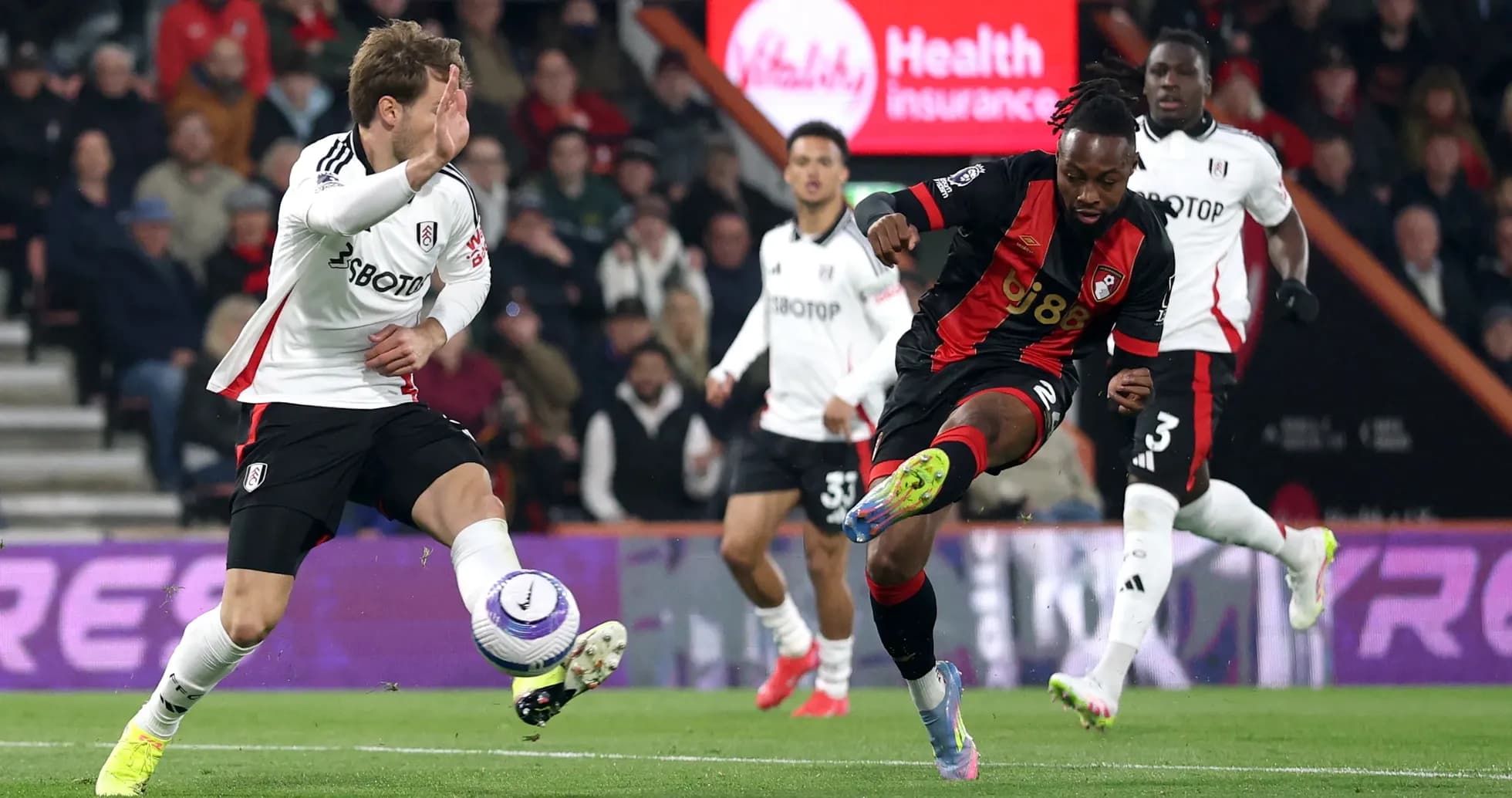
Craven Cottage had the feel of a crossroads fixture, even if the stakes were unevenly distributed. Fulham, 11th in the Premier League heading into this game with 48 points and a goal difference of -6 (44 scored, 50 conceded overall), were playing for mid‑table pride and proof of progress under Marco Silva. Bournemouth arrived in London as one of the season’s revelations: 6th with 55 points, a positive goal difference of 4 (56 for, 52 against overall) and a Europa League league‑phase place in their sights.
The 0-1 scoreline in favour of Andoni Iraola’s side felt like a distillation of the season’s underlying numbers. Fulham have been solid at home overall – 10 wins from 18, scoring 28 and conceding 20 at Craven Cottage – but their margin for error is slim. Bournemouth, by contrast, have built their rise on resilience and balance: on their travels they had 6 wins, 7 draws and 5 defeats, with 28 goals scored and 33 conceded away. This was exactly the sort of away day where their structure and mentality could tilt the fine details.
Silva’s starting XI was a familiar hybrid of control and verticality. Bernd Leno anchored a back four of Timothy Castagne, Joachim Andersen, Calvin Bassey and Antonee Robinson. In midfield, Saša Lukić and Tom Cairney were tasked with knitting phases together, while Harry Wilson, Emile Smith Rowe and Samuel Chukwueze supported lone striker Rodrigo Muniz. It was, in essence, an iteration of the 4-2-3-1 that has been Fulham’s default shape, even if the official lineup card left the formation blank.
Iraola matched that structure with his own high‑energy 4-2-3-1 template. Đorđe Petrović started in goal, protected by Adam Smith, James Hill, Marcos Senesi and Adrien Truffert. Alex Scott and Ryan Christie formed the double pivot, with Rayan and Eli Junior Kroupi flanking Marcus Tavernier behind centre‑forward Evanilson. It was an XI that embodied Bournemouth’s season: technical midfielders who can press, full‑backs willing to push high, and a front four built to attack space.
The tactical voids on both sides shaped the narrative before a ball was kicked. Fulham were without A. Iwobi and R. Sessegnon, both listed as missing through injury, robbing Silva of a ball‑carrying option between the lines and a natural left‑sided runner. Bournemouth’s absentees were just as significant: L. Cook and J. Soler were both ruled out with hamstring injuries, while Álex Jiménez – the league’s most card‑prone defender with 10 yellows and a reputation for aggressive duels – was suspended. Without Jiménez, Iraola had to lean on Hill and Senesi to hold the line in wide defensive zones where Jiménez’s front‑foot style often sets the tone.
Discipline has been a season‑long subplot for both clubs. Fulham’s yellow‑card profile shows a pronounced late‑game edge: 21.92% of their bookings come between 46-60 minutes and 20.55% between 76-90, with an even higher 23.29% between 91-105. Bournemouth’s pattern is even more volatile, with a late‑game surge of 27.71% of yellows in the 76-90 minute window and 20.48% from 91-105, plus red cards for Christie and others at key junctures this season. This match, framed by those numbers, was always likely to be defined by which side could keep its head as legs and minds tired.
Key Matchups
The “Hunter vs Shield” duel was written across Bournemouth’s left half‑space. Eli Junior Kroupi, with 12 league goals and 2 penalties scored from 5 team spot‑kicks, has emerged as one of the Premier League’s breakout attackers. His movement between the lines and knack for finding shooting lanes (29 shots, 20 on target) asked persistent questions of Fulham’s right‑sided pairing of Castagne and Andersen. Fulham’s defence at home has been respectable – 20 conceded in 18, an average of 1.1 per game at Craven Cottage – but Kroupi’s ability to combine with Tavernier and Truffert tested their compactness whenever Bournemouth broke quickly.
At the other end, the Shield had a very different face. Andersen’s season has been defined by leadership and risk: 33 appearances, 2,275 completed passes at 86% accuracy, 19 blocked shots and 36 interceptions, but also a red card on his disciplinary record. His partnership with Bassey was responsible for managing Evanilson’s penalty‑box presence and the late surges of substitutes like Enes Ünal or Justin Kluivert, should Iraola choose to change the profile of his attack.
In the “Engine Room”, the contrast was just as stark. For Fulham, Wilson was the creative heartbeat and emotional barometer. With 10 goals and 6 assists, 38 key passes and 761 total passes at 81% accuracy, he has been their most productive attacking midfielder. His battle was twofold: to find pockets away from Scott’s and Christie’s pressing lanes, and to resist Bournemouth’s capacity to draw fouls and turn transitions into chaos. On the other side, Scott’s remit was to dictate tempo and protect the central lanes, while Christie – whose season includes a red card and a heavy tackling load – walked the tightrope between disruptive energy and disciplinary risk.
Lukić, too, sat at the heart of Fulham’s tactical equation. His 675 passes at 85% accuracy and 27 key passes underline his role as a metronome, but his 50 fouls committed and 9 yellow cards show how often he operates on the edge. Against a Bournemouth side that thrives on quick restarts and broken play, any mistimed challenge in the 46-60 or 76-90 windows – where Fulham’s yellows spike – risked tilting momentum.
From a statistical standpoint, the contours of the contest were clear heading into this game. Fulham’s overall scoring rate of 1.2 goals per match (1.6 at home) collides with Bournemouth’s away concession rate of 1.8, suggesting opportunities for Muniz and the wide creators if Fulham could sustain pressure. Yet Bournemouth’s own attacking output – 1.6 goals per game overall, with 28 away – combined with 5 away clean sheets and only 3 away matches without scoring, painted the picture of a side that almost always carries threat.
Overlaying expected‑goals logic onto these trends, the likeliest script was a tight encounter with Bournemouth generating slightly clearer chances through transitions and overloads around Kroupi and Tavernier, while Fulham relied on volume from wide areas and Wilson’s set‑piece delivery. Fulham’s defensive numbers at home hinted at a low‑margin environment; Bournemouth’s away profile hinted at a team comfortable living in that narrow band of risk.
Following this result, the 0-1 scoreline felt less like an upset and more like the season’s underlying patterns playing out over 90 minutes. Bournemouth’s defensive solidity, even without Jiménez, held firm under Fulham’s intermittent pressure, while their attacking structure produced the one decisive moment. Fulham, for all their home resilience and Wilson’s creative influence, once again discovered how unforgiving the Premier League can be when your margins are this thin and your disciplinary and attacking peaks arrive just a fraction too late.