.svg&w=384&q=75 "Pitchgist logo")
France Overwhelms Sweden in World Cup Knockout Stage
Didier Deschamps saw the clock tick into the final five minutes and finally relented. With Sweden floored and France three goals clear, he called Kylian Mbappé and Michael Olise ashore. As Mbappé jogged towards the touchline, his manager met him with a grin, hands outstretched, and bowed in mock supplication.
It felt less like a substitution and more like a curtain call.
France had not just beaten Sweden. They had overwhelmed them. This was 3-0 that could easily have been six, a night when the French attack moved with such speed and clarity that it seemed to exist half a second ahead of everyone else on the pitch.
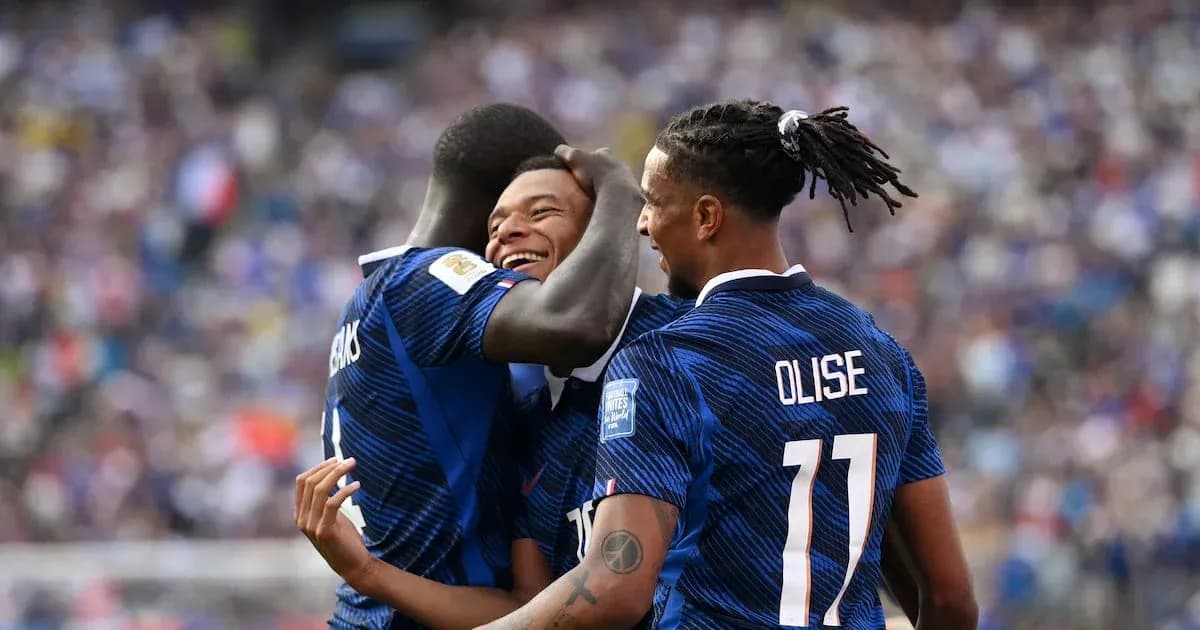
Mbappé scored twice, Barcola added another, and Olise stitched the whole thing together with two assists. Both Mbappé and Olise rattled the woodwork, Olise with an outrageous overhead kick that missed goal-of-the-tournament status by the width of a post. Sweden were left chasing shadows, their manager Graham Potter admitting his team would not have won “even if they had been perfect”.
The scoreline flattered Sweden. The performance flattered no one. It was brutal.
France now stride into the last 16 with the air of a side auditioning for history. The question is no longer whether they can win this World Cup, but what kind of champions they might become. Will they be remembered like Brazil in 1970, the gold standard of glory, or like Brazil in 1982, the team that seduced the world and then collapsed at the moment of truth?
Deschamps, so often painted as a functional pragmatist, has found himself at the centre of something far more intoxicating. He flew home last week to attend his mother’s funeral; when Mbappé lashed in his first goal against Sweden, he ran straight for his manager. The embrace said as much about this team’s emotional core as any tactical diagram.
France were not alone in sending shockwaves through the tournament.
Mexico wake the Azteca
In Mexico City, the night kicked off late and then exploded. Electrical storms hovering over the capital delayed Mexico’s tie with Ecuador by an hour, the kind of disruption that can drain energy from a stadium.
Instead, it charged it.
Once the whistle finally went, Ecuador were hit by the full force of the Azteca at World Cup knockout intensity. Mexico played like a country tired of its own history, tired of being reminded that they had not won a World Cup knockout match since they last hosted the tournament in 1986.
They fixed that here.
Teenage breakout Gilberto Mora drove Mexico forward with the fearlessness of someone who has not yet learned to be cautious on this stage. Julián Quiñones struck first on 22 minutes, Raúl Jiménez added a second on 31, and Ecuador never recovered. Mexico managed the game, fed off the noise, and saw it out with a maturity that has so often deserted them in this round.
England, if they get past DR Congo later today, will walk into the same stadium for a last-16 meeting with Mexico. They will walk into the same noise, the same altitude, the same sense of national impatience finally tipping into belief.
They have been warned.
Haaland, history and a Viking boat
Norway’s message came later, but it landed just as heavily. Against Ivory Coast, they were dragged into a seesaw tie that refused to settle. Antonio Nusa had given them the lead in the 39th minute, Amad Diallo equalised with a gorgeous solo goal on 74, and the game seemed to be slipping away from the Norwegians.
Then Erling Haaland did what Erling Haaland does.
With four minutes left of normal time, Oscar Bobb, freshly introduced from the bench, threaded an incisive pass. Haaland finished, as if the entire evening had been waiting for that one movement, that one swing of his boot. Norway’s players celebrated in their now-familiar Viking-rowboat routine, rowing in unison on the turf, a choreographed reminder that they intend to stay in this tournament a while.
Next up is Brazil. A heavyweight tie with a twist.
Remarkably, Norway remain the only team to have faced Brazil and never lost to them: two wins, two draws, four games, no defeats. It is a quirk of history that now feels like a psychological weapon. Brazil will know the record. So will Norway. So will everyone else.
Diallo, for his part, leaves the tournament with one of the goals of the day. His equaliser against Norway was a slaloming run followed by a composed, clever finish, a flash of individual brilliance on a night that ultimately belonged to Haaland.
Cats, commentary and a bow to Deschamps
Not every memorable moment came from the pitch. Before Bobb slipped Haaland through for Norway’s winner, he inspired a very different sort of contribution. On BBC commentary, Danny Murphy drifted briefly away from tactics and transitions to recall a lost pet.
“I used to have a cat called Bob,” he said. “He jumped in the back of a Royal Mail van and we lost him. Sad really. Anyway.”
The Irish Times later reported that the Murphy household now finds “Postman Pat” a little too close to the bone.
Back in New York, where France had just ripped Sweden apart, Deschamps received an unexpected wave of contrition from those who once dismissed him as dowdy, conservative, a man who won by trimming the imagination out of games. On this evidence, and on this night, those old caricatures looked badly out of date.
A day that rattled the favourites
By the final whistle of the last game, the pattern of the day had emerged. France had sent a warning. Mexico had broken a 38-year barrier. Norway had kept their improbable record against Brazil alive and well.
For those nations resting, rotating and quietly plotting their routes through the knockout rounds, this was not a comfortable day to watch from afar. It was a day of omens, of statements, of teams stepping out of their old stories and writing new ones.
The World Cup has a way of punishing those who think they can glide through on reputation alone. After this round of 32, that lesson should be ringing loud in every camp still dreaming of the trophy.