.svg&w=384&q=75 "Pitchgist logo")
Fiorentina vs Genoa: Tactical Insights from a Goalless Draw
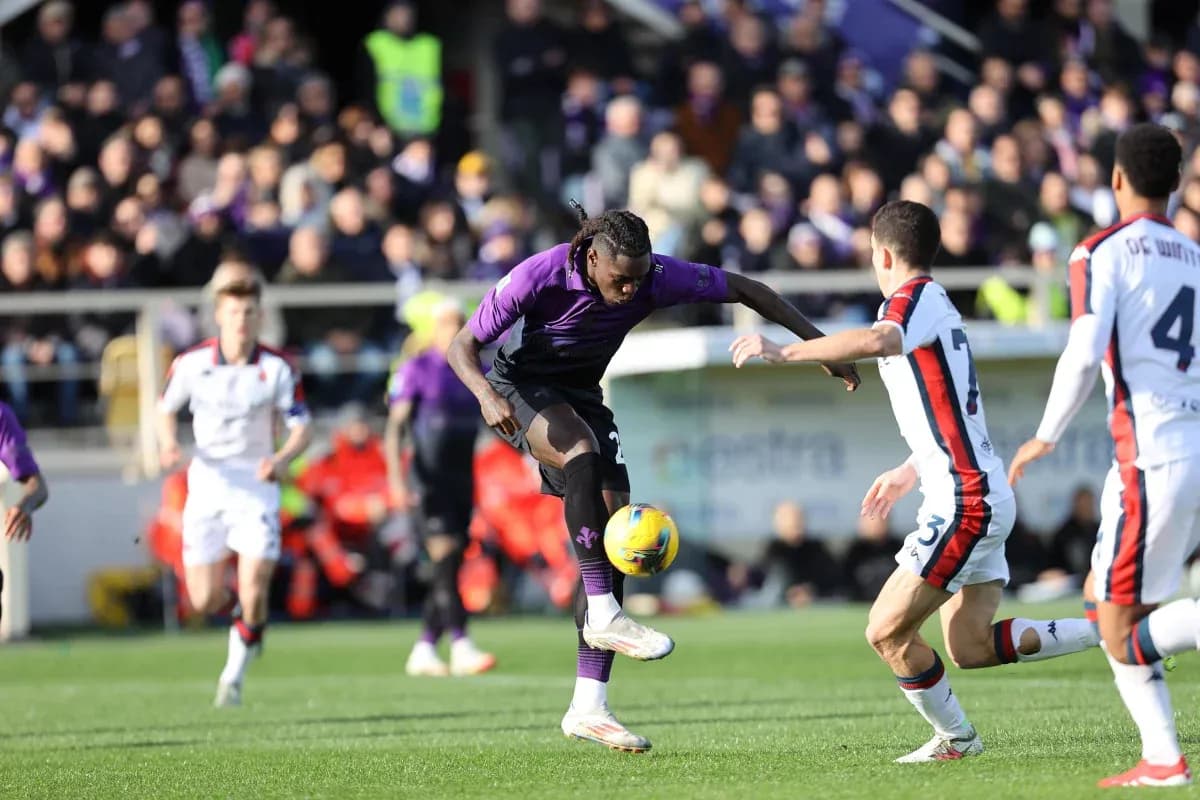
The late-spring light over Stadio Artemio Franchi felt deceptive. On paper this was a mid-table dead rubber, 15th against 14th, Fiorentina versus Genoa with survival already essentially secured. Yet the 0-0 that followed told a more nuanced story: two sides trying to reconcile their seasonal identities with the tactical realities of a cautious, attritional afternoon.
I. The Big Picture – Two Identities, One Stalemate
Following this result, the standings snapshot remains revealing. Fiorentina sit 15th on 38 points with a goal difference of -11, built from 38 goals scored and 49 conceded in total across 36 matches. Their season has been one of balance without edge: at home they have scored 20 and conceded 20, averaging 1.1 goals for and 1.1 against per home game. Genoa, a step ahead in 14th with 41 points and a goal difference of -8 (40 for, 48 against overall), have been marginally more incisive. On their travels they have scored 19 and conceded 24, averaging 1.1 goals for and 1.3 against away.
The formations on the day mirrored each club’s broader tactical DNA. Fiorentina went back to their most-used shape, a 4-3-3 that has started 13 league games this season, with Paolo Vanoli trusting structure over improvisation. Genoa, under Daniele De Rossi, lined up in a 3-4-2-1, a system they have used 9 times this campaign, slightly more expansive than their staple 3-5-2 but still rooted in defensive stability.
II. Tactical Voids – Who Was Missing, and What It Cost
The absentees shaped the match as much as those on the pitch. Fiorentina were without their leading scorer M. Kean, ruled out with a calf injury. His 8 league goals in total and willingness to attack space in behind have often been the difference between a draw and a narrow win. Without him, the front line of F. Parisi, R. Braschi and M. Solomon lacked a true reference point. Parisi and Solomon are comfortable drifting wide and dropping off, but none of the trio offers Kean’s penalty-box gravity.
The absence of T. Lamptey removed another vertical threat from the right, pushing Vanoli towards a more conventional full-back in Dodo rather than an out-and-out wing-back profile. Fiorentina’s season-long numbers underline how costly bluntness can be: they have failed to score in 11 of their 36 league games in total, despite a respectable 9 clean sheets overall. This fixture added another chapter to that story.
Genoa’s voids were more creative than structural. T. Baldanzi, Junior Messias and M. Cornet were all unavailable, stripping De Rossi of three players capable of operating between the lines or attacking 1v1. B. Norton-Cuffy and S. Otoa were also missing, limiting rotation options in the wide channels. As a result, the 3-4-2-1 leaned heavily on Vitinha and L. Colombo as the primary outlets, with J. Ekhator asked to bridge midfield and attack.
Disciplinary trends hovered over the contest even if the referee’s notebook stayed relatively light. Fiorentina’s season card profile shows a late-game edge: 25.00% of their yellow cards arrive between 76-90 minutes, and both of their red cards this season have also come in that 76-90 window. Genoa, by contrast, scatter their bookings more evenly but have a dangerous habit of red cards at key phases: 33.33% of their reds between 0-15 minutes, another 33.33% between 46-60, and 33.33% between 91-105. Both benches knew that any late surge could be double-edged.
III. Key Matchups – Hunter vs Shield, Engine Room vs Enforcer
With Kean absent, Fiorentina’s “Hunter” role became more collective. The notional spearhead was Solomon from the left of the front three, but the attacking responsibility was distributed across wide rotations and late midfield runs. Against a Genoa side that concedes 1.3 goals on average away, the hosts’ inability to generate consistent final-third threat was striking. Fiorentina’s season-long average of 1.1 goals at home should, in theory, have been enough to trouble a back three that has allowed 24 away goals in 18 matches.
Instead, the “Shield” for Genoa held firm. The trio of A. Marcandalli, L. Ostigard and N. Zatterstrom formed a compact block in front of J. Bijlow, with wing-backs M. E. Ellertsson and Aarón Martín dropping into a back five when out of possession. Aarón Martín’s broader season numbers underline his importance: 5 assists in total, 60 key passes and 11 blocked shots speak of a full-back who both creates and defends. Here, his role tilted more towards containment, tracking Solomon and Dodo while still offering an outlet in transition.
In the “Engine Room”, the contest was compelling. For Fiorentina, R. Mandragora, N. Fagioli and C. Ndour formed a three-man midfield tasked with progressing play and shielding a back line anchored by M. Pongračić and L. Ranieri. Pongračić’s season profile is that of a classic stopper: 23 blocked shots and 34 interceptions, alongside 11 yellow cards in total, paint a picture of a defender who steps in aggressively and lives on the disciplinary edge. Ranieri adds balance, with 34 tackles and 11 blocks of his own.
Opposite them, Genoa’s Amorim and M. Frendrup were the hinges. Frendrup’s energy allowed Genoa to toggle between a 3-4-2-1 and a more compact 5-4-1 without losing central bite, while Amorim focused on screening passing lanes into Braschi and Solomon. With De Rossi keeping R. Malinovskyi on the bench at kickoff, Genoa sacrificed some creative range in favour of solidity; Malinovskyi’s 6 goals, 3 assists and 10 yellow cards in total this season embody a high-risk, high-reward profile that might have opened the game but also loosened Genoa’s grip.
IV. Statistical Prognosis – xG in Disguise
Even without explicit xG data, the season trends and tactical shapes allow a reasonable inference. Heading into this game, Fiorentina’s overall average of 1.1 goals scored and 1.4 conceded per match contrasted with Genoa’s 1.1 scored and 1.3 conceded. Both sides sit in that narrow band where matches are often decided by a single big chance or a set-piece detail.
Fiorentina’s 9 clean sheets in total and Genoa’s matching tally of 9 suggest both can grind out low-scoring affairs. Genoa have failed to score in 14 matches overall, Fiorentina in 11, reinforcing the idea that a goalless draw was always within the realm of likely outcomes once the early exchanges passed without incident.
The disciplinary profiles also hint at why neither side fully committed to chaos late on. Fiorentina, aware that 25.00% of their yellows and all of their reds come late, resisted overcommitting bodies in the final 15 minutes. Genoa, with their history of early and stoppage-time reds, likewise chose control over risk, especially away from home where they have already lost 7 times.
In xG terms, this felt like a match where both teams hovered around low-value territory: half-chances, blocked shots, and crosses cleared by dominant centre-backs. Pongračić’s instinct for stepping into shooting lanes, mirrored by Marcandalli and Ostigard at the other end, effectively suppressed shot quality on both sides.
Following this result, the narrative is less about the single point each side takes and more about what it reveals. Fiorentina remain a team whose 4-3-3 offers structure but still craves a ruthless finisher like Kean to turn control into goals. Genoa, in their 3-4-2-1 guise, look like a side that can manage away games, keep the scoreline tight, and trust that on another day, with Malinovskyi or Baldanzi available, the balance between Hunter and Shield might tilt just enough to turn a stalemate into a narrow win.