.svg&w=384&q=75 "Pitchgist logo")
Is Harry Kane the Last in England’s Line of Elite Strikers?
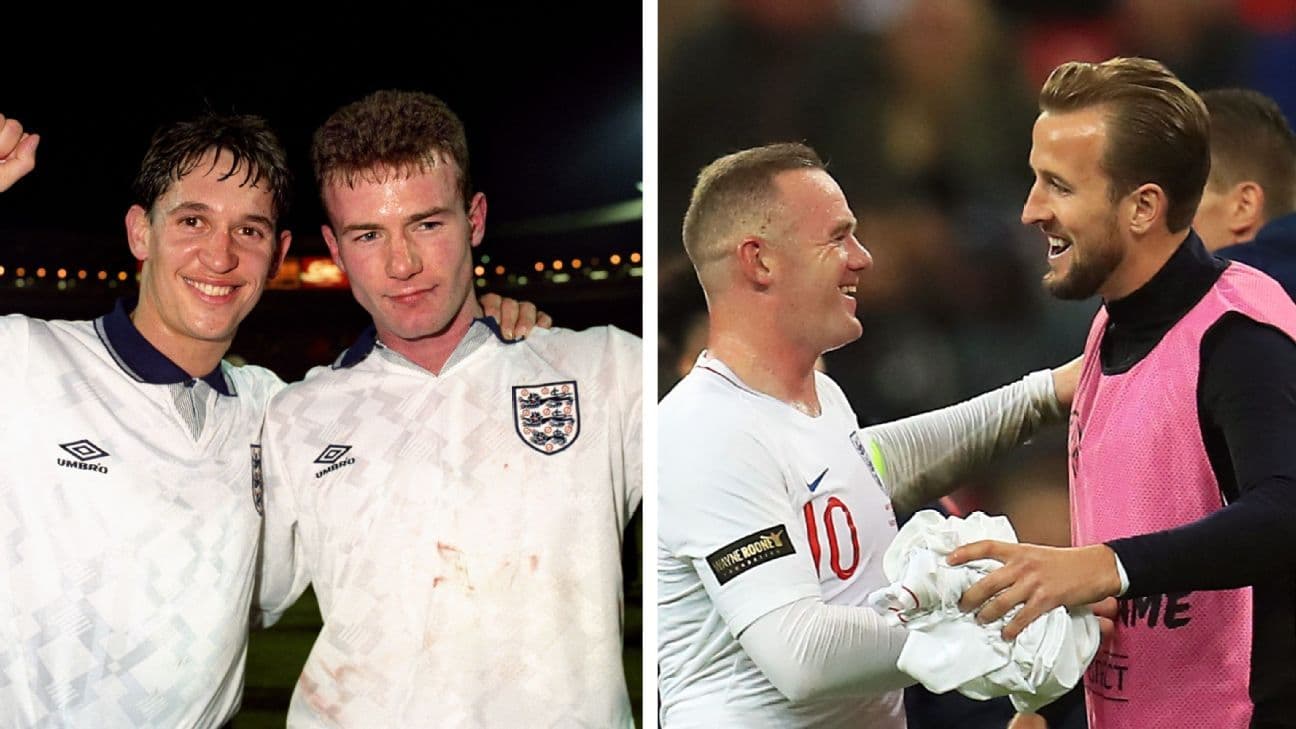
From Gary Lineker to Wayne Rooney, England has showcased a world-class striker for nearly five decades. Yet as Harry Kane leads the team at the 2026 World Cup, questions arise about who will succeed him.
Kane, now 32, carries the immense pressure of being England's captain and one of the most feared forwards in international football. It is likely his final World Cup, and whenever he retires, England may find itself without a striker of comparable quality.
The recent matches without Kane revealed how dependent the team remains on him. In March, England’s draw with Uruguay and loss to Japan exposed vulnerabilities. Observers described the side as "lost and confused," offering a stark preview of life after their talismanic No. 9.
A Tradition of Striking Excellence
Since Gary Lineker replaced Tony Woodcock in a 1984 match against Scotland, England has rarely lacked a top striker. A succession of talents including Alan Shearer, Michael Owen, Wayne Rooney, and now Kane have featured in every major tournament England qualified for since 1986.
This remarkable run produced 249 international goals, two World Cup Golden Boots, eleven domestic Golden Boots, and numerous club scoring records. Supporting players like Teddy Sheringham, Les Ferdinand, Ian Wright, Robbie Fowler, Emile Heskey, Jermain Defoe, and Peter Crouch also contributed reliably during this era.
"The No. 9 back in the day was the role everyone wanted to play," says former striker Emile Heskey. "It was all about goals, hold-up play, and creating space." Heskey reflects on adapting to teammates like Wayne Rooney, who preferred to drop deeper, explaining how strikers adjusted their roles accordingly.
How England Compares Internationally
While England’s striking legacy stands tall, other nations boast impressive positional runs too. France’s history of forwards like Jean-Pierre Papin, Eric Cantona, Thierry Henry, David Trézéguet, Karim Benzema, and Kylian Mbappé nearly matches England’s, and they secured two World Cup titles in 1998 and 2018.
Spain’s dominance lies in midfield maestros such as Pep Guardiola, Xavi, Andrés Iniesta, Sergio Busquets, and Xabi Alonso. Italy’s legendary center-backs—Gaetano Scirea through Leonardo Bonucci—once formed an unbroken defensive line but recent World Cup absences suggest that era may have ended.
These continuous runs of talent have shaped footballing reputations worldwide, often underpinning major tournament success—except perhaps England’s ongoing hunt for a breakthrough star to end its long wait for a trophy.
Who Will Replace Kane?
Kane’s transfer to Bayern Munich saw him flourish with 95 goals in 93 Bundesliga games, marking him among the club’s great strikers. His departure from the Premier League has highlighted a shortage of top English goal scorers domestically.
This season, only three English forwards netted 10 or more Premier League goals: 30-year-old Ollie Watkins (16), 29-year-old Dominic Calvert-Lewin (14), and 35-year-old Danny Welbeck (13). All these players overlapped with Kane’s prime years, limiting their chances to shine internationally. Meanwhile, Ivan Toney has excelled abroad, scoring 31 goals in Saudi Arabia’s Pro League.
The next generation struggles to emerge. England’s under-21 coach Lee Carsley named just two strikers recently—Liam Delap and Jay Stansfield. Delap, once highly rated, has had a tough first season at Chelsea with just one Premier League goal.
The decline in traditional strikers traces back to the Premier League’s rise and the global search for attacking talent. The trend favored versatile wide forwards over classic No. 9s, influenced by managers like Pep Guardiola. Players such as Marcus Rashford and Raheem Sterling have thrived in these roles. Yet signs hint at a renewed demand for pure strikers, with high-profile signings like Erling Haaland and Alexander Isak bringing power and pace back into vogue.
Heskey warns against expecting another Kane. "We never got another Michael Owen, Wayne Rooney, or Alan Shearer. We just changed the canvas," he says. The role evolves, and so must England’s approach.
Once Kane departs, England faces an uncertain future up front. Maybe a new style of striker will emerge, or a different tactical focus will reshape the team. Until then, Kane’s legacy remains a towering chapter in England’s football story.