.svg&w=384&q=75 "Pitchgist logo")
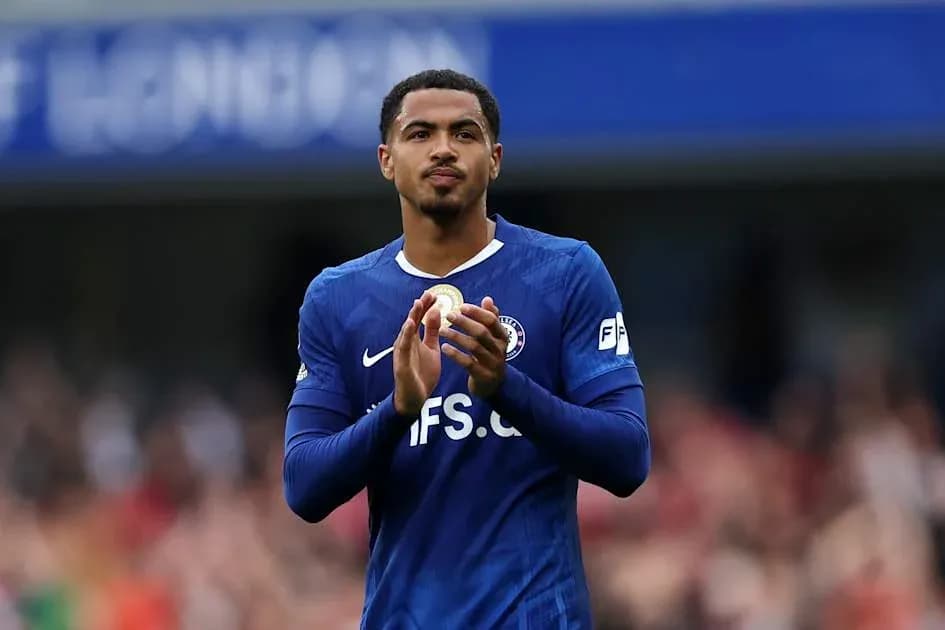
Levi Colwill's Journey Through Injury and Recovery
Levi Colwill had just touched the ceiling of the club game. A FIFA Club World Cup winner, a young defender riding the surge of momentum into a new Premier League season. Then, without warning, everything stopped.
One serious injury. Eight to nine months gone. The high of Abu Dhabi replaced by the cold stillness of a treatment room.
“I didn’t believe it to be honest,” he admitted, looking back on the moment the diagnosis landed, less than two weeks before the league campaign was due to start. “You’re flying, you’re buzzing, and all of a sudden you hit rock bottom.”
That drop is the spine of a new behind‑the‑scenes mini-documentary on CFC+, Chelsea’s global subscription platform, which tracks Colwill’s recovery in raw, unvarnished detail. The cameras are there from the first days of shock and denial, through the lonely graft of rehab, to the moment he finally steps back over the white line at Stamford Bridge.
This is not the polished, post‑injury soundbite. It is the grind.
Life on pause
For a footballer, time is usually measured in games, not months. Colwill’s calendar was suddenly wiped clean.
“When your life stops for eight or nine months, you know that you’re going to get through, whatever you can,” he said. “It’s time to move on and you know the hard work really starts now.”
Those early days bite the hardest. No roar from the stands, no rhythm of matchday, just repetition: treatment, gym, pool, more treatment. The documentary lingers on those phases, catching him after each small milestone – first steps without pain, first work on the grass, first touches of the ball – and the mental toll that sits behind the physical work.
Colwill doesn’t hide from it. He talks openly about the strain, the frustration, and the moments when the end felt a long way off.
The circle around him
What stops a long-term injury from swallowing a season, and sometimes a career, is often the people around the player. Colwill is quick to push the spotlight away from himself.
“At home I had my friends and family checking up on me all the time,” he said. “When I first did the injury and I was back home, every day I had someone new coming and seeing me and just spending time with me.
“It gave me that motivation to work harder to be back on the pitch and make them proud again.”
The support network stretched from his living room to Cobham. Chelsea’s medical and coaching staff walked with him through each stage, tailoring sessions, setting targets, dragging him through the dull days when progress felt invisible.
Inside the dressing room, one voice in particular cut through. Wesley Fofana, himself no stranger to serious setbacks, became both sounding board and guide.
“Wes has been really top with me – any advice, anything I need,” Colwill said. “All these people have been there every step of the way with me. I know everyone thinks it’s my hard work, but I think in my way, it’s a lot down to them. They’ve done a lot for me, and I’ll only be here because of them. Big thank you to those guys.”
The film leans into that humility. The image of the lone athlete conquering adversity gives way to something more honest: a young defender held up by a crowd of people determined not to let him fall.
Crossing the line again
Every rehab has a date circled in red. For Colwill, it came at Stamford Bridge, in the Premier League, against Nottingham Forest. A substitution board goes up, the noise rises, and the long months shrink into a few short strides to the touchline.
“The moment I step back on the pitch with the squad is going to be a really good moment,” he said beforehand, the anticipation clear. “Because I’ve been through a lot with them by my side and obviously, to be back with them, it will be the best moment ever.”
The documentary follows him through that entire day. The build‑up. The nerves. The first sprint. The first tackle. The look on his face when the final whistle goes and the job is done, not in terms of performance, but in the simple fact that he is out there again.
That cameo did not just close a chapter. It opened another. The cameras stay with him into the regular check‑ins that run throughout 2025/26, charting how a player who has already stared down the worst kind of pause now tries to make up for lost time.
The injury stopped his life for almost a season. The question now is how far he can run, now that the clock is ticking again.