.svg&w=384&q=75 "Pitchgist logo")
Brazil’s VAR Controversy: CBF Demands Referee Removal
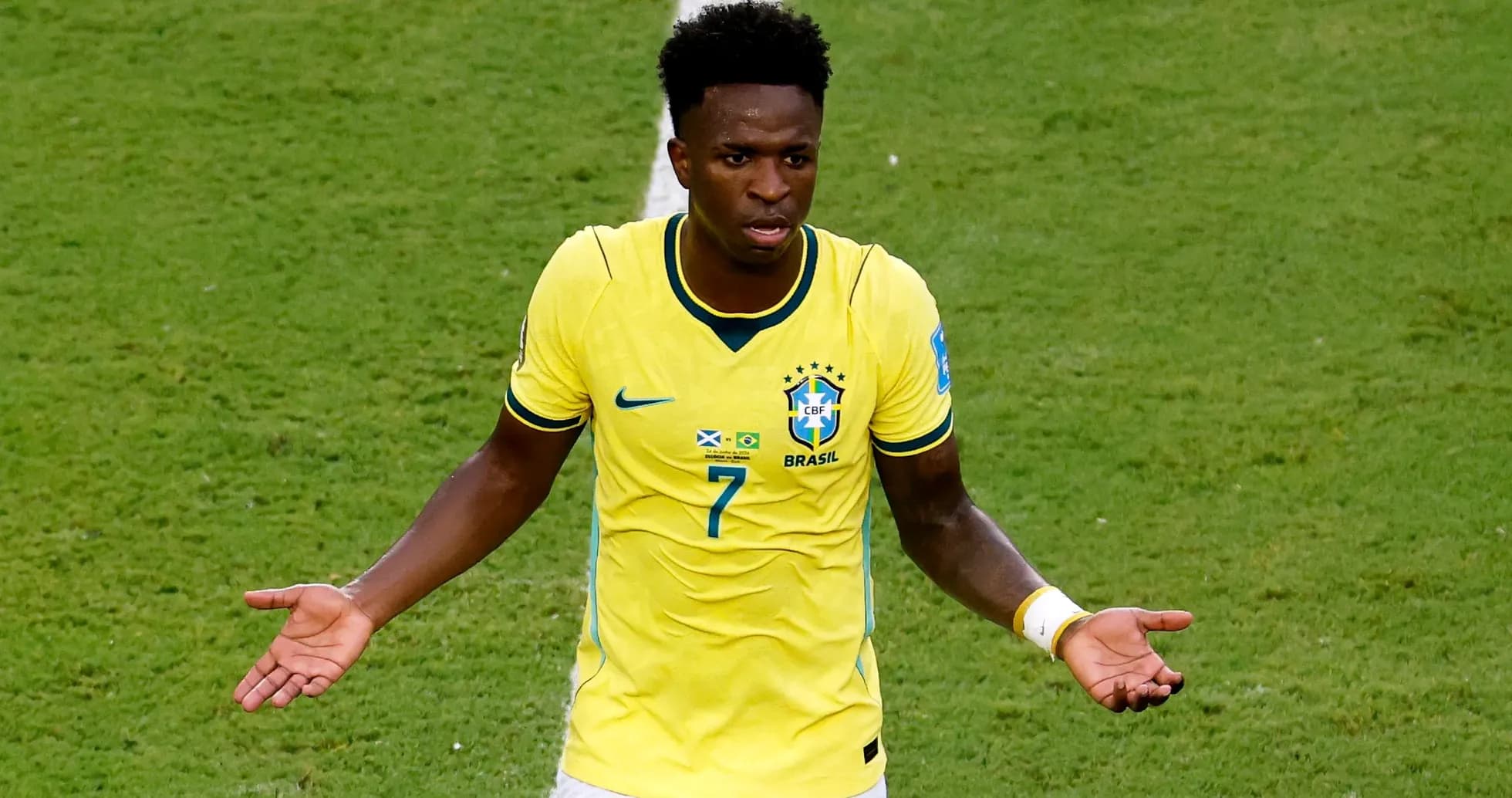
For a few seconds in the 21st minute, it felt like vintage Brazil. Jack Hendry hesitated, Vinicius Jr pounced, and Angus Gunn was beaten with a finish that oozed calm and class. Two-nil, game done, group wrapped. Or so everyone thought.
Cesar Ramos pointed to the centre circle. Brazil celebrated. Scotland reset. Then the familiar, unwelcome pause. VAR.
Moments later, the goal was gone, erased for a foul in the build-up that many inside the stadium struggled to spot in real time. The contact, deemed enough on review, was judged too heavy. The mood flipped instantly on the Brazil bench, where fury replaced relief.
For Carlo Ancelotti’s staff, the decision cut deeper than a single group-stage flashpoint. It struck at a wider frustration: what exactly counts as “clear and obvious” in this tournament?
That anger has now left the technical area and entered the boardroom.
CBF Go on the Offensive
CBF president Samir Xaud has taken the extraordinary step of writing directly to FIFA president Gianni Infantino, challenging not just the disallowed goal against Scotland but what Brazil see as a pattern of inconsistency in officiating across the competition.
The federation’s demand is blunt. They want Mexican referee Cesar Ramos removed from any future Brazil matches in North America.
In a document cited by Brazilian outlet Estadao, the CBF point to what they describe as a “negative history” with Ramos. The resentment dates back to the 2018 World Cup group match against Switzerland, where Brazil felt they were denied a clear penalty and a foul in the build-up to the Swiss equaliser. For the CBF, that night never really left the file; it has now been reopened and placed squarely on FIFA’s desk.
Their argument is simple: with that backdrop, Ramos should never have been appointed to a Brazil game at this tournament.
Messi, Argentina and the Double-Standard Claim
In a twist that will not go unnoticed in South America, Brazil have even turned to their greatest rival to make their case.
The letter reportedly highlights a goal scored by Lionel Messi for Argentina against Austria earlier in the tournament, pointing to similar physical challenges in the build-up that were allowed to stand. Where Messi’s effort counted, Vinicius Jr’s did not. For the CBF, that contrast is not just unfortunate; it is evidence.
The implication is clear. Brazil believe that what is tolerated for some nations is being punished for them.
The document goes further, noting that the call against Scotland “seemed unexpected not only for the Brazilian team, but also for the Scottish players,” whose immediate reactions suggested they did not anticipate a review, let alone the cancellation of the goal. On the pitch, nobody appeared to be appealing. The intervention came from the booth, not the players.
Ancelotti Blocks Out the Noise
While the legal and political battle escalates, Ancelotti has no time to dwell on letters and precedents. His job is more immediate: Japan await in the round of 32 in Houston.
The VAR storm did not derail Brazil’s night. Vinicius Jr still found his second goal later in the game, refusing to let the earlier setback define his performance. Matheus Cunha added a third, and Brazil eased to the top of Group C with the authority expected of them.
Ancelotti cut a measured figure after the final whistle. The Italian sees progress, not chaos.
“Now we are playing as a team, that is the goal. We are not perfect, we have things to improve. We can be a little quicker when we have control,” he told reporters, underlining the balance he is trying to strike between critique and confidence. “I’m happy because the team has improved a lot, now we are solid. In the knockout stage, solidity is very important. We have a solid team. Compared to the first game, we are making fewer mistakes, we have more rhythm, and we are more effective up front.”
The message is unmistakable: let the federation handle the politics; the squad will handle the football.
Knockout Football, High Stakes and a Shadow Over VAR
Brazil now step into the knockouts with two parallel storylines. On the grass, a side that looks sharper, more cohesive, and more ruthless than in its opening outing. Off it, a federation that has chosen confrontation over quiet diplomacy, openly questioning the integrity of appointments and the use of VAR.
Japan will not care about the paperwork. They will see a Brazil team that can still be rattled by officiating swings, yet one that increasingly trusts its structure and its stars.
The bigger question hangs over the tournament itself. After another high-profile intervention, and with one of world football’s superpowers demanding answers, how long can this World Cup keep its focus on the football before the officiating debate takes centre stage again?