.svg&w=384&q=75 "Pitchgist logo")
England's Challenge Against Panama: Injuries and Tactical Adjustments
In another universe, England would already be through, Harry Kane would have his feet up, and Saturday in New Jersey would be a glorified shooting drill against Group L’s weakest seeds. A chance for the captain to chase Lionel Messi, Erling Haaland and Kylian Mbappé in the Golden Boot race. A breather before the real stuff starts.
That world vanished with the 0-0 against Ghana.
Thomas Tuchel’s side let the group slip from their grasp on Tuesday, and with it went any notion of a stress‑free rotation game against Panama. England still need to clinch top spot. The schedule is unforgiving – potentially four games in 13 days – and the manager’s neat plan to manage minutes has become a juggling act on a tightrope.
This was supposed to be the one Ollie Watkins and Ivan Toney circled as Kane’s day off. Now it is anything but.
Injuries, bookings and a fraying plan
Tuchel will make changes, some by choice, some by force. Declan Rice sits one booking from a ban and finished the Ghana game with strapping on his left calf. Risking him from the start would be a gamble. Losing him later, to suspension, could be fatal.
Reece James’s hamstring, though, is the real problem. Again. The right-back is out for at least two games, another chapter in a long-running saga of muscle issues that saw him miss almost two months at the end of the club season. This time, the damage cuts deeper than just one position.
Tuchel built this squad light on attacking full-backs. He picked only three. Tino Livramento, himself no stranger to the treatment room, has already left the camp and been replaced not by another raiding defender, but by centre-back Trevoh Chalobah. The attacking burden on the flanks now falls heavily on Nico O’Reilly’s young shoulders.
The alternatives to James at right-back – Ezri Konsa, Jarell Quansah, Djed Spence – are all more comfortable defending than flying forward. None is a natural outlet high up the pitch. In that context, the decision to leave Trent Alexander-Arnold at home will be chewed over with fresh intensity.
What should have been a straightforward assignment against Panama suddenly feels loaded. The cost of that stalemate with Ghana is simple: England cannot ease off.
Kane, Bellingham and the rotation riddle
So do Kane and Jude Bellingham keep going? Tuchel knows some of his A-listers must start. He will not want to drift into the last 32 from second place and see the knockout path twist against him. Momentum matters too. The win over Croatia promised lift-off; the stumble against Ghana brought back familiar doubts about England’s second games at major tournaments.
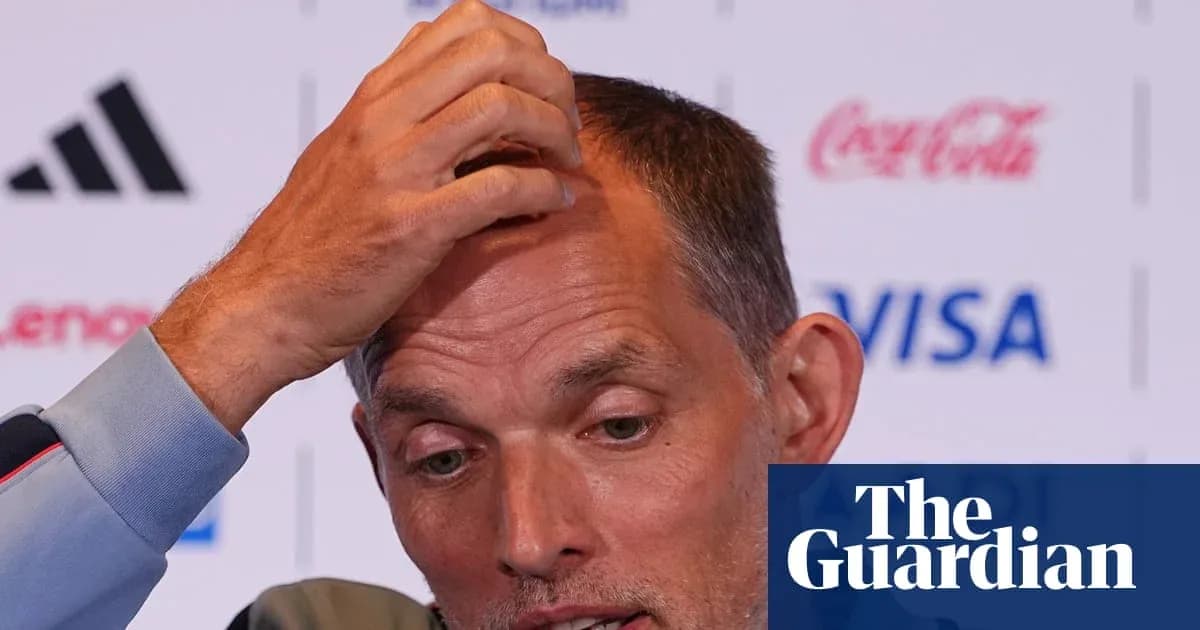
There is no panic in Tuchel’s voice, but there is clarity. England have to improve against low blocks. Ghana’s compact 4-5-1 turned the game into a grind. Panama will try to do the same.
Thomas Christiansen’s side are already out after 1-0 defeats by Ghana and Croatia, yet they were awkward, disciplined opponents in both matches. They are a very different proposition to the naïve team England shredded 6-1 at the 2018 World Cup. They have grown up.
Tuchel expects a long, attritional evening against a back five that can quickly morph into a back six or seven. He knows his England have looked most ordinary when faced with that kind of barricade. When Croatia, Serbia and Wales left space, England were electric. When Andorra, Albania and Latvia sat in during qualifying, the performances turned laboured. Ghana fell into that second category. Obdurate, organised, unyielding.
Thomas Partey tracked Kane everywhere, shutting down the captain’s habit of dropping off to knit play. The numbers were brutal. Kane had just 19 touches. Only three passes were exchanged between him and Bellingham. England hogged 78.8% of the ball and still failed to register a shot on target before half-time.
The missing recipe
Tuchel is still searching for the antidote. He admitted as much. For all his love of structure, of patterns, of control, there is no magic sequence yet that unlocks the deep block on command.
He wants England to build carefully, then suddenly accelerate. Create overloads in specific zones, then strike. The problem? There were no overloads against Ghana. And, as he freely concedes, there will “very likely” be none against Panama either.
So something has to give. More risk on the ball. More aggression in possession, without tipping into recklessness and handing Panama the transitions they crave. The trap is obvious: get impatient, start forcing passes, and Panama will happily slow everything down, take fouls, and spring forward when England over-commit.
Bellingham’s frustration was clear against Ghana. He snapped into a needless foul just before the interval, a moment that summed up the team’s irritation as much as his own.
The message now is to maintain intensity, not anxiety. The centre-backs must step in with more conviction, dragging the block out of shape. Kobbie Mainoo’s calm in tight midfield pockets could be crucial if he replaces Rice. He can receive under pressure, turn, and change the angle of attack in a heartbeat.
Out wide, England need more than safe possession. The wingers must run at their full-backs, not just recycle. Tuchel hopes Bukayo Saka is ready to return on the right in place of Noni Madueke. On the left, Anthony Gordon has not convinced and may make way for Marcus Rashford.
Another option is to turn to Eberechi Eze or Morgan Rogers, starting them nominally wide but asking them to drift inside and link play. Bellingham showed relentlessly for the ball against Ghana. Too often, he was ignored or not seen quickly enough.
A blunt left side and a restless bench
Tuchel admits the left flank has lost its spark. In the friendly win over Costa Rica this month, Gordon and O’Reilly dovetailed superbly. For a moment, the manager thought that side of the pitch was “solved”. Competitive football has told a different story.
In both group games, the combinations have been flat. The penetration has gone. The vertical runs that once tore through defences have been replaced by safe angles and sideways passes.
Against Ghana, the right-footed Spence offered little in possession when he came on at left-back for the more adventurous O’Reilly. Rashford, meanwhile, did not appear until the 83rd minute and is still to show Tuchel he can be decisive from the start in this tournament.
“He’s a candidate to start,” the manager said, but the wider point was blunt: the left side as a unit must pose a greater threat.
Tuchel continues to emphasise the collective over any individual saviour. He wants his players to relish the “one-against-ones”, to break the line themselves when the pass is not on. Yet he is realistic enough to know Panama will do everything to prevent those overloads he craves.
Against a low block, the tempo of the match is notoriously hard to raise. It often comes down to a single moment of quality: a cleaner cross, a sharper run, a shot from distance that takes a deflection and finally breaks the resistance. Tuchel’s questions to his players are pointed. Are they attacking the box aggressively enough when the ball comes in? Are they taking on the responsibility to shoot from range?
No crisis, but no comfort either
For now, Tuchel keeps perspective. He insists that nobody enjoys facing Carlos Queiroz’s Ghana, drawing on his own Champions League experience. The description is vivid: a team that celebrates every duel, every counterattack, every rare foray over halfway as if it were a goal. Ghana treated 0-0 as a triumph. They earned that right.
England live with different expectations. A goalless draw, heavy possession, few chances – it is not what this squad was built, or hyped, to deliver. Against Panama, the demand is not simply to win, but to excite. To release some tension, to send the team into the knockouts with a lighter mood and a faster stride.
Tuchel does not need to rip up his blueprint. He does need to loosen it. The handbrake has to come off at some point. The question is whether England can do that without losing the control their manager prizes – and whether this bruising group stage will harden them for what comes next, or expose cracks that better sides will be only too happy to tear open.