.svg&w=384&q=75 "Pitchgist logo")
Australia Advances with Concerns in Attack
Australia are through, but the alarm bells are ringing.
The Socceroos ground out a 0-0 draw with Paraguay to book their place in the round of 32 at the FIFA World Cup, a result that did exactly what was required on paper. On the pitch, though, the story was very different. The brightest attacking spark in green and gold was not a forward, not even a winger pushed high. It was Jordan Bos, a full-back thrown into a reshaped system and suddenly carrying the threat usually reserved for the men up front.
That is what worries two former Socceroos.
Bos shines, questions grow
Jacob Italiano’s late injury forced Tony Popovic into a rethink on the flanks. He responded with a bold shuffle: Bos came in on the right, while Melbourne City left-back Aziz Behich slid across to fill the gap on the left. It was the tactical tweak many had been waiting to see Popovic make, and it delivered. Bos attacked with conviction, drove at Paraguay’s back line and repeatedly offered an outlet that Australia’s forwards could not match.
For Scott McDonald and Robbie Slater, watching on from the Stan Sport studio, that was the problem.
“Up front is a bit of a worry when we’re looking at Jordy Bos as one of the most threatening (for Australia),” Slater said on Added Time, laying bare the concern that a 21-year-old defender had become the side’s most dangerous weapon in the final third.
McDonald did not disagree. In his eyes, this was supposed to be the stage for Mo Toure or Nestory Irankunda. Instead, one was left on the bench and the other was marooned in a role that does not yet fit.
No.9 conundrum
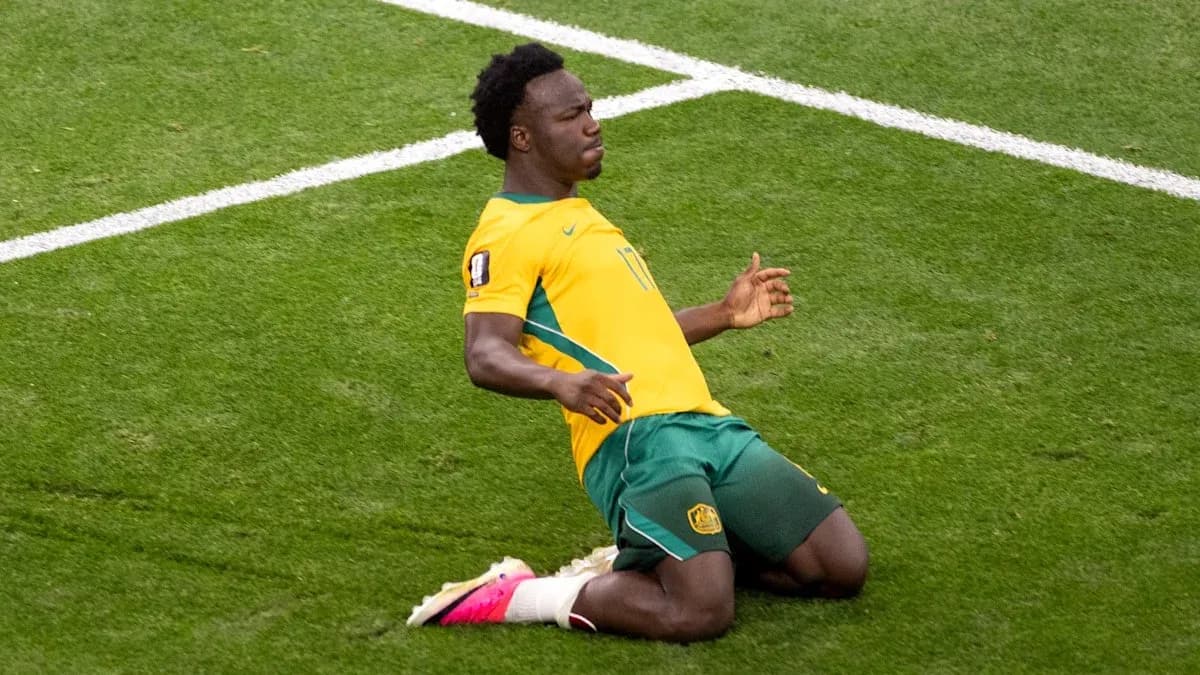
Popovic’s decision to use Irankunda as a No.9 rather than in his natural wide position framed the entire night. The 20-year-old, usually a winger who thrives when he can isolate full-backs and cut inside, spent long stretches wrestling with Paraguay’s three central defenders, often starved of service and living, as McDonald put it, “off scraps”.
For a former international striker, the message from the bench was as telling as anything on the pitch.
“There is a problem in terms of the No.9. Not bringing (Mo) Toure on instead of Tete Yengi tells me today that there’s no trust there,” McDonald said. “Does he go and start him (Toure) out of the blue in the next game? You just can’t tell with Tony. But as a striker, being Toure, I don’t like that. That doesn’t fill me with confidence that my coach trusts me.”
That is a brutal assessment, but it cuts to the heart of Australia’s attacking dilemma. The Socceroos are through, yet there is no settled spearhead, no obvious solution in the box, and no clear sign Popovic is convinced by any of his options.
Irankunda out of position, out of rhythm
The pressure on Irankunda is obvious. He is young, explosive, and carries the kind of raw talent that excites coaches and fans alike. Shifted centrally, though, he looked like a player learning the job on the fly.
“Look, he’s gotta hold it up a little bit better,” McDonald said. “I think at times he struggled because it’s not his natural game.”
Paraguay’s structure only made it harder. With a back three set up to squeeze space and track his movement, Irankunda found no room to spin in behind or drift wide. Every time he tried to pull into those channels, he ran into a wall of red and white. When he dropped deeper, support was slow to arrive.
“They were aware of his threat also, with three taking care of him,” McDonald added. The answer, in his view, lies not in more running, but in smarter positioning. Stay central. Wait for the moment. Let the game come to you.
He pointed to Erling Haaland as the modern template: a striker who conserves energy, trusts the players around him to create chaos, then appears in the right space at the right time. Irankunda, by instinct, wants to be the one doing the creating, drifting wide, driving at defenders, shooting from the edge of the box. The role of a classic No.9 demands patience, penalty-box movement, and a willingness to let others “do the dirty work”.
If he is to continue there, McDonald argued, he will have to adjust.
Thankless task at the top
McDonald’s sympathy for any Australian forward in this system was clear. “No matter who we put up there, it’s a thankless task up there,” he said. Nestory’s night against Paraguay only reinforced that view.
With Irankunda pinned between centre-backs and little in the way of a target presence, Australia’s attacks repeatedly broke down before they reached the box. That is why Bos’s performance on the right stood out so sharply. He overlapped with purpose, offered width, and became the release valve when Paraguay’s press tightened.
“Jordy Bos playing on the right-hand side was brilliant and it gave us that outlet,” McDonald said. Praise for the youngster, yes, but also an indictment of those meant to be leading the line.
For McDonald, the profile of Australia’s No.9 remains as traditional as ever. “I’ve always said it, if you can head it, you’ve got a better chance of being a No.9 for the Socceroos. It’s as simple as that.” A big man to play off, a focal point, a presence in the air. Right now, Popovic has not found that answer, or does not fully trust it.
Through, but far from settled
So Australia move on, job done, bracket secured, clean sheet banked. Yet the picture up front is anything but clean. A full-back is leading the charge, the most gifted young winger is wrestling with an unfamiliar role, and a natural striker in Toure is left wondering where he stands.
Popovic has time, but not much. The knockout rounds do not forgive uncertainty in the penalty area. Will he double down on Irankunda as a central striker, restore him to the flank, or finally hand the keys to a No.9 he truly trusts?