.svg&w=384&q=75 "Pitchgist logo")
Solbakken's Strategy: No Regrets After France Loss
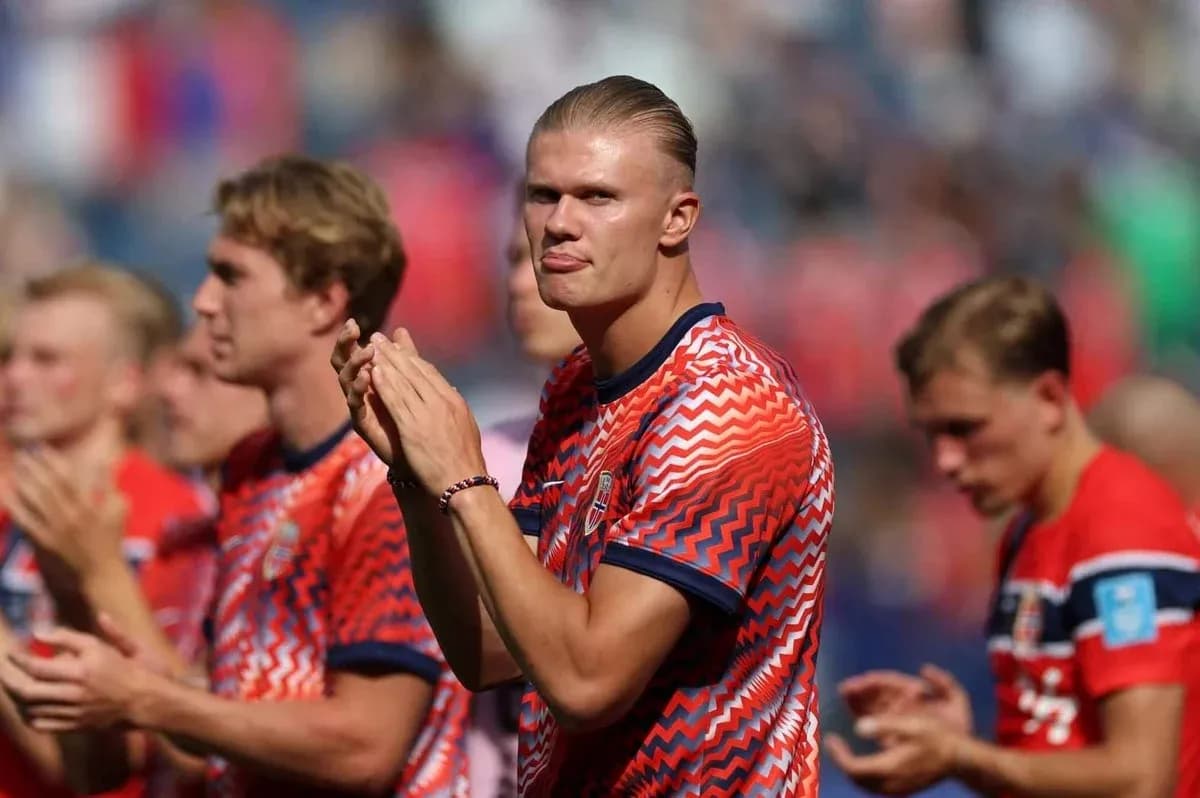
Stale Solbakken walked into the mixed zone in Boston with a 4-1 defeat on the board, Erling Haaland unused, Martin Odegaard still in his tracksuit – and not a flicker of regret.
The Norway head coach had ripped up his winning side from the 3-2 victory over Senegal, making 10 changes and effectively treating a glamour meeting with France as a live training exercise. Top spot in the group was there for the taking, along with a smoother route and a date with Sweden instead of Ivory Coast. He didn’t blink.
“This is simple,” the 58-year-old said. For him, it was.
A weakened XI, a heavy defeat, and a bigger picture
Norway had already booked their place in the knockout rounds before a ball was kicked against France. The equation was clear: win and secure first place; rotate and risk a beating but protect the legs that really matter.
Solbakken chose the latter. Only one player survived from the Senegal win. Haaland stayed on the bench. So did Odegaard. The marquee showdown with Kylian Mbappé that many in the crowd had paid thousands to see never materialised.
The price on the night was obvious. A disjointed, second-string Norway side were outclassed and outgunned. The 4-1 scoreline underlined the gulf. Yet Solbakken’s calculations had begun long before kick-off.
“We did a summary after Senegal and there were five or six who were very affected,” he explained. “After 80 minutes of play, the entire defence line and one or two midfielders were very affected.”
Cramp had ripped through the team in that chaotic win. Data from the medical staff backed up what the eye had already seen.
“The (urine) samples were taken by the medical team and they were fed back to me,” he said. “It was not a decision that took a long time to arrive at.”
The tightest turnaround in the tournament
Norway’s schedule left almost no room for romance. Between Senegal and France, they had the shortest recovery window of any side. Now comes a round of 32 tie on Tuesday, just three days after being run ragged by France’s first-choice stars.
Solbakken saw the trap early. Chase top spot, squeeze every last drop from tired legs, and risk going into the knockouts flat. Or take the hit, rest his core, and try to cash in when it truly counts.
“We know that from this match to Senegal, Norway has the shortest window before another match,” he said. “It could have been that we were able to play a decent match today but we want to win. Bear in mind we might not have won, what about the next game then?
“It was a no-brainer. Both on my part and the physio and medical team — and from some players themselves. They all said it would be difficult for them and to be able to train.”
The decision shifts the balance of fatigue. Ivory Coast, who beat Curaçao on Thursday to qualify, will face a Norway side whose main weapons have barely broken sweat since Senegal. The four-hour trip to Dallas is hardly ideal, but Solbakken believes he has already done the heavy lifting to offset that.
“You have to take that into consideration – the shortest space between games, the train trips and changing hotels with one rest day less,” he said. “It was part of why we did what we did.”
Asked if the quick turnaround now hands Ivory Coast an advantage, he was blunt: “Not now because we did what we did today.”
Fans wanted Haaland vs Mbappé. Solbakken wanted survival.
The stands in Boston told their own story. Norwegian shirts, Haaland 9 on the back, Odegaard 10 dotted everywhere. Many had travelled across the Atlantic for this: their star striker against Mbappé, the kind of heavyweight duel that defines tournaments and fills highlight reels.
They got neither. Haaland and Odegaard stayed seated, spectators like everyone else.
“The support has been very good and they want to see Erling and Martin so that is the only reason you can feel something about the way we lined up today,” Solbakken admitted.
He understood the disappointment. He chose to ignore it.
“Hopefully because of that we can give them some good summer nights in the weeks ahead,” he added. “I feel this consideration but we have given them a couple of victories and the opportunity to watch more games. That is what we are here to do.”
Then came the line that cuts to the heart of his thinking.
“We don’t need to be the naive country who just play for fun. We are here to proceed as long as we can and I have to make the decisions to do that.”
For Solbakken, this is about shedding an old skin. Norway, in his mind, cannot afford to be the plucky underdog that chases occasions instead of outcomes.
“I wouldn’t want to sit on the plane back knowing we didn’t do our best to go as far as possible,” he said. “It was an easy decision. Not even up for discussion.”
France look ahead, Norway roll the dice
On the opposite bench, France treated the match as a chance to lock in first place and ease their own path. Assistant coach Guy Stephan pointed to the practical reward: a 45-minute hop to New York instead of a four-hour journey to Dallas.
For Norway, that longer flight now awaits. So does Ivory Coast. The risk is obvious: they sacrificed a shot at a more favourable tie and a marquee group-stage scalp in the hope that fresher legs will carry them deeper.
Solbakken did leave a sliver of room for a different script. Haaland and Odegaard were not completely ruled out; they were his emergency glass case.
“It would have had to be after the last hydration break,” he said of using them from the bench. “If there was a situation where we might have reached our goal.”
That situation never came. France were too strong, Norway too disjointed, the gap too wide to justify breaking the seal.
So the plan remains intact. Haaland and Odegaard will board that longer flight with minutes saved in the bank, energy preserved for a knockout game that will now define whether Solbakken’s “no-brainer” was cold, clear thinking – or an expensive miscalculation on the biggest stage.