.svg&w=384&q=75 "Pitchgist logo")
Declan Rice and Elliot Anderson: Can They Start Together for England?
The argument has followed England around this World Cup like a drumbeat: can Declan Rice and Elliot Anderson really start together?
It is not a daft question. Supporters want England higher up the pitch, with more risk, more incision, more bodies in the final third. Two No10s, not two No6s. Less safety net, more cutting edge.
But the reality is simple: Rice and Anderson are among the most complete central midfielders in the Premier League. Different profiles, same level. Anderson sees passes others don’t, switches play, threads lines. Rice covers ground relentlessly, eats up space, recovers the ball, drives his team forward. Between them, there is enough quality to dominate any midfield.
The catch? For their clubs, they usually sit. They build. They rarely arrive to finish.
For England, that balance is under the microscope. The double pivot gives licence to the full-backs to fly on, to overload wide areas, to pin a low block back. On the tactics board, it all fits. On the pitch, if the game drifts to the hour mark and England are still circling without cutting through, something has to change.
That is where bravery comes in. Not from the players. From the bench.
Substitutions always carry a risk. Get them right and the manager is hailed as a genius, the narrative flips, the tie is “won from the dugout”. Get them wrong and control evaporates, a game that felt safe suddenly tilts, and a knockout tie slips away because too many shirts went hunting the winner at once.
This is not Panama. This is DR Congo, a side with far more threat in transition and a fully earned place on this stage. England cannot ignore the counter-attack. They also cannot play with the handbrake on.
The passes between the lines have to be played. The risky ones. Some will be cut out, some will go astray, but the point is to keep asking the question, to keep rapping on that door until it gives way. Shots from distance must be part of the plan too; against a low block, not every chance will be carved from six yards. England need to be willing to score from 25.
This tie demands a different approach to long spells of those games against Ghana and Panama. Not just tactically. Mentally.
Lose here and you go home. No safety net, no “we’ll fix it in the group”. The weight of the shirt grows heavier in these moments. Playing for England always comes with scrutiny, but in a World Cup knockout, in a match the country expects you to win, that pressure hardens into something else.
The scars of Iceland in 2016 still sit in the background of any such conversation. That was another night “meant” to be straightforward. It wasn’t. England cannot afford even a second of complacency. Full concentration, from the first whistle to the last, is non-negotiable.
DR Congo are not a mystery quantity. Their AFCON run turned heads, and their squad carries a spine of Premier League experience. Yoane Wissa is the obvious attacking spearhead. He never quite exploded at Newcastle the way he would have hoped, but this World Cup has lit a fire under him. He harries defenders, forces them to think, never lets them settle. DR Congo lean on him, and he has embraced that responsibility.
Behind him, Axel Tuanzebe has quietly become one of the pillars of this side. Those who worked with him at Burnley speak of a defender whose pace rescues tight moments and allows his team to squeeze up the pitch. On television he may not look electric, but his stride eats ground, and he is physically imposing with it.
His path has not been smooth. Injuries have interrupted promising spells, yet his professionalism has never wavered. Gym work, preparation, recovery – the unglamorous details that decide careers – he nails them. When he crosses the white line, he leads. He talks his back line through games, organises, nudges team-mates into better positions. That comes from a grounding at Manchester United, where you do not reach the first team without serious ability and an even more serious attitude.
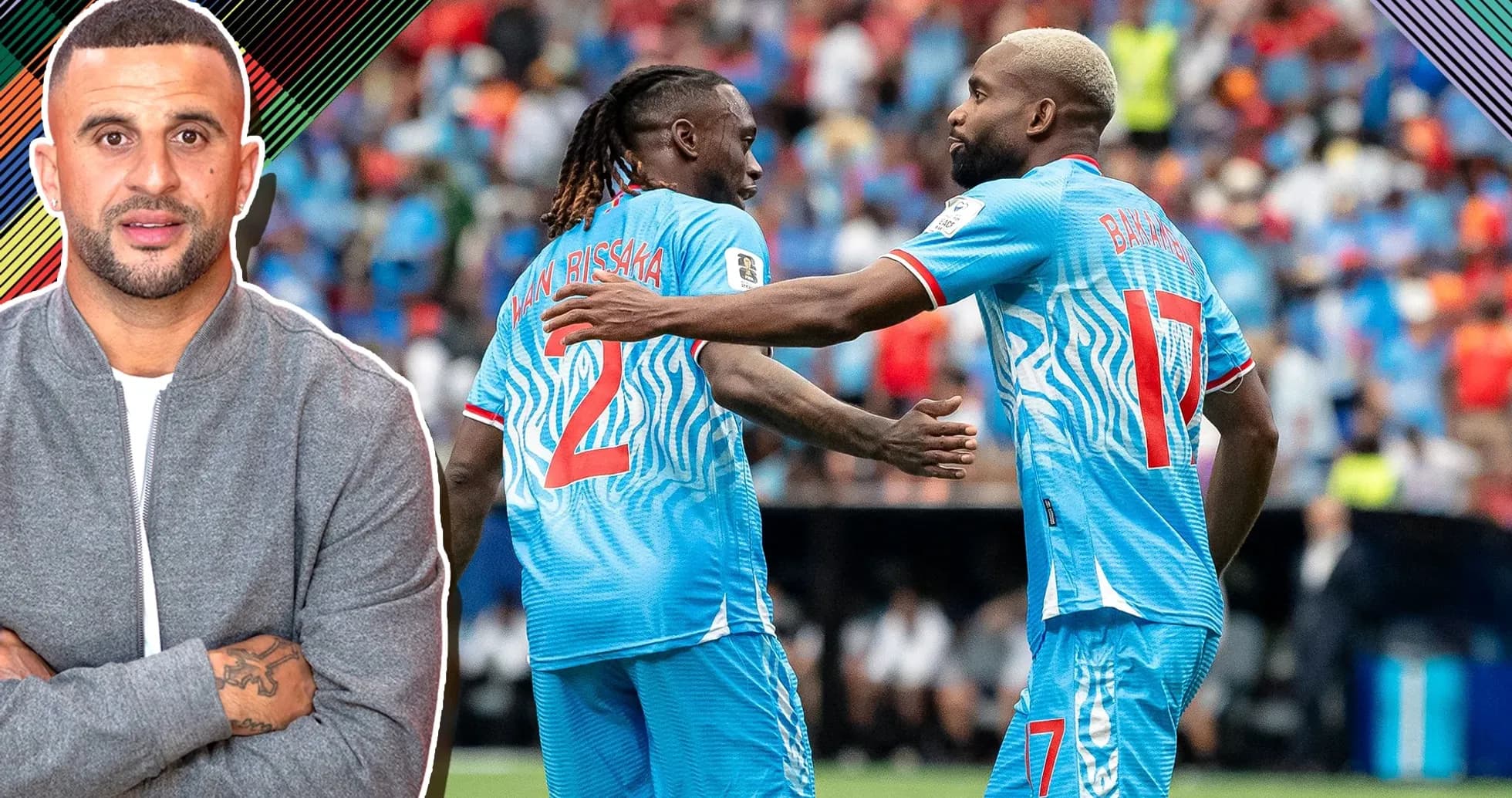
Tuanzebe’s versatility, at centre-back or right-back, offers options, but on that flank DR Congo already boast Aaron Wan-Bissaka, one of the most stubborn one-on-one defenders in the modern game. Opponents think they’ve skipped past him and then, out of nowhere, a telescopic leg hooks the ball away. At City they used to call him “Go-Go Gadget” for a reason.
He thrives on the duel. He relishes the challenge of shutting down elite wingers. If Marcus Rashford features, the subplot writes itself: former Manchester United team-mates, now on opposite sides of a World Cup knockout, reacquainting themselves in the tightest of spaces. It will be a battle of timing, familiarity and nerve.
So England step into this tie with superior depth, greater expectations and all the usual noise swirling around team selection. Rice and Anderson together or not, the demands remain the same: assert yourselves, trust your quality, take calculated risks, and do not let fear of the counter suffocate your ambition.
Because this will not be straightforward. And if England forget that for even a moment, DR Congo have just enough power and poise to turn a supposed formality into another night that lives long in the wrong kind of memory.