.svg&w=384&q=75 "Pitchgist logo")
Crystal Palace vs Everton: Premier League Showdown at Selhurst Park
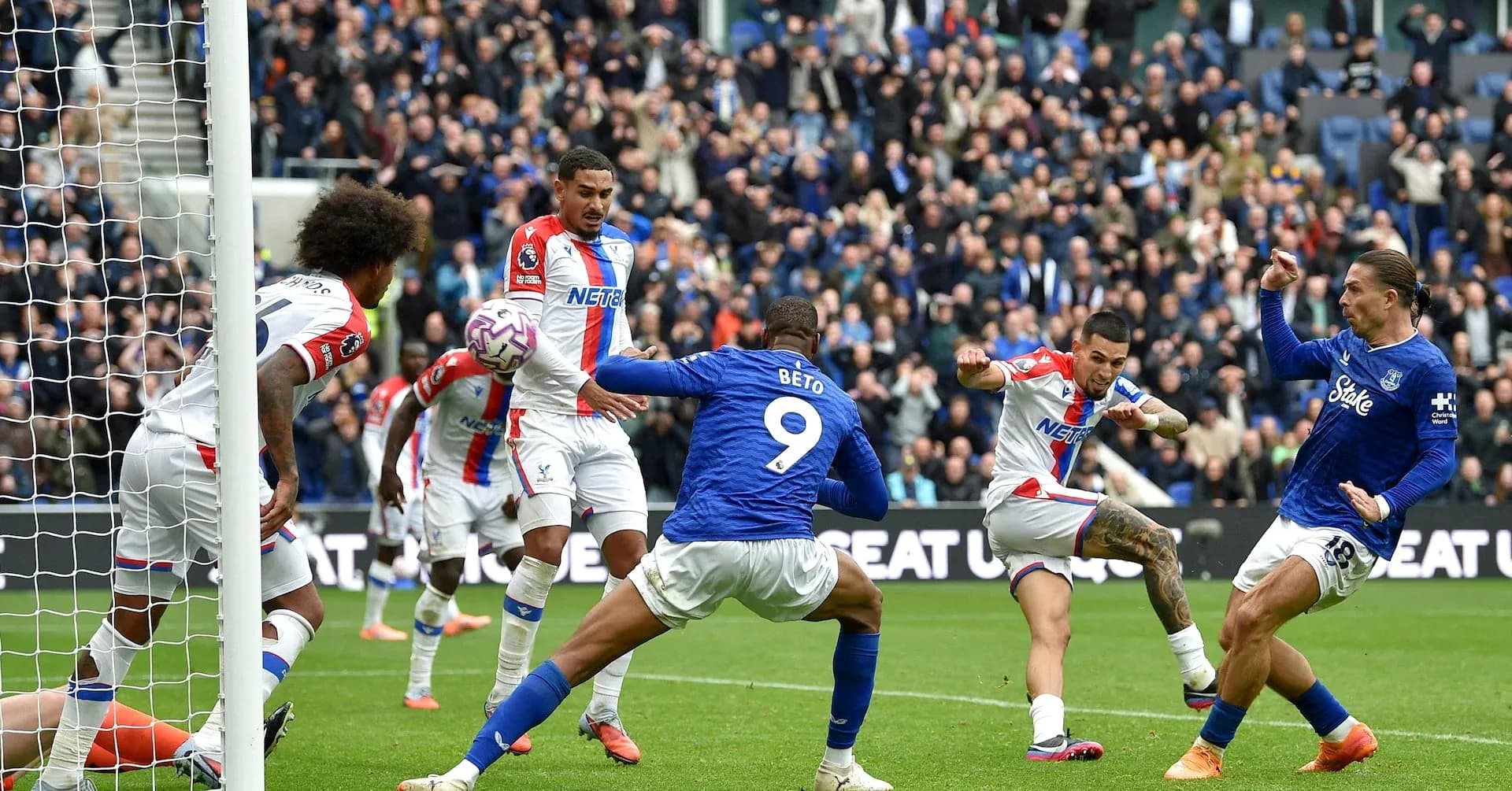
In 2026 at Selhurst Park, Crystal Palace host Everton in Regular Season - 36 of the Premier League, a late‑league fixture with clear mid‑table stakes. In the league phase, Palace sit 15th on 43 points with a -6 goal difference (36 scored, 42 conceded), while Everton are 10th on 48 points with a neutral goal difference (44 scored, 44 conceded). This match is less about the title or relegation and more about securing mathematical safety for Palace and consolidating a top‑half finish for Everton.
Head-to-Head Tactical Summary
The recent head-to-head trend is strongly tilted towards Everton, with Crystal Palace repeatedly taking early leads but failing to convert them into wins.
On 5 October 2025 at Hill Dickinson Stadium in Liverpool (Premier League, Regular Season - 7), Everton beat Crystal Palace 2-1. Palace led 1-0 at half-time, but Everton turned it around to 2-1 by full-time.
On 15 February 2025 at Selhurst Park in London (Premier League, Regular Season - 25), Everton again won 2-1. Everton were 1-0 up at half-time and held on to that advantage, adding and conceding once after the break to finish 2-1.
On 28 September 2024 at Goodison Park in Liverpool (Premier League, Regular Season - 6), Everton defeated Palace 2-1. Palace led 1-0 at half-time, but Everton came back to win 2-1.
On 19 February 2024 at Goodison Park (Premier League, Regular Season - 25), the sides drew 1-1. It was 0-0 at half-time before both teams scored in the second half.
On 17 January 2024 at Goodison Park in the FA Cup 3rd Round Replays, Everton edged a 1-0 win over Palace, leading 1-0 at half-time and maintaining that scoreline to full-time.
Across these five matches, Everton have four wins and one draw, consistently finding ways to overturn or protect narrow margins, while Palace have struggled to manage game states once in front.
Global Season Picture
- League Phase Performance: In the league phase, Crystal Palace’s 15th place comes from 11 wins, 10 draws and 13 losses in 34 matches, with 36 goals for and 42 against (goal difference -6). Their home record shows 4 wins, 8 draws and 5 losses, scoring 16 and conceding 19. Everton, in 10th, have 13 wins, 9 draws and 13 losses from 35 matches, with 44 goals for and 44 against. Away from home they have 7 wins, 4 draws and 6 losses, scoring 19 and conceding 20.
- All-Competition Metrics: Across all phases of the competition, Crystal Palace average 1.1 goals scored and 1.2 conceded per match (36 for, 42 against over 34 games), with 12 clean sheets but 11 matches where they failed to score, pointing to a low‑volume, inconsistent attack and a defense that is solid in structure but still concedes slightly more than it scores (1.2 goals against on average). Their most used formation is 3-4-2-1 (30 matches), with occasional 3-4-3 (4 matches), suggesting a back three with wing-backs and dual support behind a lone striker. Card data shows a concentration of yellow cards between 31-60 minutes (27 yellows combined in the 31-60 ranges), indicating increased defensive pressure as halves progress.
- All-Competition Metrics (Everton): Across all phases of the competition, Everton average 1.3 goals scored and 1.3 conceded per match (44 for, 44 against over 35 games), reflecting a balanced but volatile profile. They have 11 clean sheets and have failed to score in 9 matches, slightly more reliable in attack than Palace but with similar defensive leakiness. Their main formation is 4-2-3-1 (21 matches), with occasional 4-3-3, pointing to a more traditional back four with double pivot and a central No.10. Everton’s yellow cards peak late (15 yellows in minutes 76-90 and 11 in 91-105), hinting at aggressive game management and potential late‑game risk of suspensions.
- Form Trajectory: In the league phase, Crystal Palace’s form string “LLDWD” shows two straight losses followed by a draw, win, and another defeat. That pattern underlines inconsistency and a lack of sustained momentum, with any positive result quickly offset by a setback. Everton’s “DLLDW” reads as defeat, two draws, a win, then a loss, a similarly uneven sequence but with slightly more resilience through draws. Neither side is in sustained form; both are oscillating between stabilising and slipping, which increases the relative importance of this head‑to‑head as a potential inflection point.
Tactical Efficiency
Across all phases of the competition, Crystal Palace’s low scoring rate (1.1 goals per match) against a slightly higher concession rate (1.2) suggests a modest attacking efficiency and a defense that keeps them in games without providing a strong platform to dominate. The frequent use of 3-4-2-1 indicates reliance on structured build‑up and wing‑back width rather than high shot volume, which aligns with the number of matches where they fail to score (11). Their card distribution, with many yellows in the middle phases of each half, hints at a team that often has to react to pressure rather than control it.
Everton, with 1.3 goals scored and 1.3 conceded across all phases, profile as a more open, higher‑variance side. The 4-2-3-1 base suggests a clearer attacking framework, which is reflected in their slightly higher scoring rate and the ability to overturn deficits in the recent head-to-heads. Their late-game card spikes (especially 76-90) point to aggressive closing phases, which can be both a weapon in disrupting opponents and a liability in terms of fouls and potential red cards. Without explicit attack/defense index values from the comparison block, the empirical picture is of Everton having a marginally stronger attack than Palace and a similar defensive level, but operating in more stretched, transition-heavy matches.
The Verdict: Seasonal Impact
For Crystal Palace, this fixture is a late‑season safety lock. In the league phase they are 15th on 43 points with a -6 goal difference; a win would likely move them clear of any residual relegation anxiety and give them breathing room heading into the final two rounds. Given their inconsistent form (“LLDWD”) and limited attacking output across all phases, taking three points at Selhurst Park would be a significant psychological and mathematical step towards a stable mid‑table finish in 2026.
For Everton, 10th on 48 points with a neutral goal difference, the match is about solidifying or improving their top‑half status. A win would push them towards the low‑50s in points, strengthening their position in the upper mid‑table and keeping alive any outside chance of climbing further if results above them go their way. Dropped points, especially a defeat, would risk them sliding back into the pack of mid‑table sides and turning the final matches into a fight just to stay in the top half rather than pushing towards the European conversation.
Structurally, Everton’s recent dominance in the head-to-head (four wins and a draw in the last five) and slightly superior attacking metrics across all phases give them a small edge, particularly given Palace’s difficulty converting leads against them. However, Palace’s home resilience in the league phase (only 5 losses in 17 at Selhurst Park) means this is more a pivotal mid‑table test than a foregone conclusion. The result will not reshape the title race, but it will strongly influence whether Everton finish 2026 as a clear top‑half side and whether Palace end the year looking upwards from safety or nervously over their shoulders.