.svg&w=384&q=75 "Pitchgist logo")
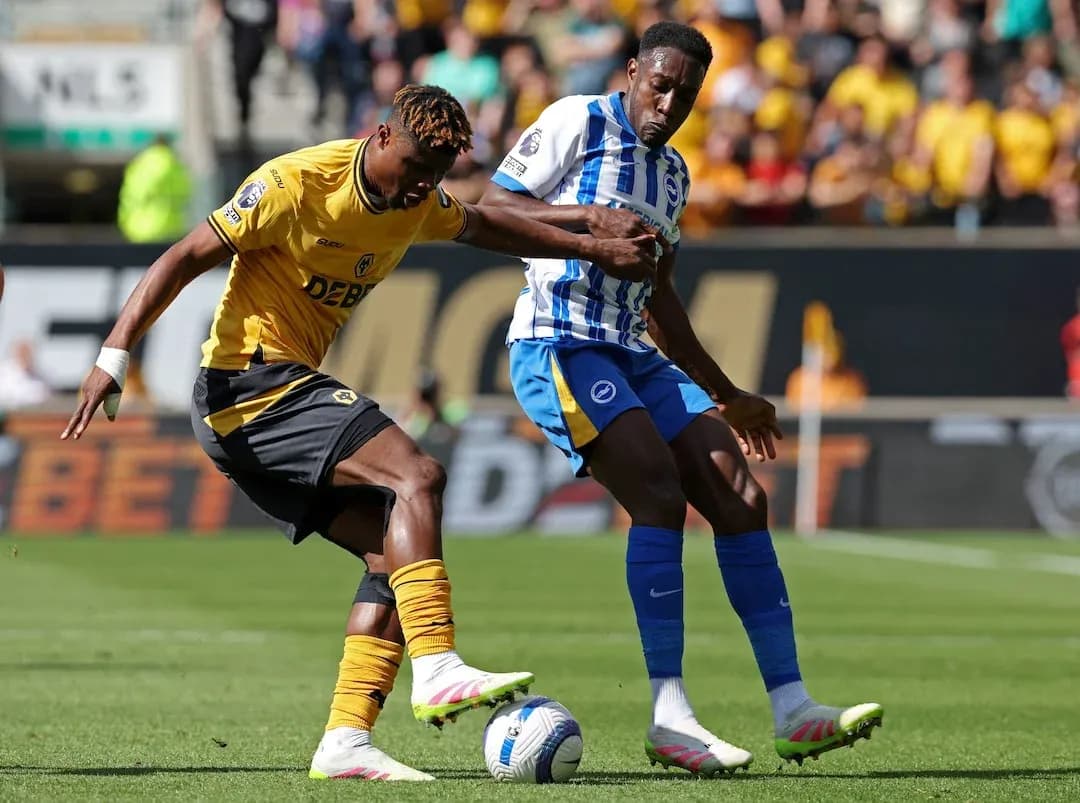
Brighton vs Wolves: Premier League Clash with High Stakes
Brighton host Wolves at the Amex Stadium in a late-season Premier League fixture that carries very different stakes for each side. In the league phase, Brighton sit 8th on 50 points with a +7 goal difference (49 scored, 42 conceded from 35 games), pushing for a strong top-half and potential European-position finish. Wolves arrive bottom in 20th with 18 points and a -38 goal difference (25 scored, 63 conceded in 35), locked in the relegation zone and needing a result to keep any survival hopes alive. Within the context of Regular Season - 36, this is a high-leverage safety-versus-ambition game: Brighton can consolidate an excellent campaign, while Wolves are effectively fighting to avoid confirmed relegation.
Head-to-Head Tactical Summary
The recent head-to-head pattern between these sides has been tight and tactically varied across competitions and venues.
On 5 October 2025 in the Premier League at Molineux Stadium, Wolves drew 1-1 with Brighton. Wolves led 1-0 at half-time before Brighton levelled after the break, underlining Brighton’s capacity to adjust in-game and Wolves’ difficulty in protecting narrow leads.
On 10 May 2025, also at Molineux in the Premier League, Brighton won 2-0. The visitors led 1-0 at half-time and closed the game out with a clean sheet, showing effective control once in front.
On 26 October 2024 in Premier League action at the American Express Stadium (Brighton’s home), the match finished 2-2. Brighton led 1-0 at half-time but Wolves found a way back, indicating that Brighton’s home dominance in spells has not always translated into three points against this opponent.
In the League Cup on 18 September 2024 at the American Express Stadium, Brighton beat Wolves 3-2. The half-time score was 2-1 to Brighton, and the hosts ultimately edged a high-scoring contest, suggesting that cup meetings between these two can become more open and transitional.
In the FA Cup on 28 February 2024 at Molineux Stadium, Wolves defeated Brighton 1-0, leading 1-0 at half-time and holding that advantage. That tie highlighted Wolves’ ability to execute a compact, cup-style game plan and protect a single-goal lead when structure and concentration are high.
Overall, across league and cups, both teams have taken wins off each other, with several games decided by a single goal and multiple instances of one side leading at half-time and the other responding after the interval. The tactical theme is of narrow margins, with Brighton slightly more expansive and Wolves leaning on defensive resilience and counter-attacks when they have succeeded.
Global Season Picture
- League Phase Performance: In the league phase, Brighton’s 8th place is underpinned by 49 goals for and 42 against from 35 matches, yielding 50 points. That profile points to a relatively balanced side, with a positive goal difference and enough attacking output to win games without being overly exposed defensively. Wolves, in 20th, have scored just 25 and conceded 63 in 35 league matches, collecting only 18 points. This combination of very low scoring and heavy concessions explains their entrenched relegation position and the high pressure attached to every remaining fixture.
- All-Competition Metrics: Across all phases of the competition, Brighton’s numbers confirm a controlled, possession-oriented side with moderate risk. They average 1.4 goals scored per match and 1.2 conceded, with nine clean sheets and only seven games where they have failed to score. Their most common formations (4-2-3-1 in 30 games and 4-3-3 in 4) indicate a consistent structure focused on ball progression and width. The card distribution shows a concentration of yellow cards between 46–60 minutes (24 yellows, 28.24%), suggesting an aggressive press and tactical fouling phase just after half-time. Wolves, across all phases, average only 0.7 goals scored per match and 1.8 conceded, with 18 matches where they failed to score and just four clean sheets. Their frequent use of three-at-the-back variants (3-4-2-1, 3-5-2, 3-4-3) reflects a search for defensive stability that has not translated into solidity, given the high goals-against average. Their yellow cards also spike between 46–60 minutes (21 yellows, 28.00%), mirroring Brighton in terms of intensity and fouling just after the restart, but with a higher red-card incidence across 31–75 minutes, indicating discipline issues when under sustained pressure.
- Form Trajectory: In the league phase, Brighton’s form string of LWDWW shows an upward trajectory. After a defeat, they have taken 10 points from the next four games, with three wins and one draw, implying momentum and confidence heading into this fixture. Wolves’ form of DLLLD tells the opposite story: three losses and two draws in their last five league matches, with no wins. This sequence continues a longer pattern of struggle across all phases, where extended losing streaks (up to 11 consecutive defeats) have been punctuated only sporadically by draws and isolated wins. The form lines reinforce Brighton as a team trending positively and Wolves as a side in persistent decline.
Tactical Efficiency
Across all phases of the competition, Brighton’s attacking efficiency is respectable rather than explosive: 1.4 goals per match with a best single-game margin of 3-0 at home and 1-3 away. They convert possession structures (4-2-3-1 and 4-3-3) into a steady stream of chances, and their nine clean sheets point to a defense that, while not impermeable (1.2 goals conceded per game), generally protects leads effectively. Their card profile, with a high proportion of yellows between 46–60 minutes and again late in games, suggests a tactical willingness to break play and manage transitions when ahead.
Wolves’ tactical efficiency is significantly lower. Offensively, 0.7 goals per match across all phases, combined with 18 games without scoring and a maximum of 3-0 at home, indicates a blunt attack that struggles to turn possession into xG and clear chances. Defensively, conceding 1.8 goals per match and suffering heavy defeats (0-4 at home, 4-0 away) reveals a fragile back line that can collapse once the first goal is conceded. Their frequent system changes (seven different formations used) underline a search for balance that has yet to yield a stable, efficient game model.
In comparative terms, Brighton’s attack/defense balance is clearly superior to Wolves’ profile: more goals, fewer conceded, more clean sheets, and fewer games without scoring. Any pre-match comparison index built from these trends would lean strongly towards Brighton in both attacking and defensive departments, with Wolves rated as low-probability winners unless they can produce an outlier performance relative to their season averages.
The Verdict: Seasonal Impact
From a seasonal perspective, this fixture has asymmetric but substantial implications. For Brighton, a home win would likely cement a top-half finish in 2026 and keep them in realistic contention for European qualification should teams above them slip. Given their current 50 points and positive goal difference in the league phase, three more points would reinforce the narrative of a club consolidating itself in the upper third of the Premier League, strengthening their platform for recruitment and tactical evolution in the next campaign.
For Wolves, the stakes are existential. Sitting 20th on 18 points with a -38 goal difference, every remaining match is effectively a must-win scenario. Failure to take at least a point at the Amex would push them closer to confirmed relegation to the Championship, especially given their non-existent away win record in the league phase (0 wins, 5 draws, 12 losses, 7 goals for and 30 against). A defeat here would not only damage the mathematics of survival but also further erode belief in a side already struggling for goals and defensive stability across all phases.
In forward-looking terms, this match is poised to be a validation test for Brighton’s upward curve and a last-chance benchmark for Wolves. If Brighton impose their season-long patterns of controlled attacking play and relatively solid defending, they strengthen their claim to be a stable top-half side. If Wolves cannot break their away and overall scoring issues, this fixture may become one of the defining steps in a season that ends in relegation.