.svg&w=384&q=75 "Pitchgist logo")
Brighton vs Wolves: A Crossroads Fixture in the Premier League
The Amex Stadium had the feel of a crossroads fixture. Regular Season - 36, a spring afternoon under John Brooks, and two campaigns pulling in opposite directions. Brighton, seventh in the Premier League and tracking a European play-off berth, carried a season-long identity of controlled risk: high possession, layered build-up, and a willingness to leave space behind. Wolves arrived bottom, 20th with just 18 points, their season defined by blunt attacking edges and defensive erosion.
Following this result, the table tells a stark story. Overall this campaign Brighton have played 36 league matches, winning 14, drawing 11 and losing 11. They have scored 52 and conceded 42, a goal difference of 10 that underpins a push for the Conference League play-offs. At home they have been particularly reliable: 18 matches, 9 wins, 6 draws, 3 defeats, with 30 goals for and 17 against. Wolves, by contrast, have endured a brutal season. Overall they have played 36, with just 3 wins, 9 draws and 24 defeats. They have scored 25 and conceded 66, leaving a goal difference of -41. On their travels they have yet to win: 18 away games, 0 victories, 5 draws and 13 losses, with 7 goals for and 33 against.
Coaching Challenges
Into that context stepped two coaches with very different problems. Fabian Hurzeler had to navigate notable absences. Diego Gómez, a key midfield enforcer and one of Brighton’s most carded players, missed out with a knee injury. So did S. Tzimas and A. Webster, both sidelined by knee issues, and M. Wieffer through injury. That stripped Brighton of some defensive steel and depth, especially in the back line where Webster’s experience is often a stabilising presence.
Rob Edwards’ list was even more disruptive. For Wolves, L. Chiwome and E. Gonzalez were both ruled out with knee injuries, while S. Johnstone (knock) and J. Sa (ankle injury) left the visitors without their first-choice goalkeeper. Daniel Bentley had to anchor a defence already under siege all season.
Team Line-ups
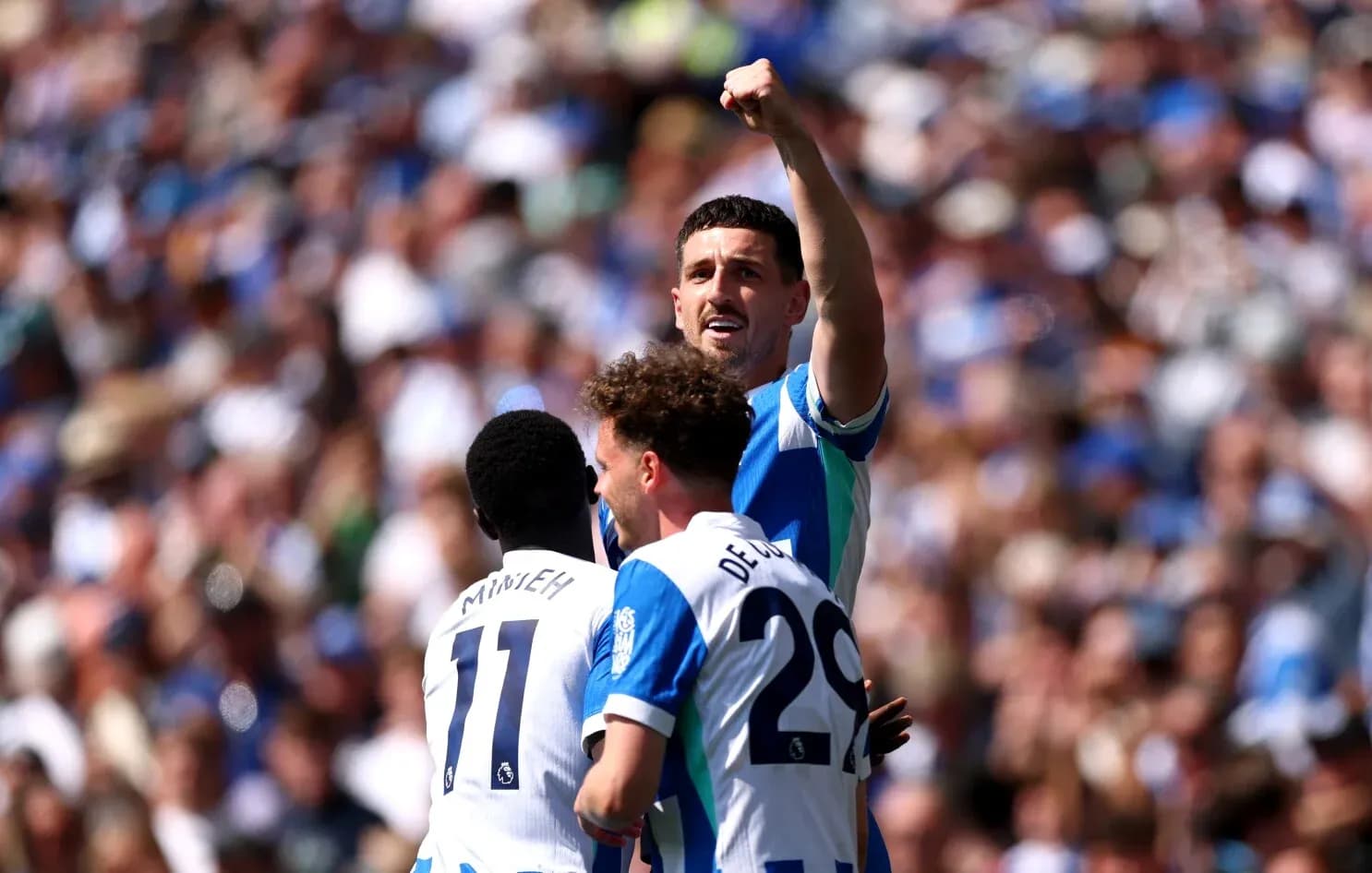
Hurzeler’s starting XI, even without its missing pieces, was built to dominate the ball. Bart Verbruggen started in goal behind a back four of Ferdi Kadıoğlu, Jan Paul van Hecke, Lewis Dunk and Maxim De Cuyper. In midfield, Carlos Baleba and Pascal Groß formed the central hinge, with a fluid band of Yankuba Minteh, Jack Hinshelwood and Kaoru Mitoma operating behind centre-forward Danny Welbeck.
The shape mirrored Brighton’s season-long preference for a 4-2-3-1 (their most-used formation, deployed 31 times overall). Groß dropped deep to assist build-up, Baleba patrolled the half-spaces, and the wide trio stretched Wolves horizontally. Welbeck, Brighton’s leading scorer this campaign with 13 league goals, provided the penalty-box gravity. His season has been productive but imperfect: he has scored 1 penalty but missed 2, a detail that colours every Brighton spot-kick with a hint of jeopardy.
Edwards answered with a back three and a crowded midfield. Daniel Bentley was protected by Yerson Mosquera, Santiago Bueno and Toti Gomes. Ahead of them, Pedro Lima, João Gomes, André and Hugo Bueno formed a flexible line, with Adam Armstrong, Mateus Mané and Hwang Hee-chan tasked with counter-punching.
Defensive Strategies
It was a selection that leaned heavily on Wolves’ most combative characters. André, one of the league’s most-booked players with 11 yellow cards overall, anchored the midfield. His profile is that of a deep-lying disruptor: 76 tackles, 12 blocked shots and 28 interceptions this season, plus 41 fouls committed. João Gomes, with 10 yellow cards overall and 108 tackles, is cut from similar cloth, a relentless presser who lives on the disciplinary edge. Behind them, Mosquera adds more aggression, with 11 yellow cards overall and 14 blocked shots to go with 57 tackles.
Yet the numbers show how often that aggression has been reactive rather than proactive. Overall this campaign Wolves concede an average of 1.8 goals per match both at home and on their travels. They have kept just 4 clean sheets in total, and away from home they average only 0.4 goals scored. Nineteen matches overall without scoring underline how fragile their attacking structure has been.
Brighton’s defensive leaders, by contrast, have underpinned a more stable platform. Dunk has 10 yellow cards overall but marries that edge with control: 26 blocked shots and 29 interceptions, plus 2,317 passes at 92% accuracy. Van Hecke has been even more complete: 3 goals, 3 assists, 28 blocked shots and 43 interceptions overall, while winning 196 of 322 duels. Those two form a centre-back pairing that can hold a high line and still defend their box.
Match Dynamics
This is where the “Hunter vs Shield” dynamic crystallised. Welbeck, the hunter, has 45 total shots this season with 27 on target, plus 20 key passes and 13 league goals. He thrives on service into the box and quick combinations around the area. Wolves’ shield is a collective of André, João Gomes and Mosquera, but the underlying structure has leaked: 66 goals conceded overall, with their biggest away defeat a 4-0 loss. Against a Brighton side that averages 1.7 goals at home and has failed to score in only 3 home matches overall, the odds tilted heavily towards the hosts.
In the “Engine Room”, Pascal Groß and Carlos Baleba had the technical edge. Groß, Brighton’s metronome, linked defence and attack, while Baleba’s energy allowed Brighton to compress the pitch. Wolves’ response through André and João Gomes was physical and intense, but their season-long card profile hints at the cost. Overall this campaign Wolves’ yellow cards peak between 46-60 minutes at 28.57%, with further spikes of 20.78% between 61-75 and 19.48% between 76-90. Brighton’s own bookings also surge after half-time, with 27.91% of their yellows arriving between 46-60 and 15.12% between 76-90, suggesting a match that was always likely to grow more ragged as legs tired and spaces opened.
Statistical Prognosis
Following this result, the statistical prognosis is clear. Brighton’s overall goal difference of 10, built on 52 goals scored at an average of 1.4 per match and 42 conceded at 1.2, reflects a side whose xG profile would be expected to sit comfortably in the upper half of the league. Wolves’ overall goal difference of -41, their meagre 0.7 goals scored per match and 1.8 conceded, points to an xG and defensive solidity far below survival standard.
A 3-0 full-time scoreline at the Amex did not so much surprise as confirm the trajectories. Brighton’s structure, even with key absences, is robust enough to impose itself at home. Wolves’ resistance, no matter how hard André, João Gomes and Mosquera fight, is undermined by systemic frailty. In narrative terms, this was a match between a side sharpening its European credentials and one staring down the consequences of a season-long collapse—and the numbers, as much as the football, made that outcome feel inevitable.