.svg&w=384&q=75 "Pitchgist logo")
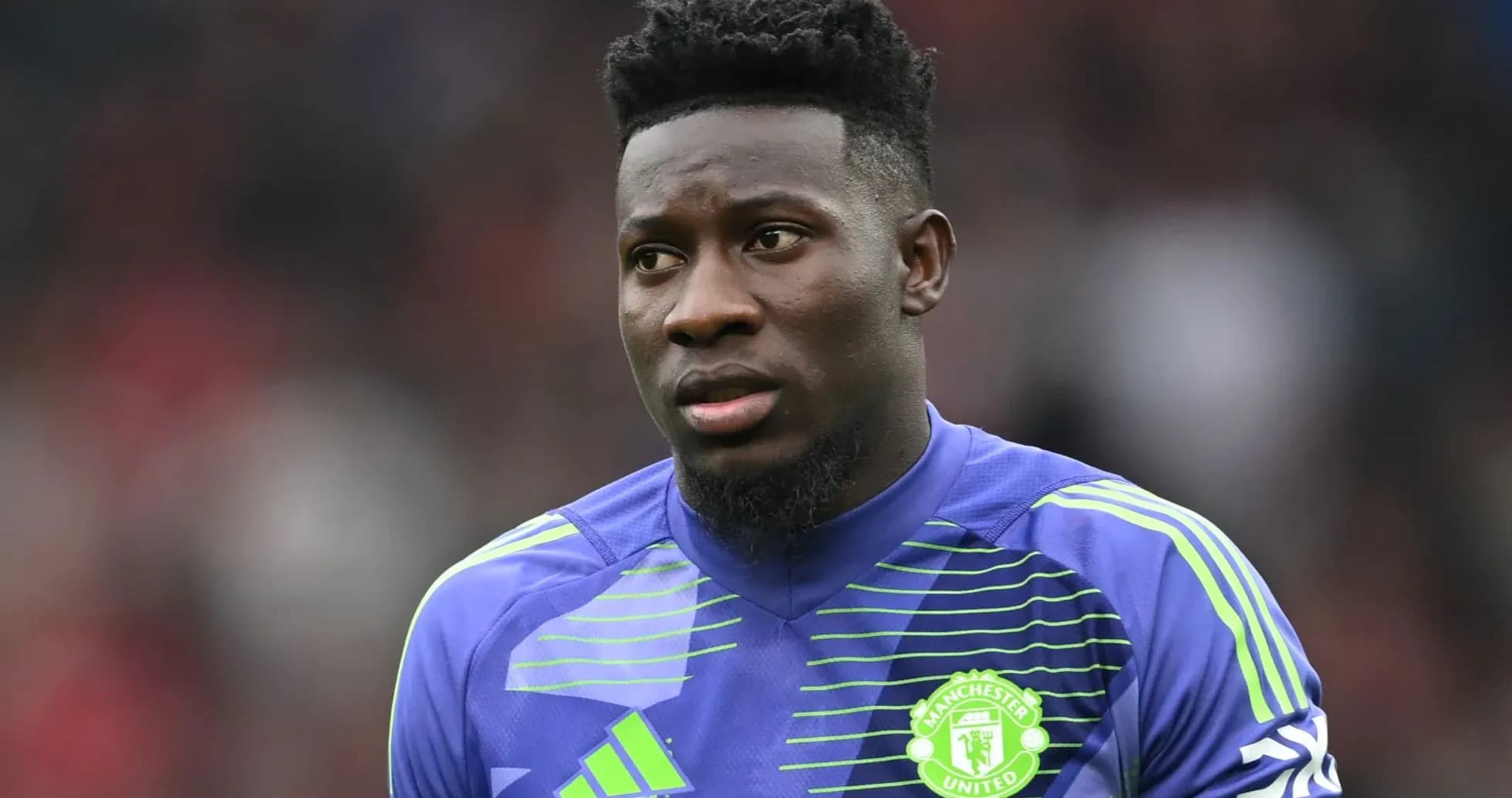
André Onana's Manchester United Journey: A Difficult Return Ahead
André Onana’s Manchester United story looks to be drifting towards an unsentimental ending.
Rehabilitated in Turkey, rebuilt at Trabzonspor, the Cameroon international has just lifted the Turkish Cup at the end of the 2025-26 season and rediscovered the rhythm that deserted him in England. The loan has done its job. Confidence back. Medals won. Reputation repaired.
Now comes the hard part.
Onana is due back at Old Trafford this summer when his season-long deal expires, but the club he returns to is no longer the one that handed him the No.1 shirt and a £43 million fee after prising him from Inter in 2023. Two seasons, one FA Cup and a torrent of scrutiny later, United have moved on.
Senne Lammens, installed in September 2025, has taken the gloves and, crucially, kept them. The Belgian has become the “more reliable last line of defence” United felt they needed after Onana’s turbulent spell. He has helped steer the club back into the Champions League and, with that, seized the dressing room’s trust and the supporters’ patience.
That leaves a 30-year-old Champions League finalist, still under contract until 2028, staring at a door that looks all but closed.
Djemba-Djemba: ‘For me, the best thing is to be transferred’
Eric Djemba-Djemba knows what Old Trafford can do to a player’s confidence. The former United and Cameroon midfielder believes the path is now clear for Onana — and it leads away from Manchester.
“It's quite difficult for him,” Djemba-Djemba told GOAL in association with World Cup Betting. “Because when he left, he went on loan, it was good for him, because he went there, he played, he won the cup, he played every game.
“He's not a bad goalkeeper, but he was there at the bad moment and sometimes in England they don't care if you are a goalkeeper playing very well with your feet. They don't care, they know the goalkeeper needs to stay on his line. He was there in the bad moment, it was difficult for him.”
That “bad moment” became a cycle. One mistake, then another. At a club of United’s scale, in a league that rarely forgives, the noise swelled quickly. Groans from the stands. Headlines from the press. Questions from pundits. For a goalkeeper, there is nowhere to hide.
“Now, he went on loan, he played there, he won there, it was good,” Djemba-Djemba said. “Now, the second goalkeeper [Lammens] was playing, he did very well, now it will be hard for the manager to change that. Even me, if I was the manager, it would be hard for me to change that because the second goalkeeper was there, he brought the team to the Champions League. Now it will be difficult for me, the manager, to change.
“If Onana comes back now, it will be sub and it will be difficult, because he will be nervous, the atmosphere will be different, because Onana will not be happy to not play, and it can affect the second goalkeeper. So, for me, the best thing for him is to be transferred.”
United’s dilemma is obvious. A high‑value asset, still in his goalkeeping prime, sits on a long contract. The expectation is that the club will seek to recoup part of that initial outlay this summer, rather than carry an unhappy deputy on substantial wages. Sporting logic and dressing-room harmony point in the same direction.
The weight of Old Trafford
Onana’s struggles in Manchester were not purely technical. At Inter, his ability with the ball at his feet was a weapon. At United, under the glare of the Premier League, it became a lightning rod whenever results dipped.
Pressed on whether the keeper suffered a full-blown crisis of confidence at the “Theatre of Dreams”, Djemba-Djemba did not hesitate.
“I think so,” he said. “I think when you have one mistake, two mistakes, even if you are the best in the world, every goalkeeper has a moment where he will have a doubt — every goalkeeper. But you need to rebuild that, you need to play, to play every game and to rebuild that.
“But for him, it was very, very difficult because one mistake, another mistake, and people, they were behind you, people were shouting, newspapers, it's very difficult. You know how it is in England, it's not too easy. He did great, but now for him, the best thing is to rebuild his confidence, he needs to be transferred.”
That is the paradox of Onana’s situation. The very thing he needs most — games, rhythm, the space to make and move past errors — is what he is least likely to get if he stays at United behind an in-form Lammens.
In Turkey, he found that space again. Week after week, cup run after cup run, he played. He won. He reminded everyone, not least himself, why United paid so much to sign him.
Now, with his loan over and his belief restored, the next move will define the second half of his career. Stay, and accept life as a No.2 in a stadium that never truly trusted him? Or leave, and chase the kind of stage where a goalkeeper with his personality and style can breathe again?
For Djemba-Djemba, and increasingly for United, the answer looks brutally simple.